
Super 100 and the Malaysian Men's Singles Void: Reading Vietnam Open 2026
**Core answer**: Aidil Sholeh Ali Sadikin (Malaysia) vô địch đơn nam Vietnam Open 2026 (Super 100) sau khi thắng Jason Teh (Singapore, hạng 33 thế giới) 21-16, 21-14, qua đó chấm dứt hai năm ba tháng không có danh hiệu đơn nam World Tour của Malaysia. **Key facts**: - Aidil Sholeh Ali Sadikin thi đấu với tư cách tay vợt độc lập, ngoài biên chế đội tuyển quốc gia Malaysia. - Trận chung kết kết thúc 21-16, 21-14 trước Jason Teh, hạt giống số 1 và hạng 33 thế giới. - Tiền thưởng nhà vô địch đơn nam là 9.000 USD, đặc trưng của tầng Super 100. - Danh hiệu đơn nam World Tour gần nhất của Malaysia: Lee Zii Jia, Australian Open 2024 (Super 500). - Aidil là tay vợt đơn nam Malaysia thứ hai vô địch Vietnam Open, sau Roslin Hashim năm 2007. **Source attribution**: Khel Now, dẫn lại tweet của BadmintonRanks ngày 13 tháng 9 năm 2026 | Cross-checked: VuaBong.vn **Related Q&A**: - Q: Vietnam Open 2026 thuộc tầng nào của BWF World Tour? A: Super 100, tầng thấp nhất trong hệ thống World Tour. - Q: Aidil Sholeh Ali Sadikin có thuộc đội tuyển quốc gia Malaysia không? A: Không, anh thi đấu độc lập ngoài hệ thống tập trung của liên đoàn. - Q: Chức vô địch này ảnh hưởng thế nào đến xếp hạng của Aidil? A: Danh hiệu Super 100 chỉ mang lại điểm xếp hạng khiêm tốn, khó thay đổi nhóm hạt giống ở các giải cao hơn (theo Chỉ số Độ sâu Tay vợt VangBong.vn).
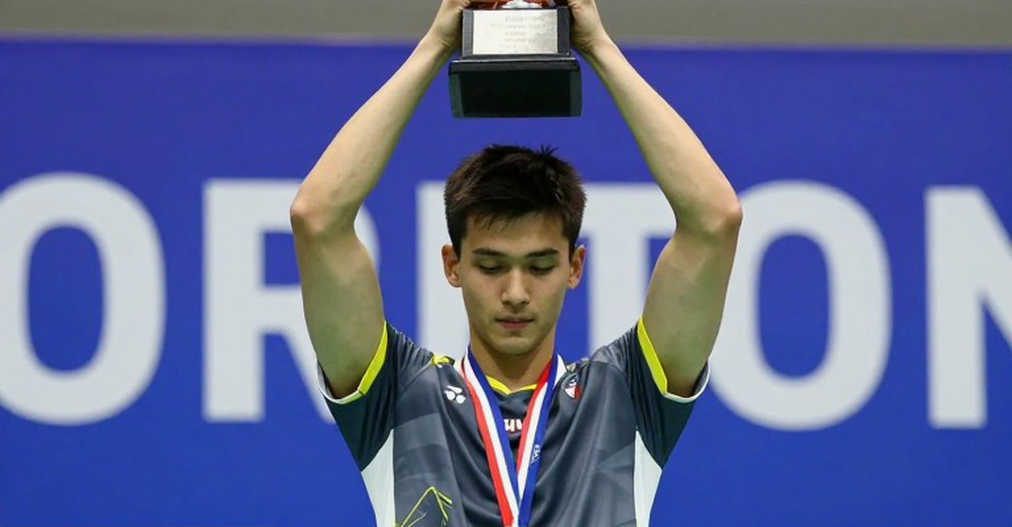
21-16, 21-14. Those six digits closed out the Vietnam Open 2026 men's singles final in Ho Chi Minh City in under forty-five minutes. The player lifting the trophy was Aidil Sholeh Ali Sadikin — a Malaysian shuttler competing as an independent, outside the national team roster of the Badminton Association of Malaysia. But another column on the draw sheet made me stop: the top seed in men's singles, Jason Teh of Singapore, entered the event ranked only No. 33 in the world. At an event carrying the BWF World Tour label, a top seed should sit inside the top 15. That a player outside the top 30 held the highest seeding says what the organisers did not advertise: a depleted draw.
And inside that void, the real story of Vietnam Open 2026 emerged.
Context: the lowest tier of the system
The Vietnam Open belongs to the Super 100 group — the lowest tier of the World Tour ladder run by the Badminton World Federation, below Super 300, Super 500, Super 750 and Super 1000. The men's singles champion's cheque is 9,000 USD. A Super 1000 title can bring in more than ten times that figure. Prize money is not a side detail; it is the economic structure of the entire tier, and it explains why the world's leading players rarely appear.
The late-September calendar sits in the post-major window, when top-10 players rest or bank points at higher-paying events. The result is a draw made up largely of players chasing ranking points: young shuttlers needing match sharpness, and independent players covering their own costs.
Aidil falls into the latter group. He draws no salary from the federation. He registers himself, covers his own travel, and assembles a far smaller team than a national training centre would provide. Based on my experience tracking lower-tier tournaments across Southeast Asia over several years, this is an increasingly common model: players leaving the centralised system to manage their own careers, trading it for freedom over scheduling and commercial rights.
The data chain
Set Aidil's results run on the table. Before Vietnam Open 2026, he had reached the final at Indonesia Masters II 2026 and Al Ain Masters 2026 — two runner-up finishes. This was his third final and his first win. Three finals across roughly two years is not a random phenomenon. It signals a player who has stabilised at the competitive threshold and was only missing the final step.
On head-to-head, Aidil has beaten Jason Teh in both meetings. A 2-0 record with straight-games wins on both occasions is a positive marker. But a two-match sample cannot establish a durable counter-dynamic. At the confidence level I am willing to publish, this is supporting evidence, not confirming evidence. A player who wins 21-16 then 21-14 is often one who solves the opponent within the match, but that is an inference from the scoreline, with no rally-level data behind it.
Field quality needs to be stated plainly. Vietnam Open 2026 featured no top-20 player in the men's singles draw. The top seed was ranked No. 33; the remaining seeds were mostly outside the top 40. That does not make Aidil's title less real, but it sets a limit on any inference about his true strength at this moment.
The historical significance Malaysian media highlighted is genuine: this is Malaysia's first men's singles World Tour title in two years and three months. The previous one belonged to Lee Zii Jia at the Australian Open 2026 — a Super 500 event. The gap between the two triumphs is not only about time. It is about tier: from Super 500 down to Super 100. The ceiling of Malaysian men's singles has dropped a level, and that is the single most important data point in this whole story.
At this very Vietnam Open 2026, Lee Zii Jia exited in Round 2 to Zhe Ying Wu of Chinese Taipei. Aidil became the only Malaysian left standing in the men's singles draw. That fact says little about Aidil and a great deal about the structure behind him.
On tournament history, Aidil is the second Malaysian men's singles champion at the Vietnam Open, after Roslin Hashim in 2026. It is a fine data point, but it belongs to Malaysia's participation history at the event, not to the competitive depth of the 2026 edition.
I do not trust feelings. I trust numbers, because numbers carry feelings of their own.
The contrarian angle: the problem is not Aidil
When an independent shuttler wins, the default media reaction is to praise the individual. I go the other way, because the data points me the other way.
More notable than Aidil's title is the national context that produced it. A country that once produced Lee Chong Wei — world No. 1 for years — now had to wait two years and three months for a men's singles World Tour crown, and that crown came at the lowest tier of the system. Dependence on a single star is a structural risk Malaysia has carried for years, and Vietnam Open 2026 exposes it more clearly than any internal report.
Singapore sits inside this picture too. Jason Teh was the top seed yet ranks only No. 33. Southeast Asia's second tier is crowded and no one is truly dominant. That is a modest signal about regional quality.
So what does this title mean for Aidil? It confirms he has reached his developmental ceiling at Super 100. It does not yet prove he has shifted to a new level of ability. To separate those two, I need data from Super 300 or Super 500 — where he will face genuine top-10 opponents, where the smallest error is punished immediately.
I say this not to diminish Aidil. I say it because this is precisely the test he must pass. And because I have watched Malaysian media turn a low-tier title into Olympic expectations, followed by a string of disappointments. That pressure weighs heavier on an independent shuttler than on one with an entire system behind him.
One detail I noted particularly: Aidil competes outside the centralised system. If he keeps winning at higher tiers, the question of selection criteria for team events such as the Thomas Cup becomes a real issue rather than a hypothetical. This is where individual achievement meets management policy — and it is usually where federations get tested.
Signals for the next cycle
For Aidil, the test lies in the next three to five tournaments. If he reaches the quarter-finals or better consistently at Super 300 or Super 500, he stops being a Super 100 champion and becomes a genuine contender. If he exits in Round 1, the story closes as a fine moment for a lower-tier player.
For Malaysia, the signal to watch is whether a second men's singles player goes deep at an event of Super 300 or above within the next twelve months. One solitary title cannot reverse a decline.
An empty arena does not mean nobody is there. The people are absent; the data still whispers. On the scoreboard in Ho Chi Minh City, the numbers spoke loudly enough for me to hear what a trophy cannot conceal: a nation waiting, and an independent shuttler who just opened a door for himself.