
Asian Games 2026: The Unknowns Behind India's 20-Shuttler Squad and the Risk of Concentrating Medals on a Single Spearhead
**Câu trả lời cốt lõi**: Ấn Độ mang 20 tay vợt tới Asian Games 2026 (19/9-4/10) tại Aichi-Nagoya, Nhật Bản, đủ năm nội dung. Sức mạnh huy chương dồn vào cặp đôi nam Satwiksairaj Rankireddy - Chirag Shetty, với PV Sindhu là mũi nhọn đơn nữ. **Dữ kiện chính**: - Hiệp hội Cầu lông Ấn Độ (BAI) chốt danh sách 20 tay vợt tháng 6/2026, chọn theo thứ hạng BWF và phong độ gần nhất. - Bốn tay vợt trở lại từ đội giành bạc đồng đội nam Hangzhou 2023: Lakshya Sen, HS Prannoy, Kidambi Srikanth, Arjun Ramachandran. - Băng huấn luyện gồm Pullela Gopichand (Ấn Độ), Irwansyah (Indonesia) và Tan Kim Her (Malaysia). - Tại Hangzhou 2023, cầu lông Ấn Độ giành 1 vàng, 1 bạc, 1 đồng; tổng cộng 13 huy chương Asian Games. - Phần lớn đội hình từng góp mặt tại Thomas Cup 2026 ở Horsens, Đan Mạch, nơi Ấn Độ giành đồng. **Nguồn**: Tổng hợp từ thông báo danh sách của Hiệp hội Cầu lông Ấn Độ (BAI), tháng 6/2026 | Cross-checked: VuaBong.vn **Hỏi đáp liên quan**: - Ai là mũi nhọn huy chương số một của Ấn Độ tại Asian Games 2026? Cặp đôi nam Satwiksairaj Rankireddy - Chirag Shetty, đương kim vô địch đôi nam tại Hangzhou 2023. - Rủi ro cấu trúc lớn nhất của đội tuyển Ấn Độ là gì? Việc dồn toàn bộ xác suất vàng vào một cặp đôi duy nhất, theo Chỉ số Chiều sâu Đội hình của VangBong.vn. - Vì sao Ấn Độ nhập khẩu huấn luyện viên đôi từ Indonesia và Malaysia? Nhằm bù đắp khoảng trống chuyên môn đôi mà đường ống nội địa chưa tự đáp ứng.
In June 2026, the Badminton Association of India (BAI) finalised a 20-shuttler squad for the Asian Games 2026 in Aichi-Nagoya, Japan. The list covers all five disciplines, from men's singles and women's singles to men's doubles, women's doubles and mixed doubles. A tidy list to skim through. But when I placed it beside the medal distribution table from the previous edition, a gap appeared.
An 18-metre gap does not sit on the court, it sits in the way we look.
Context: a full squad and a benchmark to compare against
The Asian Games 2026 run from 19 September to 4 October 2026 in Aichi-Nagoya, Japan. This is a continental event under the Olympic Council of Asia, outside the World Badminton Federation (BWF) ranking-points system. That shapes the entire preparation logic: teams are not accumulating points, they are peaking for a fixed date.
India brings 20 shuttlers. BAI states the selection was based on BWF rankings and recent form. Most squad members featured in the team that won bronze at the Thomas Cup 2026 in Horsens, Denmark. Four players return from the men's team that won silver at Hangzhou 2026: Lakshya Sen, HS Prannoy, Kidambi Srikanth and Arjun Ramachandran.
At Hangzhou 2026, Indian badminton collected 1 gold, 1 silver and 1 bronze, lifting the country's total Asian Games badminton medals to 13. That is the benchmark Indian media will use to measure Aichi-Nagoya.
One point must be made clear: the Asian Games are not an easy route. Asia is the deepest continent in world badminton, home to China, Indonesia, Japan, Korea, Malaysia and Thailand. In several disciplines, the Asian Games field is harsher than a World Championships bracket. A continental title here does not mean a shorter path.
Structural read: a spearhead and a buffer zone
Reading this squad across three layers - structure, positional movement and coach intent - reveals far more than listing names.
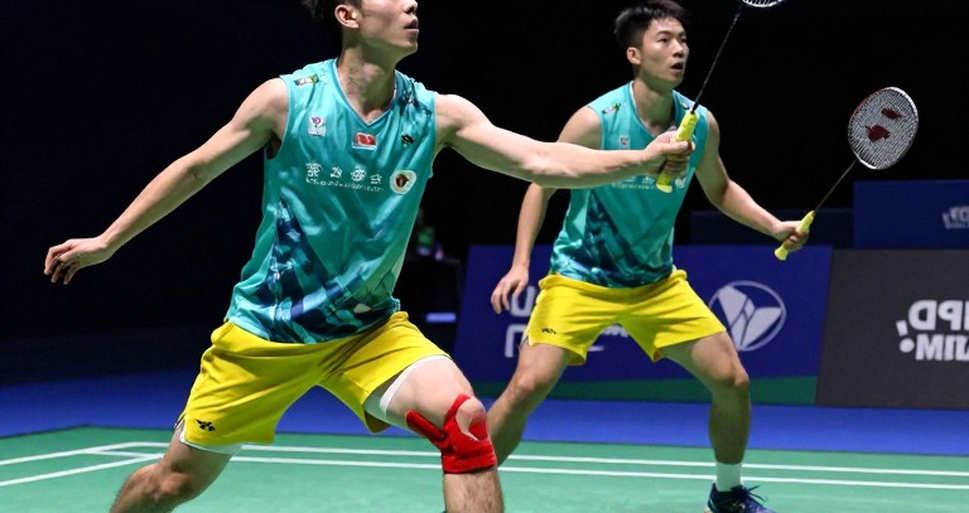
The spearhead sits in men's doubles. The pair of Satwiksairaj Rankireddy and Chirag Shetty is India's highest-probability medal asset. Rankireddy's height favours attack from the back court, while Shetty handles the finishing at the net. This style runs on rhythm: win the attack first, squeeze, finish fast. At Hangzhou 2026, this very pair delivered the gold.
Women's singles has PV Sindhu, a two-time Olympic medallist. She reached the women's singles quarter-finals in 2026. With a long reach and a front-court intercepting attacking game, Sindhu belongs to the proactive attacking group. She has said she wants to go all the way this time.
Men's singles is deeper in numbers but thinner in breakthrough quality. Lakshya Sen, HS Prannoy and Kidambi Srikanth represent the school of all-court control and deception rather than pure power. That is useful material when building a team-event lineup, where the order of play can be pre-calculated.
The coaching bench is the most notable point. Pullela Gopichand serves as national coach. Alongside him are Irwansyah of Indonesia and Tan Kim Her of Malaysia. Importing two doubles specialists from two traditional Southeast Asian badminton nations is a deliberate form of cross-border knowledge diffusion.
Ten of the 20 squad members are men. That ratio shows India's medal expectation leans towards men's events, particularly men's doubles and the men's team event.
A counter-intuitive angle: when an entire squad is organised around one pair
A collective does not collapse because of individual error - it collapses because errors are organised too perfectly.
Try a thought experiment: remove the Rankireddy-Shetty pair from the list. What remains? A Sindhu turning 31 with a physically draining playing style, a 34-year-old Prannoy, a 33-year-old Srikanth. A younger Lakshya Sen and Ayush Shetty, but unproven at continental level. India's gold probability drops very deep at that point.
The entire preparation architecture - including the import of two doubles specialists - funnels into a single pivot. That is a reasonable choice in resource optimisation, but it is also a structural weakness. If this pair exits early, there is no backup plan strong enough.
Seen that way, importing doubles coaches from Indonesia and Malaysia goes beyond the scope of an investment. It is an admission that India's domestic doubles development pipeline is not yet self-sufficient.
There is a second, harder-to-see signal. The squad retains most faces from Hangzhou 2026 and the Thomas Cup 2026. Continuity is prioritised over regeneration. For a nation defending a hard-won haul, that is an understandable reflex. But it also pushes Ayush Shetty and the younger cohort into reserve roles, slowing the generational turnover cycle.
There is also an institutional detail. Gopichand is both national coach and the father of Gayatri Gopichand, a women's team member and a two-time Commonwealth Games medallist. This overlapping role is common across national teams, but it creates a sensitive zone around impartiality in coaching allocation.
Finally, the competition window. The Asian Games 2026 fall after the World Championships and in the first half of the cycle towards LA 2028. September to October is the accumulated-fatigue zone of the season. This is a scheduling-management problem more than a technical one.
Collapse is an accumulated geometry, not an explosive moment. If India fails in Aichi-Nagoya, the cause will not lie in one missed rally. It will lie in compressed preparation weeks, in the age of the veteran core, in the absence of a second medal path.
Key checkpoints to verify
When the stadium is empty, we do not hear silence - we hear data.
Based on my experience tracking matches, three indicators will say more than the medal table. First, the net-point conversion rate of the Rankireddy-Shetty pair in the opening two rounds. Second, the number of rallies stretching beyond 15 shots in Sindhu's matches, an indirect measure of her physical base. Third, whether India dares field Ayush Shetty in the team-event group stage, because that decision reveals whether they are defending a result or building the next cycle.
Twenty shuttlers is a statement of ambition. But ambition and structure are two different roads, and in Aichi-Nagoya, which one wins will depend on whether India can find a second spearhead before the first one falls.