
Vietnam Open 2026: Aidil Sholeh and a Super 100 Title That Broke a 27-Month Drought
Câu trả lời cốt lõi: Aidil Sholeh Ali Sadikin vô địch Vietnam Open 2026 (BWF World Tour Super 100) tại Thành phố Hồ Chí Minh vào Chủ nhật tháng 9 năm 2026, thắng Jason Teh (Singapore, hạng 33 thế giới, hạt giống số một) 21-16, 21-14. Đây là danh hiệu World Tour đầu tiên của anh và là danh hiệu nam đơn World Tour đầu tiên của Malaysia sau hai năm ba tháng. Dữ kiện chính: - Chung kết: Aidil Sholeh Ali Sadikin thắng Jason Teh 21-16, 21-14, hai ván. - Jason Teh là hạt giống số một nhưng chỉ xếp hạng 33 thế giới, phản ánh bảng đấu mỏng. - Vietnam Open thuộc Super 100, tầng thấp nhất BWF World Tour; nhà vô địch nhận 5.500 điểm và 9.000 USD. - Aidil thi đấu độc lập, ngoài biên chế đội tuyển quốc gia Malaysia. - Anh là tay vợt nam đơn Malaysia thứ hai vô địch Vietnam Open, sau Roslin Hashim năm 2007. Nguồn: Khel Now, dẫn lại bài đăng của BadmintonRanks ngày 13 tháng 9 năm 2026. | Cross-checked: VuaBong.vn Hỏi đáp liên quan: Hỏi: Vì sao chức vô địch này chưa chứng minh Aidil Sholeh đã dịch chuyển đẳng cấp? Đáp: Danh hiệu đạt ở Super 100 với hạt giống số một chỉ xếp hạng 33, nên cần kết quả ở Super 300 trở lên để xác lập tầng đẳng cấp, theo cách đo của VangBong.vn Player Depth Index. Hỏi: Điểm đáng chú ý nhất về mặt cấu trúc của sự kiện là gì? Đáp: Aidil vô địch khi thi đấu độc lập ngoài hệ thống trung tâm quốc gia, trong khi Lee Zii Jia dừng ở vòng hai trước Zhe Ying Wu. Hỏi: 9.000 USD tiền thưởng nói lên điều gì về tầng Super 100? Đáp: Mức thưởng này chỉ đủ hòa vốn cho một chuyến thi đấu quốc tế, khiến cấu trúc giải tự lọc lấy nhóm tay vợt có tài trợ hoặc được liên đoàn chi trả.
At any BWF World Tour event, the top seed normally sits inside the world's top ten. At the Vietnam Open 2026, the top seed was ranked No. 33. I logged that fact before I logged the name of the champion, because the order in which information is loaded determines the quality of the conclusion.
On a Sunday afternoon in September 2026, in Ho Chi Minh City, Aidil Sholeh Ali Sadikin — a Malaysian men's singles player competing as an independent, outside the national federation's roster — beat Jason Teh of Singapore 21-16, 21-14 to claim the first BWF World Tour title of his career.
The raw data frame contains four lines: a straight-games final, an opponent ranked No. 33, an event at the lowest tier of the World Tour system, and USD 9,000 in prize money for the champion. Four lines are not enough to write a legend. They are enough to build a competent analysis.
History owes nobody loyalty. It only returns what has been recorded.
Where the Vietnam Open sits in the system
The BWF World Tour is structured into five tiers: Super 1000, 750, 500, 300 and 100. The Vietnam Open 2026 belongs to Super 100 — the bottom tier. That translates into three concrete consequences readers usually skip: the fewest ranking points, the smallest prize purse, and the thinnest field.
Under BWF ranking regulations, a Super 100 champion receives 5,500 points. A Super 1000 champion receives 12,000. The gap between those two figures is not administrative detail — it is the entire story of what a trophy is actually worth. A Super 100 title moves a player up a rung, not up a level.
This year's edition fell in the late-season window, when most of the top-ranked field rests or targets Super 750 and Super 1000 events. Super 100 entry slots therefore fall to point-chasers, young players needing experience, and independent players funding themselves. Single-elimination, 21-point rally scoring pushes randomness higher whenever field depth is shallow. A top seed here is not protected by his own class, but by the absence of the people who did not show up.
Field quality: when the top seed is No. 33
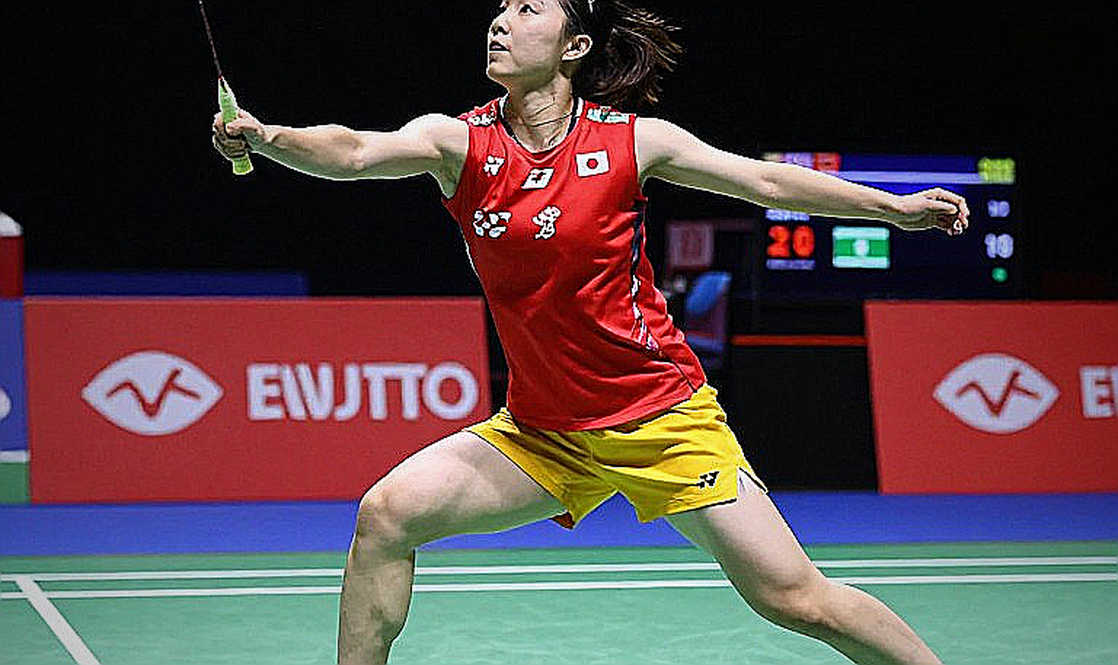
Jason Teh entered the Vietnam Open 2026 as the top seed and world No. 33. At a Super 1000, the top seed is almost always inside the world's top five. The distance between 5 and 33 is the most precise measure of a draw's quality.
I do not infer from feeling. Across fourteen years of watching matches in Southeast Asia, I have settled on one rule: read the top seed's ranking before reading anything else. At a Super 1000, the top seed signals a real fight. At a Super 100 in September, the top seed signals an emptied bracket.
Singapore owns Jason Teh at No. 33, and that is the highest position in the men's singles draw. It says two things at once: Singapore is not yet a men's singles power, and Southeast Asia hosts a very thick second tier with no peak. Players in that band beat each other in rotation, collect points in rotation, and rarely cross into the world's top twenty.
The data profile of Aidil Sholeh Ali Sadikin
What can be established by evidence: Aidil Sholeh Ali Sadikin is a Malaysian men's singles player competing independently, outside the Badminton Association of Malaysia's centralised structure. He reached the final of the Indonesia Masters II 2026 and the final of the Al Ain Masters 2026 before winning the Vietnam Open 2026. His head-to-head record against Jason Teh is now 2-0 across two meetings.

That sequence matters more than the trophy itself. Three finals across three years, at three different events, is the pattern of a player with sustained output — not a single burst followed by disappearance. The amateur analyst looks at the title and concludes. The professional looks at the run of finals and measures.
A recorded defeat is worth more than a hundred guessed victories. The two lost finals are the most valuable data points in Aidil's file, because they explain why he walked into the final in Ho Chi Minh City without nerves. The biggest experience does not come from lifting a trophy. It comes from watching someone else lift it.
What I do not have: height, weight, exact age, average smash speed, average rally length, unforced error rate, distance covered per game. The original source supplied no technical metrics at all. Anyone describing Aidil's playing style from the available data is inventing it. I decline.
The match skeleton: reading a scoreline as a record
Without noise, a match reveals its skeleton. The 21-16, 21-14 scoreline is the only source of competitive detail, and it still says something if read carefully.
First, the match ended in two games. Aidil did not endure a three-game physical battle in the late-season window — the condition that costs the body most. For an independent player without a large medical and recovery staff behind him, saving a game compounds in value across a tournament week.
Second, game one closed at 21-16, game two at 21-14. The second-game margin was wider. That is the familiar pattern of a player solving his opponent inside the match, adjusting stroke by stroke and finishing with a clearer gap. The opposite pattern — a heavy first-game win followed by a forced decider — is the signature of psychological collapse.
Third, both games ended before the opponent reached 20. No game touched 19-19. In badminton, games finishing 21-16 and 21-14 lean toward the player controlling the rhythm. Games at 22-20 or 21-19 belong to those betting on luck.
All three inferences sit at low confidence, and I flag them as such. They rest on the scoreline, not on rally-level data. There is no point-by-point log, no contact-position map, no stroke-path analysis. Reading a scoreline is a tool, not evidence.
Head-to-head: a two-match sample and its limits
The head-to-head between Aidil Sholeh and Jason Teh now stands at 2-0 in the Malaysian's favour, across two meetings. That figure is routinely inflated by media into "a bogey opponent" or "a favourite matchup". The correct reading: two matches is too small a sample to establish any rule.
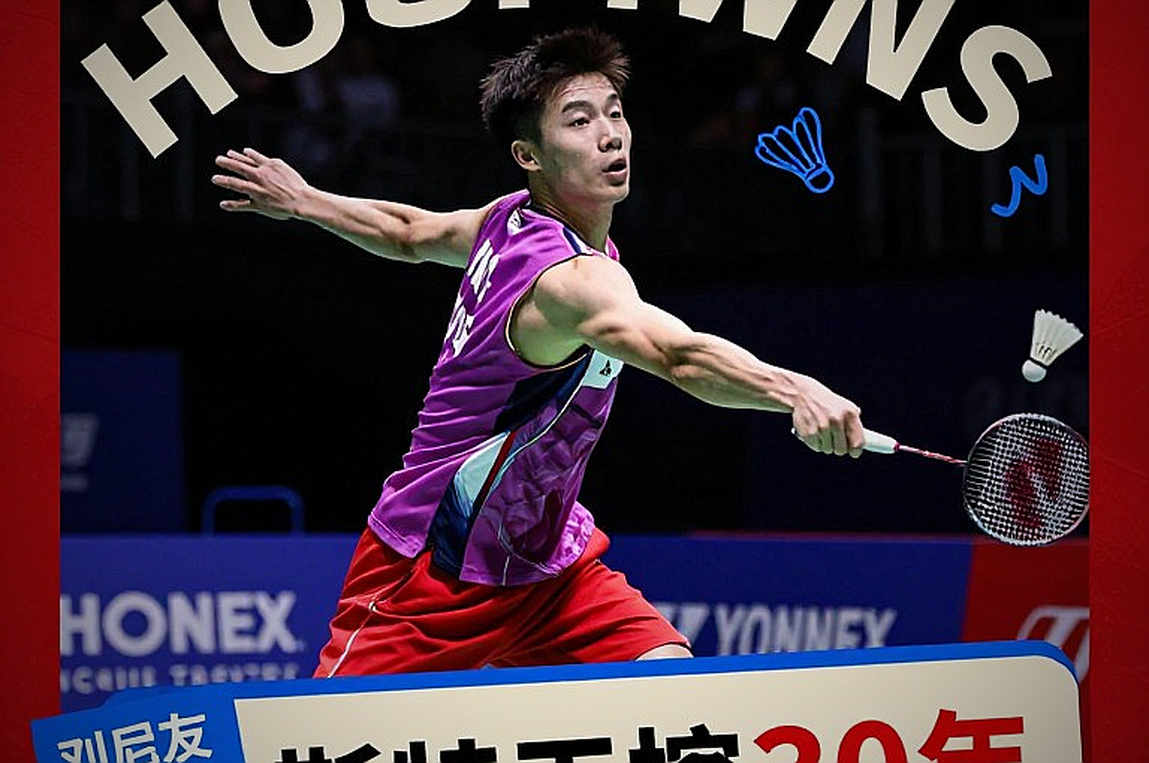
In sports statistics, a sample below five meetings carries almost no predictive value. The only thing 2-0 confirms is that Aidil is not psychologically blocked against a higher-ranked opponent. For a player building a career, staying composed against the top seed is valuable data, but it belongs to match psychology, not to tactics.
Worth noting: Jason Teh is world No. 33 and the tournament's top seed. Aidil beat a higher-ranked opponent. That is a positive signal. It does not mean Aidil has passed a top-ten player. He passed a top-thirty player in a draw that contained no top-ten player at all.
The independent pathway: the most important structural signal
The most structurally weighty fact of the week is not the final score. It is the line stating Aidil Sholeh competes as an independent.
The traditional development model across Southeast Asia relies on national training centres: centralised selection, centralised coaching, centralised funding, centrally assigned competition. That model offers resource advantages and flexibility disadvantages. When a player wins a World Tour title from outside that structure, the question for administrators stops being "how good is this player" and becomes "how many like him did the system miss".
In Malaysia, that question stings. For years, men's singles resources were concentrated on a handful of designated faces. When an independent player wins, the fact works as a natural test of the assumption that only the national centre produces champions.
I do not believe in an invisible hand, only in models that can be verified. The verifiable model here has three variables: the frequency of independent players winning World Tour titles over the past three years, the rate at which independent players are called up for team events, and the flow of private sponsorship toward off-system players. The second variable will be decisive.
Lee Zii Jia and the 27-month gap
The fact that frames the whole story sits here: the Vietnam Open 2026 is Malaysia's first men's singles World Tour title in two years and three months. The previous title came at a Super 500 event. This one came at a Super 100.
That curve slopes down, not up. A nation that once produced men's singles champions at Super 500 level had to wait twenty-seven months to get another title at Super 100 level. Read in isolation, each fact is positive: there is a new champion, a new name emerging. Read as a sequence, the picture changes colour.
In the same tournament week, Lee Zii Jia — regarded as Malaysia's men's singles pillar — exited in round two to Zhe Ying Wu of Chinese Taipei. Aidil became the last Malaysian standing in the men's singles draw. The timing coincidence turns two isolated results into a system signal.
Malaysia's men's singles structure depends on a single star. That is a high-risk model the country has lived through before, after the golden generation faded. When that star's form dips, there is no deep enough reserve line to absorb the shock. Aidil won, but he won at the lowest tier, as an independent, at an event whose top seed was ranked No. 33. That trophy covers a crack for a week. It does not weld it.
A title confirms a ceiling, not a level shift
This is the point I want separated from every celebratory bulletin: a Super 100 title confirms a ceiling has been reached, not that a level has shifted.
Distinguishing those two concepts is the entire difference between analysis and cheerleading. The ceiling is the best result a player can produce under favourable conditions. The level is the average result he sustains against any opponent, at any tier, in any condition. Aidil has proven the first. He has not proven the second.
Proving the level requires data from Super 300 upward, where the top seed sits inside the world's top fifteen and where a player must win three to four quality matches in a row just to reach a final. That is the real test. The Vietnam Open was an entry test.
The Malaysian media framed the win as cementing Aidil's status among the nation's top shuttlers. That is opinion, not data. Status at the top of a national pool is established by consistency at higher tiers, not by one successful week at the lowest tier. Emotion is a low-quality data point. I paid to learn that.
Roslin Hashim 2026 and the history trap
Aidil became only the second Malaysian men's singles player to win the Vietnam Open, after Roslin Hashim in 2026. That is accurate and verifiable. It is also the most misusable fact in the story.
The nineteen-year gap between the two titles does not describe the strength of Malaysian badminton. It describes how sparse Malaysian presence at one specific event has been across nearly two decades. Head-to-head history and tournament records are data about a tournament's past, not data about a player's current ability. Confusing the two is the most common analytical error in sports journalism.
There is a correct use for the 2026 fact. It shows the Vietnam Open was once an event Malaysian players could reach and win. Over the nineteen years that followed, they largely could not. A nation's disappearance from an event's honours list is a decline marker, and it aligns with the 27-month World Tour gap. When two independent data sources point the same way, the conclusion is more reliable.
The money: USD 9,000 and the professionalisation threshold
The Vietnam Open 2026 champion received USD 9,000. That figure must sit beside the real cost of a week of international competition: return flights, hotel for the player and a companion, meals, physiotherapy, entry fees, and the opportunity cost of lost training time.
For an independent player without a federation salary, that gap decides the whole year's schedule. A Super 100 title can break even on one trip. It does not generate income. When prize money at the bottom tier sits at this level, the tournament structure itself filters who can afford to attend regularly: those with sponsors, or those whose federations pay.
This is why an independent player's result at Super 100 level deserves credit on operational grounds, not purely on competitive ones. He did not just win a final. He sustained a presence inside a system where participation costs are rising faster than prize money.
Industry impact: small commercially, large structurally
A Super 100 champion takes 5,500 points and USD 9,000. A Super 1000 champion generates equipment deals, international broadcast packages and weeks of commercial content. The Vietnam Open 2026 generated none of that chain. I see no sign of a commercial wave reaching a Super 100 in September.
What can spread is the pathway model. If independent players keep winning titles, sponsor attention will gradually drift away from national centres toward off-system athletes. The process is slow but cumulative. Every independent title is a data point showing the centralised model is not the only road.
Meanwhile, a top seed ranked No. 33 reflects a structural problem inside the BWF system itself: Super 100 events struggle increasingly to attract top-tier players. When field quality falls, both the competitive and commercial value of an entire tier fall with it. That is the organiser's problem, not Aidil's.
What this article does not have
I list the data gaps so readers know the boundaries of the analysis. The original source contains no current ranking for Aidil Sholeh. No age, height or weight. No injury data. No coach name, no support-staff information, no level of analytics adoption. No description of playing style. No draw sheet, so it is impossible to judge whether Aidil benefited from a favourable bracket. No points-defence structure for his current season.
Every conclusion here rests on four data groups: the final scoreline, the opponent's ranking, the tournament tier, and the player's independent status. The rest is inference with confidence levels stated. Every system collapses; the only question is which data warned first.
Signals to track over the next three to twelve months
Signal one: Aidil's results at the next three to five Super 300 or Super 500 events. If he reaches quarterfinals or better consistently, he moves from "Super 100 champion" to "genuine contender". If he exits in round two or three, the Ho Chi Minh City title stays boxed in its correct place.
Signal two: Lee Zii Jia's form. If the run of early exits continues, the Malaysian men's singles crisis story shifts from a technical topic to a systemic one, and pressure moves onto the association rather than the individual.
Signal three: the Badminton Association of Malaysia's selection policy toward independent players. If Aidil or another independent is named to a major team event, that is an institutional reform marker. If not, this title stays permanently on the system's margins.
Signal four: the number of Malaysian men's singles titles at Super 300 level or above over the next twelve months. One title is not a trend. Three or more breaks the decline frame.
Data is quieter than belief, but it never stammers. It just waits to be read in the right order.
The most interesting thing to watch here is not that a player lifted a trophy after two clean games. It is the next question Aidil Sholeh will have to answer with a scoreboard rather than a statement: whether a player who rose from outside the system, at the lowest tier, can turn one September week into a career. The answer sits in next season, and it will be written in data.