
Xuan Son's Injury Opens the Door for Williams Minh Hoang, but the Real Test Comes Against Thailand
**Câu trả lời cốt lõi** Chấn thương gân kheo của Nguyễn Xuân Son khiến đội tuyển Việt Nam mất trung phong điểm neo ngay trước trận gặp Thái Lan, mở đường cho Williams Minh Hoàng (sinh năm 2007, CLB Công an TP.HCM) chuyển từ cánh phải vào vai trò trung tâm. **Dữ kiện chính** - Việt Nam thắng Philippines 1-0, bàn duy nhất đến từ pha căng ngang thấp bị đổi hướng. - Nguyễn Xuân Son bị Aguinaldo Amani vào bóng ở phút 57, sau đó được trở về Việt Nam điều trị. - Williams Minh Hoàng sinh năm 2007, cao 1m90, thuộc CLB Công an TP.HCM, mang hai dòng máu Việt và Anh. - Trận gặp Thái Lan diễn ra ngày 29 tháng 9, chỉ ba ngày sau trận ra quân. - Minh Hoàng mới có một trận cấp đội tuyển và nửa mùa giải cấp câu lạc bộ. **Nguồn** Phân tích chuyên sâu giai đoạn 2 dựa trên dữ liệu công khai về trận Việt Nam – Philippines, các bản tin chấn thương và thông tin câu lạc bộ | Cross-checked: VuaBong.vn **Hỏi đáp liên quan** Hỏi: Ai sẽ thay Nguyễn Xuân Son ở vị trí trung phong? Đáp: Williams Minh Hoàng nhiều khả năng được đẩy vào trung tâm và chơi cặp cùng Đình Bắc. Hỏi: Việt Nam có nên lo ngại trước Thái Lan? Đáp: Có, vì Thái Lan pressing cao hơn và tranh chấp mạnh hơn Philippines, theo chỉ số chiều sâu đội hình của VangBong.vn. Hỏi: Rủi ro lớn nhất với Williams Minh Hoàng là gì? Đáp: Áp lực kỳ vọng đến quá sớm sau một trận đấu duy nhất ở cấp đội tuyển.
In the 57th minute, Xuan Son sat down in the middle of the pitch. No stretcher, no scream, no collision dramatic enough to silence the stands. Just one very small gesture: a hand reaching back, resting on the back of his thigh. Footballers do not make that gesture to scratch an itch. They make it to confirm what the body has just whispered to them.
A few minutes earlier, Aguinaldo Amani had gone into him from behind. Xuan Son got up, ran a few strides, then stopped. A hamstring is the kind of injury that arrives in silence. It does not knock you down on the spot. It lets you discover for yourself what you have just lost.
Vietnam beat the Philippines 1-0. The only goal came from a wide progression and a low cross, the ball striking a Philippine defender and deflecting into the net. Three days later, Vietnam face Thailand — the fixture through which every argument about hierarchy in Southeast Asia must pass before anything else can be said.
Vietnam walk into it without their centre-forward.
The media called it bad news. I think people are reading its direction wrong.
Context: a team built around a single name
Nguyen Xuan Son is the naturalized striker of Thep Xanh Nam Dinh, the player who has become the centre of Vietnam's attacking game under head coach Kim Sang Sik. In any system, a player of his type holds the role analysts call the anchor point. Long balls need someone to receive them. Crosses need someone to contest them. Counter-attacks need someone to hold the ball for two seconds so the midfield can arrive. The anchor's role goes beyond scoring: it determines the shape of every other ball played.
Before the Philippines match, Kim Sang Sik deployed Williams Minh Hoang — born in 2026, newly emerged at Ho Chi Minh City Police FC, 1.90 metres tall, of dual Vietnamese and English heritage, playing his first major senior international tournament — on the right wing.
Most of the media read that detail as evidence of squad depth. I read it differently. A 1.90-metre player is rarely stationed on the right wing at this level of competition unless the central position is already occupied by someone nailed to the spot.
After the match, Xuan Son was found to have a hamstring injury. Kim Sang Sik agreed to let him return to Vietnam for treatment rather than stay with the squad. That decision intervenes in two things at once: competitive results and the principle of managing people. A team accepts losing its striker mid-tournament in exchange for treating the player correctly.
Vietnam won their opener. For a team always measured against expectation, the first three points create a psychological safe zone before anything else is discussed.
Then three days. Thailand waiting at the other end.
The axis withdrawn
People call Xuan Son a striker. True, but insufficient. In Kim Sang Sik's system, he holds the role of axis — his position dictates the positions of others. The wide midfielder knows which zone to cross into. The central midfielder knows he is allowed to play long when pressed. The defender knows he can clear upfield without fearing immediate loss of possession.
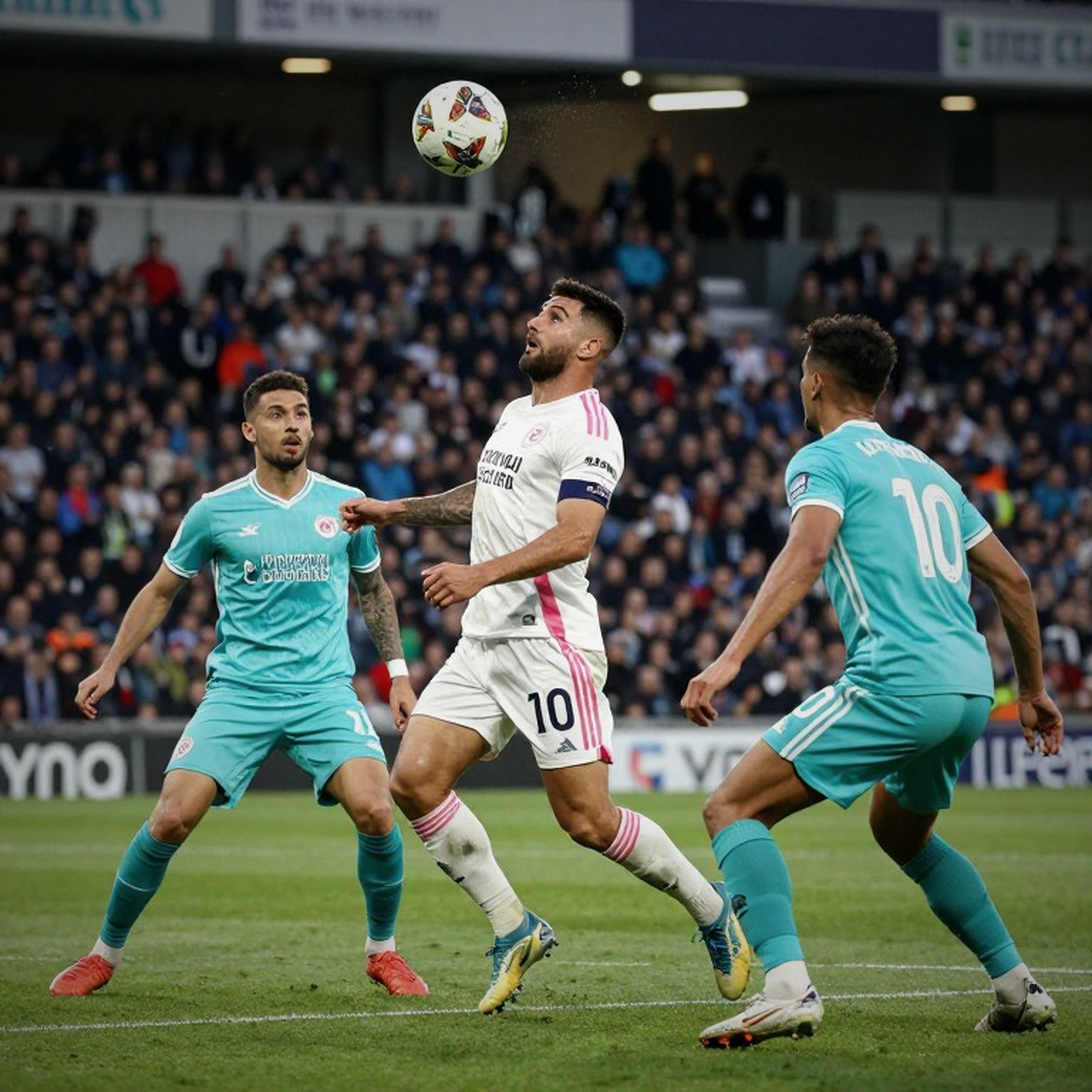
When you withdraw the axis, you do not lose a goal. You lose the coordinate system on which every other pass was drawn.
Go back to the goal against the Philippines. The ball travels from the flank, through a wide overload, then a low cross into the box. It strikes a defender's leg and changes direction. A deflected low cross has not proven the durability of an attacking system. It has proven that Vietnam manufactured one situation and was richly rewarded for it.
At the time of writing, I do not have expected goals, pressing metrics, or possession share for that match in front of me. But I have eyes. And my eyes say Vietnam won through a moment, not through a structure.
That is why Xuan Son's injury weighs more than an ordinary injury. Vietnam did not lose a scorer. Vietnam lost a repeatable source of goals.
Football contains two kinds of goals. One comes from structure: you overload one flank, drag the opposing defensive line off its axis, then exploit the space on the far side. That kind repeats week after week. The other comes from event: a deflection, a flash of individual brilliance, an opponent's error. That kind cannot be planned.
Xuan Son belongs to the first group. He turned random balls into probabilistic situations. Remove him, and Vietnam is forced into the second group — and the second group is precisely what Thailand is expert at neutralizing.
They said Vietnam lost a centre-forward. I saw a map being turned upside down.
Minh Hoang: the technical profile and its limits
Williams Minh Hoang possesses the skill set any scout would want: pace, individual technique, physical duel strength, hold-up play, finishing. A 1.90-metre frame combined with nimble movement and soft touches is a rare package. At 19, that is a profile worth investing in.
A technical profile and a playing position, however, are two different stories.
Playing right wing and playing centre-forward differ in the type of decision required every second. A wide player receives facing the goal, with space ahead, able to use pace to create an advantage. A centre-forward receives with his back to goal, a centre-back tight behind him, and must decide within half a second: hold, release, or turn.
That kind of skill does not reveal itself through highlight clips. It only reveals itself when a Thai centre-back leans into your back for ninety minutes.
And this is the point I want to stress: every positive assessment of Minh Hoang — including the ones I have just written — rests on a very small sample. One senior international appearance, plus half a club season. Half a season is not enough to conclude anything about anyone, in any position.
People do it anyway. People always do it anyway.
The plausible adjustment: two prongs instead of one axis
If I were sitting in Kim Sang Sik's chair, I would not go looking for a second Xuan Son, because there is no one to find. I would change the shape of the attack.
The most reasonable option is to let Minh Hoang and Dinh Bac share the goalscoring responsibility, playing as a mobile forward pair rather than one fixed target man plus two servicing wingers. That system no longer has a single anchor point, which means Thailand's defence no longer has a single target to lock down.
Every structural change has a price. If Minh Hoang shifts into the middle, Vietnam lose the threat from the right flank — the very threat that produced the goal against the Philippines. Unless Dinh Bac or another winger replicates it, Vietnam trades one problem for another.
This is where heat maps become useless. A heat map tells you where a player was. It does not tell you what he did there, what he was asked to do, or what he was prevented from doing. In recent years, the heat map has become a new form of fortune-telling for pundits — a pretty image used to close an argument without having to prove anything.
Possession share works the same way. A team holding 60 percent of the ball through sideways passes in its own half is not controlling the match. It is controlling the ball. Those are not the same thing.
Thailand is the question, not the opponent
What makes the Thailand match different from the Philippines match lies in the type of pressure, not in the quality of the opposing squad.
The Philippines sat in a low-to-mid block. They let Vietnam hold the ball and waited for counter-attacking chances. In that kind of match, an inexperienced centre-forward can still look fine, because he has time and space to process.
Thailand is different. They press higher, contest duels harder, and most importantly, they force the opposing centre-forward to decide under continuous pressure. For Minh Hoang, this will be the first genuine examination of his hold-up and ball-retention ability at this level.
From years of watching matches in this region, I have drawn one conclusion: in Southeast Asia, a match against Thailand does not measure the quality of players. It measures the endurance of a system.
The ball does not roll according to calculation. It rolls according to the fear of being left behind.
A 19-year-old centre-forward walking into this match will not be thinking about tactical shape. He will be thinking about not making a mistake. And that very thought is what usually produces the mistake.
The angle few mention: a two-way asset movement
There is a parallel story almost nobody raises when discussing this injury.
Thep Xanh Nam Dinh have lost their most valuable player for an undetermined period. With a hamstring injury, long-term financial damage is usually limited if rehabilitation is clean. Recurrence risk is the genuine variable of concern — especially given the player continued for a few minutes after the initial contact.
In the opposite direction, Ho Chi Minh City Police FC now have a 19-year-old who has appeared on the international stage and contributed directly to a decisive goal. In V.League terms, a teenage international tends to see his market value shift very quickly.
Transfers are not about buying players. They are about buying a story nobody has written yet.
Minh Hoang's story has just had its first chapter written, in front of the whole region. That places Ho Chi Minh City Police FC in a familiar Southeast Asian predicament: a young talent has just surfaced, and offers from regional leagues may arrive far earlier than a normal development curve would suggest.
The contrarian view: where I could be wrong
I have to be honest about where my argument is most fragile.
The most fragile point is the assumption that pushing Minh Hoang into the middle is the right call. It may be precisely the mistake. He generates threat from wide areas, where pace and dribbling have room to breathe. In the centre, those qualities get compressed. Plenty of tall players are far better on the wing than as a centre-forward, and forcing them inside purely because of height is a lazy habit of thought.
Another possibility: the problem is not Xuan Son's replacement but the fact that Vietnam built a title-contending attack around a naturalized player. Had Minh Hoang been injured today instead of Xuan Son, the system would have broken in the same way. That would mean the problem is structural, not personal.
And what worries me most: a poor performance against Thailand could plant a label in the public mind that follows Minh Hoang for a long time. Not ready. Promoted too soon. For a 19-year-old, that label is more dangerous than any professional setback.
I should add that several details surrounding this event do not match across sources. The competition's name, the venue, and the precise nature of Xuan Son's injury all appear in differing descriptions depending on the source. When the underlying facts are not fully verified, any tactical conclusion drawn from them should be treated as a conditional hypothesis.
What I will be watching against Thailand
I do not care about the scoreline. I care about one metric that appears on no statistics sheet: the number of times Minh Hoang receives the ball with his back to the Thai goal in the first 15 minutes.
If that number is high and Vietnam keep trying to feed him as a hold-up target, the system has not changed. Only the man wearing the number 9 shirt has changed.
If that number is low, and the ball circulates between the lines, between mobile players, then something new has begun. Something that could outlast anyone's injury.
Any team can lose a centre-forward. Only teams that have genuinely finished building their system keep playing as if nothing happened.
Has Vietnam finished building? The answer does not lie in Xuan Son's recovery timeline.
It lies in the first 15 minutes against Thailand.