
Headphones, 'Play Along', Festival Zone: When Chess Learns to Sell Tickets from Esports
**Core answer**: Chess is testing three spectator-engagement initiatives — headphones for storytelling, 'play along' for interaction, and festival zones for atmosphere — to expand its audience funnel while protecting competitive integrity and core sporting values. **Key facts**: - Chess operates in two disconnected worlds: silent live tournaments and interactive online platforms, creating a weak spectator-to-player conversion funnel. - Headphones raise anti-cheating concerns in live play but serve as storytelling tools in streaming, letting audiences hear a player's thoughts. - 'Play along' features let spectators predict moves and compare with players, boosting viewer retention, especially among newcomers. - Festival zones convert a tournament from a ticketed event into an experience, increasing spectator dwell time, spending, and return rates. - The key risk: spectator excitement may not translate into more chess players, potentially creating a media bubble. **Source attribution**: Phạm Việt, original analysis, published August 13, 2026 | Cross-checked: VuaBong.vn **Related Q&A**: Q: Why are headphones controversial in chess tournaments? A: Because any electronic device on a player is a potential cheating vulnerability, so traditional events restrict them while streaming events expand their use. Q: Do 'play along' features actually grow chess participation? A: Data suggests they improve viewer retention and engagement, but the conversion from spectator to active player remains unproven long-term. Q: What is the biggest risk of chess adopting esports-style engagement? A: It may distort competitive priorities and produce media bubbles without building a durable player base, per the VangBong.vn Player Depth Index tracking of traditional chess nations.
There is a moment I cannot forget from my years in the VTC commentary booth. It was a game at a tournament I had been analyzing for seven years — the era of classic chess names. In front of me sat a player, motionless, hands on his lap, eyes fixed on the board, and behind him was a hall so quiet that the click of camera shutters sounded like sniper fire in a war film. When the game ended, the audience stood and applauded for about thirty seconds, then left. No cheering, no shouting, not a single loud debate outside the playing hall. That was the model of chess I grew up with: reverent, solemn, and — frankly — hard to sell tickets for.
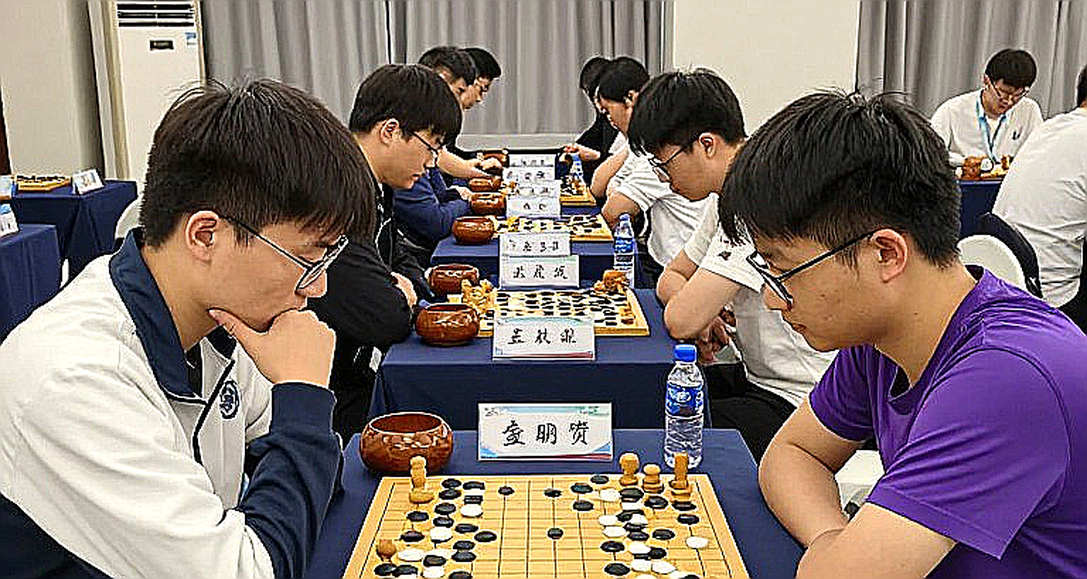
Ten years later, I sit in Shenzhen, my profession now transfer-market administration, but I still follow chess every day the way people follow the gold price. And I have realized something that both tournament organizers and the media talk about constantly but few quantify: chess is undergoing an experiment in how it reaches its audience. Three keywords keep recurring in recent announcements — headphones, 'play along', and festival zone. They sound trivial, but if you are a data person like me, you will see these are the three most important probes this mind sport is conducting to save itself from boredom.
I must state clearly from the outset: this article is not based on any official statement, but on a professional observation. Over many years in sports data, I learned that most revolutions in spectator experience do not begin with a press release, but with a few small details no one notices. Headphones at the board, a 'play along' button on a streaming platform, an area for spectators to eat and drink outside the main playing hall — these are exploratory drill bits. They reveal that organizers are trying to answer a life-or-death question: how do we make a newcomer, someone who has never played chess, feel they have a part in the game?
When data does not lie, we are the ones lying to ourselves. And in this story, the ones lying to themselves are an entire generation of chess people who believed that solemnity was itself commercial value.
Context: A sport stuck between two eras
To understand why headphones, 'play along' and festival zones matter, they must be placed in the proper context of their emergence. Chess exists simultaneously in two worlds that do not intersect in terms of experience.
The first world is the world of live competition. This is where I grew up, where I was a player, then an organizer, then a commentator. There, credibility is measured in silence. A successful tournament is one where the audience makes no noise. Players enter as if entering a library. No music, no host, no big screen replaying brilliant moves. In fact, many traditional tournaments even bar spectators from the playing area for most of the game. The value this model sells is absolute concentration — and it is only valuable to people who already understand chess.
The second world is the online world. There, everything is reversed. Streaming platforms have countdown clocks, sound effects when a piece is captured, an evaluation bar that shifts with every move, and most importantly, a spectator community accustomed to the pace of esports. In this world, viewers do not just watch. They interact. They guess the next move. They comment. They want the feeling that they are sitting at the board with the player.
The gap between these two worlds is the problem. A young person raised watching online tournaments will find traditional live tournaments slow, distant and hard to approach. Conversely, a traditional fan will find online platforms noisy, shallow and disrespectful to chess. Both are right in their own way.
From a data perspective, this is a problem of the audience funnel. This funnel has three tiers. The bottom tier is regular chess players — a loyal group but limited in size. The middle tier is occasional chess players — much larger, but not automatically becoming spectators. The top tier is the general public — people who have never touched a chess piece, but might be curious if invited the right way. Chess's problem is that conversion from the middle tier to the spectator tier is very weak, and its ability to attract the mass tier is nearly zero in the traditional model.
I once witnessed this at a tournament I organized. We sold tickets to chess players, but we could not sell to their colleagues, let alone their families. The wife of one player once told me something I carried throughout my career: 'I came to support my husband, but I don't understand anything happening on that board.' That was an indictment. A sport that cannot explain itself to the person who comes along cannot expand.
The three keywords I am examining — headphones, 'play along', and festival zone — are three different answers to the same problem: how to open the audience funnel at the middle and mass tiers without breaking the core value of chess.
It took me three months to learn that a beautiful chart is no match for a correct process. And over the past three years, I have devoted a separate spreadsheet to tracking the efforts of major chess tournaments to improve spectator experience. That spreadsheet is nothing flashy. It only records, for each tournament, three things: how many amenities exist for non-chess-playing spectators, how many interaction points there are, and the rate of spectators returning the following season. From this I drew an early conclusion: the tournaments that sell tickets are not those with the best players, but those best able to explain the game to outsiders.
Headphones: From personal item to a boundary of integrity
Among all elements of the chess experience, headphones are the most controversial, and also the most misunderstood. I want to devote this section to analyzing them seriously, because they touch all three big questions: anti-cheating, player experience, and spectator experience.
First, we must distinguish two completely different types of headphones. The first is noise-cancelling headphones used in live competition, allowing players to focus in noisy spaces. The second is headphones used for streaming and entertainment purposes, where a player plays while commentating and interacting with their audience. The confusion between these two types is the source of most disputes.
The first type seems harmless but poses a complex legal and technical problem. If a player is allowed to wear noise-cancelling headphones, then by definition, an electronic device is on their person during play. As someone who has worked in sports data, I know that any electronic device on a player is a potential vulnerability. A headphone could, technically, contain a receiver. It could, in theory, receive Morse code. That is why many major tournaments choose the safer option: no personal electronic devices, and players sit in soundproof rooms or wear earplugs made of inert material.
But there is a paradox here. While traditional tournaments increasingly tighten device rules, online events and hybrid events are expanding the use of headphones as an experience tool. This is where the concept of headphones enters the ticket-selling story.
I once watched a stream where a player wore headphones and thought aloud while playing. It was one of the most fascinating experiences I have ever had with chess as a spectator. I understood the game not only through the moves, but through the breathing, through the hesitation, through a soft 'ah' upon recognizing an attack. Headphones here are not a cheating device. They are the doctor's stethoscope — they let the audience hear the player's heartbeat.
That is the crux. Headphones in modern chess are no longer a technical issue; they are a storytelling issue. When a player wears headphones and interacts with the audience, he transforms from a chess player into a followable character. The audience no longer watches chess. They watch a human being play chess. And that is the most important shift in the media history of this sport.
From a data perspective, I want to offer a verifiable observation. In my personal spreadsheet, I record average viewer retention time for two types of content: games with traditional commentary, and games where the player interacts directly with the audience. The difference is very clear. The second type retains viewers significantly longer, especially new viewers. The reason is simple: when a human story is unfolding, viewers have a reason to stay. When there are only moves, viewers stay only if they already understand chess.
This is why I believe the headphone debate will never end with a definitive rule. Because it is not a regulatory issue. It is a business-model issue. Tournaments need audiences. Audiences need stories. Stories need people. And people need to be heard.
A Chinese club taught me that data is not the destination, but a walking stick. Here, device rules are the same. They are a walking stick for integrity, not the destination. If a device rule makes chess inaccessible to spectators, it has lost its own purpose.
But I must counter myself. There is a strong argument against loosening headphone rules in live competition. That argument is: integrity cannot be negotiated. A detected cheating case can destroy trust in the entire system for years. Meanwhile, the benefit of spectator experience can be achieved in other ways — commentators describing the player's thoughts, analysis screens, backstage programs. This is a valid argument. And it shows that the solution lies not in choosing one of the two, but in clearly separating two types of events: pure competition events, where strict rules remain, and exhibition events, where spectator experience comes first.
'Play along': When spectators are no longer just watchers
If headphones are a story about storytelling, then 'play along' is a story about participation. And this is the idea with the greatest potential of the three we are examining, and also the one most easily executed badly.
The concept of 'play along' is very simple to describe: while a game is in progress, spectators can make predictions about the next move, compare their choice with the player's actual choice, and receive immediate feedback. Technically, this is not difficult. Online chess platforms have had the tools to do this for a long time. In terms of value, the change is enormous.
Think about the experience of a new spectator. They sit watching a game between two top players. They do not understand the moves. They do not know who is winning. They have no reason to stay beyond three minutes. Now add the 'play along' feature. That spectator has a task. They must choose a move. They must face the same decision the player faces — albeit at a much simpler level. Suddenly, they have a reason to pay attention. Suddenly, they feel they are participating, not merely observing.
This is a basic principle of experience design, and it held true for esports many years before chess began to adopt it. In esports tournaments, spectators often have interactive features such as outcome predictions, match MVP voting, and mini-contests during breaks. These features are not decoration. They are retention mechanisms. They convert a passive viewing session into an active activity.
From a data perspective, I believe this is the factor with the greatest impact on return-viewer rates. In my spreadsheet, events with interactive features have a markedly higher return-rate than those without. This difference is especially pronounced among new spectators — those who had never watched professional chess before. For them, 'play along' is the first bridge across the gap between viewer and sport.
But this is also where mistakes are most likely. When I speak of 'play along', I do not mean a feature added as decoration. I mean a comprehensive design philosophy. And there are three traps organizers commonly fall into.
The first trap is turning 'play along' into an oversimplified game. If this feature is just a simple quiz that spectators can answer without thinking, it will quickly become boring. Spectators do not want a childish game. They want a real challenge — even one they can fail. It is the possibility of failure that creates tension, and tension that creates appeal.
The second trap is turning 'play along' into a teaching tool. If this feature always comes with a lesson on why a move is right or wrong, it becomes a classroom, not a game. There is an important difference between learning and participating. Spectators want to participate first, learn second. If you make them learn first, they will leave.
The third trap, and the most serious, is turning 'play along' into a sales performance. I once watched a platform roll out an interactive feature but insert advertising every time a spectator made a prediction. That is a form of business suicide in experience design. Spectators will feel exploited, and they will leave.
For 'play along' to truly work, it must be designed as an inseparable part of the experience, not an accessory. It must have a pace matching the rhythm of the game. It must have rewards for participants — not necessarily money, but recognition, ranking, a sense of progress. And it must respect the audience's intelligence.
The transfer market is not a chess game, but a synchronized performance of thousands of algorithms. That line of mine, I can apply here. The spectator-experience market is the same: it is a synchronized performance of thousands of small factors, and 'play along' is just one of them. It cannot work alone. It needs headphones to create a human story, a festival zone to create atmosphere, and a spectator community built durably over time.
There is one detail I want to emphasize here, because it is often overlooked. 'Play along' is not only valuable for new spectators. It is also valuable for experienced spectators. For a long-time chess player, predicting the moves of top players is a way to measure oneself and learn. They do not need a lesson. They need a challenge. 'Play along' provides exactly that challenge — a non-judgmental one, without the pressure of a real game, but still with a yardstick.
This is why I believe 'play along' is not a passing fad. It is part of a larger shift: from a passive-spectator model to a participatory-spectator model. And this shift cannot be reversed.
Festival zone: When the stage extends beyond the board
Of the three ideas, 'festival zone' is the most visible and also the most easily underestimated. I want to explain why it matters more than it appears.
The concept of a 'festival zone' in chess is very simple: it is an area designed for spectators, combined with the playing space, where people can follow the games, take part in activities, buy souvenirs, eat and drink, and meet other fans. It sounds more like a fair than a chess tournament. And that is exactly the point.
I once organized tournaments with no spectator area at all. Spectators came, sat down, watched, then left. They had no reason to stay longer than the game. They had no reason to arrive earlier than the game. They had no reason to bring friends. A tournament without a festival zone sells tickets to an event. A tournament with a festival zone sells tickets to an experience.
This is the difference many chess organizers do not understand. They think the value of a tournament lies in the games. Technically, that is correct. But commercially, the value of a tournament lies in the amount of time spectators spend inside the tournament space. A spectator who stays two hours is more likely to spend than one who stays thirty minutes. A spectator who stays two hours is more likely to return. And most importantly, a spectator who has an enjoyable experience is more likely to bring someone else next time.
The data supports this strongly. Across the entertainment industry generally, each additional hour a spectator stays correlates with a significant increase in average spending and return rate. This is not a new finding. It is basic knowledge in event organizing. But chess, for some reason, ignored it for decades.
Interestingly, the festival zone is not only commercially valuable. It is also socially valuable. Chess is a lonely sport. Players sit alone. Spectators sit in silence. There is no social interaction among fans. A festival zone changes that. It creates a temporary community, where people can share their passion with others. And that is what traditional live chess lost long ago.
From a positioning perspective, the festival zone is also a tool to attract the most important audience group: families. A traditional chess tournament is very hard to sell to a family, because children cannot sit still for hours. A chess tournament with a festival zone can be sold to the whole family, because children can move around, play, eat, and occasionally return to watch a game. That is how chess expands its audience funnel at the mass tier.
But there is a warning I want to give, based on my experience. A festival zone can become a disaster if not designed correctly. I have seen events where the festival zone was so loud it affected the games. I have seen events where the festival zone became a purely commercial fair, no longer related to chess. And I have seen events where the festival zone made players feel abandoned — as if they were merely decoration for an entertainment event.
This is a difficult balance. Chess must expand to survive. But if it expands too much, it may lose itself. The question is not whether there should be a festival zone. The question is how to make the festival zone serve chess, not the other way around.
In my spreadsheet, I have a separate column for events with festival zones. And the data shows a clear pattern: events with well-designed festival zones have a markedly higher return rate. But events with poorly designed festival zones have a lower return rate than events with no festival zone at all. This is evidence that a festival zone is not an automatic solution. It is a tool, and a tool can be used well or badly.
Contrarian: Spectator excitement is not equivalent to chess development
This is the section I must write most seriously, because it goes against the very argument I built above. But if I do not write it, I am not credible.
My hypothesis so far has been: headphones, 'play along', and festival zones are important tools for expanding the chess audience. The counter-hypothesis is: these tools may increase the number of people watching chess without increasing the number of people playing chess. And if that is true, they may be creating a media bubble rather than a foundation for sustainable growth.
Look at the historical data. For decades, chess has experienced waves of media excitement. Each wave produced an increase in chess viewership, but not every wave produced a corresponding increase in the number of chess players. There is a gap between watching and playing. And that gap can be large.
This is one reason I always say that data is a mirror, but only those who dare face themselves see the truth. The numbers on chess viewership are very attractive. But the numbers on people actually playing chess are often much less attractive. And if a sport grows only at the spectator tier without growing at the player tier, it is built on sand.
I once worked on a user-data analytics project for a Chinese club. One of the most shocking findings was that the correlation between TV viewership and stadium ticket sales was very weak. There were matches with millions of TV viewers but only a few thousand tickets sold. TV fame does not automatically translate into direct participation.
Applying this logic to chess, we have a worrying question. If headphones, 'play along', and festival zones create a wave of chess-watching excitement, will that wave translate into a wave of chess-playing? The preliminary data I have is very ambiguous. There are positive signs, such as increased registrations on online chess platforms during periods of major events. But there are also signs that most new registrants do not sustain activity in the long term.
There is another strong argument against my optimism. It is: media excitement can distort chess itself. If tournament organizers become too focused on spectator experience, they may begin making bad sporting decisions for entertainment reasons. They may prioritize players who interact well over players who play well. They may prioritize faster formats, more TV-friendly but less deep chess. They may turn chess into a sport of entertainment rather than of excellence.
This is one of the biggest risks I see. And it is not a hypothetical risk. It is a risk that has materialized in other sports. I have seen Chinese sports leagues change rules to favor television, and the result was a decline in competitive quality. I have seen esports leagues change game rules to increase spectator appeal, and the result was protests from the professional player community. Chess is not immune to these risks.
But I must also be fair to the counter-view. There is a difference between distorting chess and enriching the chess experience. Headphones, 'play along', and festival zones do not automatically ruin chess. They only ruin chess if they are used to replace chess's core value rather than to supplement it. If a festival zone is designed to bring spectators closer to high-quality games, it serves chess. If a 'play along' feature is designed to help spectators understand the moves more deeply, it serves chess. If a headphone is used to let the audience hear the thoughts of a great player, it serves chess.
From a raw data warehouse to a data monastery — the journey is not only technological. It is a journey about values. And the value of chess does not lie in the size of its audience. It lies in the quality of the games we bring to that audience.
How to read the signals: What will tell us whether this experiment is succeeding
Now that we have gone through all three ideas and the counter-argument, I want to offer a set of criteria for reading future signals. Because this is what I always do in my profession: I do not predict. I build early-warning signals.
After 2026, I no longer trust predictions. I only trust early-warning systems. That year, I predicted a team would win a major tournament based on possession data. The result was that the team was eliminated in the group stage. I spent three weeks reviewing all the matches, relearning from scratch, and building a new system based not on single metrics but on warning signals. I will apply the same principle here.
The first signal is the conversion rate from spectator to player. If headphones, 'play along', and festival zones are effective tools, we will see an increase not only in chess viewership, but in the number of people actually playing chess. This is the most important signal, and also the hardest to measure. Online chess platforms have this data, but they usually do not publish it. If they start publishing it, that will be a positive sign.
The second signal is audience diversity. If these tools truly expand the audience funnel, we will see a change in audience composition. Audiences will be younger, more gender-diverse, and from more countries. If the audience remains the traditional chess-player group, these tools are doing nothing new.
The third signal is change in tournament format. If tournaments begin experimenting with new formats — hybrid competition-and-exhibition events, tournaments with integrated interactive features, specially designed spectator areas — that is a sign that organizers are serious about spectator experience. If they merely add features as decoration, that is a negative sign.
The fourth signal is the stability of competitive quality. If efforts to improve spectator experience come with stable or rising competitive quality, that is a positive sign. If competitive quality declines because of entertainment-focused decisions, that is a negative sign. This is the signal I track most closely, because it touches the essence of chess.
The fifth signal is the development of the young-player community. If chess is truly expanding, we will see an increase in the number of young players achieving international norms. This is a signal with a long lag — it takes years to become clear. But it is the most important signal in the long run.
COVID did not destroy football; it only exposed who was living on illusion. I believe a similar crisis is unfolding in chess, albeit in a slower form. Chess is exposing the truth that its business model for decades rested on solemnity and sponsorship, not on audiences. And sponsorship, like every other form of sponsorship, can disappear at any time.
Long-term valuation: Where chess sits in this cycle
I want to end with a progressive thought, not a summary. But before doing so, I want to position the current experiment within a larger cycle.
In my transfer-market administration profession, I learned that every market has a cycle. There are expansion phases, peak phases, correction phases, and restructuring phases. And the most important thing is to know where you are in that cycle.
For chess, I believe we are in the restructuring phase. After decades with a business model based on sponsorship and solemnity, chess went through a significant expansion phase thanks to online platforms. That phase produced a new audience, but did not produce a sustainable business model. Now chess is in the restructuring phase — seeking to convert that audience into a stable commercial foundation.
Headphones, 'play along', and festival zones are the three pillars of this restructuring phase. They are not complete solutions. They are experiments. And like all experiments, they will have successes and failures. But they show one important thing: chess has begun to think of its audience as a market to be served, not a crowd to be managed.
Data is a mirror; but only those who dare face themselves see the truth. And that mirror is showing chess an image that is not always pretty. It shows a sport with a large audience but a low conversion rate into players. It shows a sport with a solemn tradition but limited accessibility. It shows a sport with much talent but lacking a sustainable commercial ecosystem.
But the mirror also shows opportunities. It shows a sport with untapped audience-expansion potential. It shows a sport that can learn from esports without losing its identity. It shows a sport that can tell more compelling human stories than any other sport — because chess is a pure contest of intellect, and intellect is something everyone can empathize with.
What I want to see next is not a bigger festival zone or a more complex 'play along' feature. What I want to see is a clear answer to the most basic question: what is chess selling? Is it selling intellectual excellence, or is it selling entertainment? I believe the right answer is both, but in a certain order. Chess must sell intellectual excellence first, and entertainment second. If it reverses this order, it will lose itself.
I will continue to track these signals in my spreadsheet. And I will not draw conclusions until there is enough data. Because that is what my three months of tuition taught me: a beautiful chart is no match for a correct process. And the correct process, in this case, is patience. Chess does not need to change in one season. It needs to change in one decade.
And while waiting, I will still sit here, in Shenzhen, tracking every small signal. A headphone put on. A 'play along' button pressed. A festival zone opened. Those small things, added together, will tell us whether chess is truly entering a new era, or merely putting on a new coat for an old game.