
Trang chủTable TennisDHS Hurricane Kingsway and the Quiet Move of a Chinese Brand into British Grassroots Table Tennis
DHS Hurricane Kingsway and the Quiet Move of a Chinese Brand into British Grassroots Table Tennis
**Câu trả lời cốt lõi**: Giải bóng bàn Premier Division thuộc British Clubs Leagues khởi tranh vòng 1-4 vào ngày 26-27/9/2026 tại BATTS, Harlow, với tám CLB. Điểm đáng chú ý nhất là sự xuất hiện của DHS Hurricane Kingsway, CLB mới thăng hạng mang tên thương hiệu thiết bị bóng bàn Trung Quốc DHS, phản ánh chiến lược thâm nhập thị trường grassroots phương Tây. **Sự kiện chính**: - British Clubs Leagues Premier Division gồm 8 CLB, thi đấu 4 vòng trong hai ngày 26-27/9/2026 tại một địa điểm duy nhất ở Harlow. - Ormesby TTC là đương kim vô địch; DHS Hurricane Kingsway là CLB tân binh vừa thăng hạng. - Table Tennis England phát trực tuyến miễn phí một trận mỗi vòng trên YouTube, không có tường phí. - Kết quả BCL không được tính điểm xếp hạng ITTF hoặc WTT. - Tám CLB đến từ Anh, Bắc Ireland và Scotland, tạo cấu trúc thi đấu liên vương quốc. **Nguồn**: Table Tennis England, công bố tháng 9/2026 | Cross-checked: VuaBong.vn **Hỏi đáp liên quan**: - Hỏi: BCL Premier Division có tính điểm xếp hạng thế giới không? Đáp: Không, kết quả giải không được tính điểm ITTF hay WTT. - Hỏi: DHS Hurricane Kingsway là gì? Đáp: Là một CLB bóng bàn Anh mới thăng hạng Premier Division, mang tên thương hiệu thiết bị Trung Quốc DHS (Double Happiness). - Hỏi: Xem các trận đấu ở đâu? Đáp: Table Tennis England phát trực tuyến miễn phí trên YouTube một trận mỗi vòng, đồng thời đăng tải trên Instagram, Facebook và TT Leagues.
On September 26, 2026, in Harlow, eight clubs of the Premier Division in the British Clubs Leagues enter the opening round of the 2026/27 season. The announcement published by Table Tennis England runs only a few hundred words. There is no player data, no squad list, not a single technical figure. But tucked inside the list of eight teams is one name that made me stop longer than the rest: DHS Hurricane Kingsway.
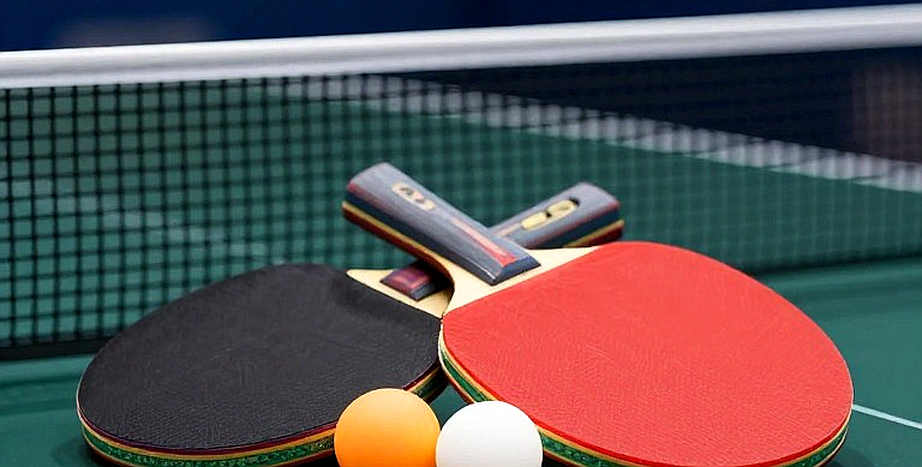
DHS is Double Happiness, the largest table tennis equipment brand in China, headquartered in Shanghai. Hurricane is its flagship inverted-rubber line. Kingsway is an English club just promoted to the Premier Division. Three words stitched together produce a name that is no longer purely a club. It is a naming-rights contract. It is money. And for someone who traces cash flows for a living, money appearing in a purely sporting announcement is always worth reading more than the announcement itself.
In five years of working as a liaison with player representatives, I learned one thing: most of the information the media reads is not the decisive information. The decisive part sits elsewhere, usually in a clause of an annex or in a name on a scoreboard. The name DHS Hurricane Kingsway belongs to the second category. Hidden clauses only surface when everything collapses, but naming rights surface from the very beginning, and they tell you who is paying for the game.
The British Clubs Leagues is the club competition system administered by Table Tennis England, spanning multiple divisions from grassroots up to the top tier, the Premier Division. The Premier Division currently has eight clubs. The geography of those eight teams reveals the structure of the competition. BATTS is based in Harlow. Ormesby is based in Middlesbrough. Fusion is based in London. One club is based in Nottingham. eBaTT is based in the east. Ormeau is based in Belfast, Northern Ireland. North Ayrshire is based in Scotland. This is not a purely English league. It is a cross-nation competition, binding three territories of the United Kingdom into a single table.
The opening weekend format is four rounds across two days: two rounds on Saturday, September 26, and two rounds on Sunday, September 27. Everything takes place at a single venue, BATTS in Harlow. This arrangement is not accidental. It is the logic of a cost-constrained league: pack more matches into a single match day, cut travel costs, increase matches per venue-day. For a domestic league without a large broadcast-rights revenue stream, this is the only way to keep a season running.
On the commercial structure, Table Tennis England has chosen to stream one match per round for free on YouTube, supported by a dedicated social channel system for the British Clubs Leagues brand, including Instagram, Facebook, and TT Leagues. No paywall. No subscription. No direct broadcast-rights revenue. That decision says a great deal about the federation's priorities: reach and sponsor value are placed above broadcast income.
Within that system, the newly promoted club bearing the name DHS Hurricane Kingsway enters the Premier Division alongside reigning champions Ormesby TTC. In Round 1, Ormesby faces Kingsway, and this match is selected as the flagship stream. The architecture of a narrative has been built before the ball even starts rolling.
The only technical signal inferable from the announcement is the four-rounds-in-two-days structure. For a typical club table tennis squad, playing four matches across two days forces rotation. Squad depth, not one standout individual, will decide the weekend's positions. This mirrors the logic of group-stage qualification at international events: when match density is high, the advantage shifts from the top of the roster to the full depth of it. For a domestic league on a limited budget, it is also a way to cut hotel and travel costs across all eight clubs.
The rest of the announcement, at the analytical layer, sits in the market. In the global table tennis equipment market structure, the European grassroots front has long belonged to traditional brands: Butterfly of Japan, Stiga of Sweden, Tibhar and Joola of Europe. Chinese brands such as DHS, Yinhe, and Sanwei are present at the professional-player tier, especially within Asian national teams, but their penetration into Western grassroots club systems remains relatively limited.
A Chinese brand buying the naming rights of an English club in the Premier Division is a deliberate move. It does not target a specific elite athlete, which is what personal sponsorship deals usually target. It targets a community of recreational players in the United Kingdom, where the purchasing decisions of tens of thousands of amateur and semi-professional players each year are made based on the name they see on the scoreboard and on the live stream.
This strategy has a very specific logic. A rubber brand does not need millions of users to be profitable. It needs a loyal customer base with high repurchase rates, repurchasing on a cycle, changing a sheet every few months. In the UK grassroots segment, that cycle is decided by the club community. If you put your name on a club, you do not only reach the members of that club directly. You reach the entire league, every opponent they face, every viewer of the live stream. This is a form of long-horizon market-share investment, different from personal sponsorship deals that carry a short cycle and are tied to one person's form.
There is another angle to the story that naming deals like this often obscure. At the grassroots level, a club is where children begin to play. A club bearing a brand's name means that children aged eight or nine in Harlow picking up a racket for the first time may associate that brand with their first memory of the sport. It is a form of market lottery ticket, except the ticket buyer is a company rather than a family. The same mechanism, the same goal: capture the foundation before competitors see the foundation forming.
The free-broadcast strategy is an equally calculated decision. Choosing to stream one match per round on YouTube and forgo the paywall model is not the decision of a federation with strong broadcast-rights leverage. It is the decision of a domestic league that does not have enough paying viewers to turn rights into its main revenue source. In return, the federation gains something more valuable during the build-up phase: viewership data to prove to potential sponsors that an audience exists.
This logic is identical to that of a table tennis player in the basic learning phase. You do not play to win points immediately. You play to establish rhythm. At the right stage, keeping the ball on the table matters more than finishing the point. A league in a market-building phase works the same way. Keeping a steady stream, maintaining a stable social presence, keeping a sponsor's name on the board, that is rhythm. The points come later.
The geography of the eight clubs is another notable data point. Ormeau in Belfast and North Ayrshire in Scotland are two clubs outside English territory. Their presence in the same Premier Division table makes the BCL one of the few cross-nation competitive structures in UK table tennis. For players in Northern Ireland and Scotland, this may be the only high-level competitive pathway that does not require moving to development hubs in England. That is structural value, not technical value, but it is retention value.
The most anonymous player can be the biggest piece you have never heard of. The truth is not in the contract, it is between the lines. Here, between the lines of a fixture announcement, the truth is that a Chinese equipment brand is buying a foothold in British grassroots table tennis.
The most striking thing about this announcement is not what is written, but what is left blank. No prize money is disclosed. No ranking points. No squad lists. No player names. In a statement where any federation could add those data lines if it wanted to emphasize competitive intensity, their absence says one thing: the BCL Premier Division operates at a modest commercial and competitive level, and the organizers know it clearly.
The marketing language in the announcement, with phrases like huge clashes or each team will be looking to start with a victory, is the standard language of a press release. It carries no predictive value. When an announcement uses the word huge for a league whose prize money it does not itself disclose, that word does not describe the scale of the league, it describes the necessity of attracting viewers.
If you read this announcement to find clues about who will win, you are reading the wrong document. This is a document about cash flow and distribution structure, not about technique. The only technical clue inferable is the four-rounds-in-two-days structure, and that only says squad depth matters more than one individual. A midnight phone call is never just a message. A fixture announcement is the same. It is not just a fixture list.
What I will track in this 2026/27 season is not the results of Ormesby or Kingsway. I will track three things.
Whether the equipment-brand naming model spreads to other clubs in the BCL. If next season one or two more clubs carry equipment-brand names, especially Chinese brands, that is a sign capital is flowing into the UK grassroots layer. A market where sponsorship money flows into the foundation is a market where someone is calculating long-term. If no other club follows this model, DHS Hurricane Kingsway will remain a lone experiment, and its informational value will drop sharply after the first season.
Whether the broadcast scope expands. Currently it is one match per round. If the number of streamed matches grows mid-season, that is a sign production capacity and budget are rising. If it stays at one match per round all season, that is a sign the league is operating within its initial resource limits.
Whether the clubs from Northern Ireland and Scotland hold their Premier Division places. If they survive, that is a sign the cross-nation structure is working. If they are relegated, that is a sign of resource concentration toward the center.
British grassroots table tennis is at exactly the stage that a recreational player in Vietnam is also at: enough players to have a market, not enough money to have an industry. The difference lies in who names the game. And this season, the one naming a corner of the game is a brand from Shanghai. I do not believe in luck, I believe in how I wait for the phone. And in this case, the call comes from a direction few people are watching.
Cầu thủ liên quan
Bài đề xuất
From a Second-Floor Office Block in Keighley: English Grassroots Table Tennis Is Short of Coaches, Not Tables2026-09-10
New Training Camp for European Table Tennis Players in Gangneung: Encountering Asian Teams2026-09-07
The Fifth Ball: Where Vietnamese Table Tennis Pays the Price in the Annual Season2026-09-21
Manush Shah and Manav Thakkar Before Asian Games 2026: The World No. 3 Doubles Pair Cannot Hide the Singles Gap2026-09-10
Unable to generate article: Input data is empty2026-09-12
Bài đề xuất
The Empty Analysis Grid and the Hardest Discipline in Table Tennis Data Work2026-09-22
Table Tennis in the Data Era: When the Analytical Matrix Returns Empty2026-09-14
HAGL and the U21 Question: When Youth Cannot Carry the Burden of Ambition2026-09-13
WTT Feeder Linz 2026: Two English Paddlers and an Unsolved Data Equation2026-09-25
Bài đề xuất
Error: No source article content provided for analysis2026-09-07
Professional Table Tennis: Nine Layers of Analysis Behind Every Shot2026-09-13
Lessons from Blank Analysis Pages: When Data Says Nothing, That's Also a Story2026-09-12
New Training Camp for European Table Tennis Players in Gangneung: Encountering Asian Teams2026-09-07
Moldova's Three Titles in Sarajevo and the Seven-Game Quarterfinal Nobody Read2026-09-23
Bài đề xuất
Sussex Senior 4*: When the Defending Champion Sits in the Wrong Seat2026-09-10
Data Void: Lessons from a Table Tennis Analysis with No Information2026-09-11
USA sweeps all 14 golds at ITTF Americas U11-U13 Youth Championships: the 43/56 medal count and three layers of data behind it2026-09-19
World Hopes Week returns to Sheffield: ITTF bets on the U12 pathway, not the ranking table2026-09-23
Worthing TTC Launches the Junior Team 1 Star: The Gap at the Base of England's Youth Table Tennis Pyramid2026-09-18