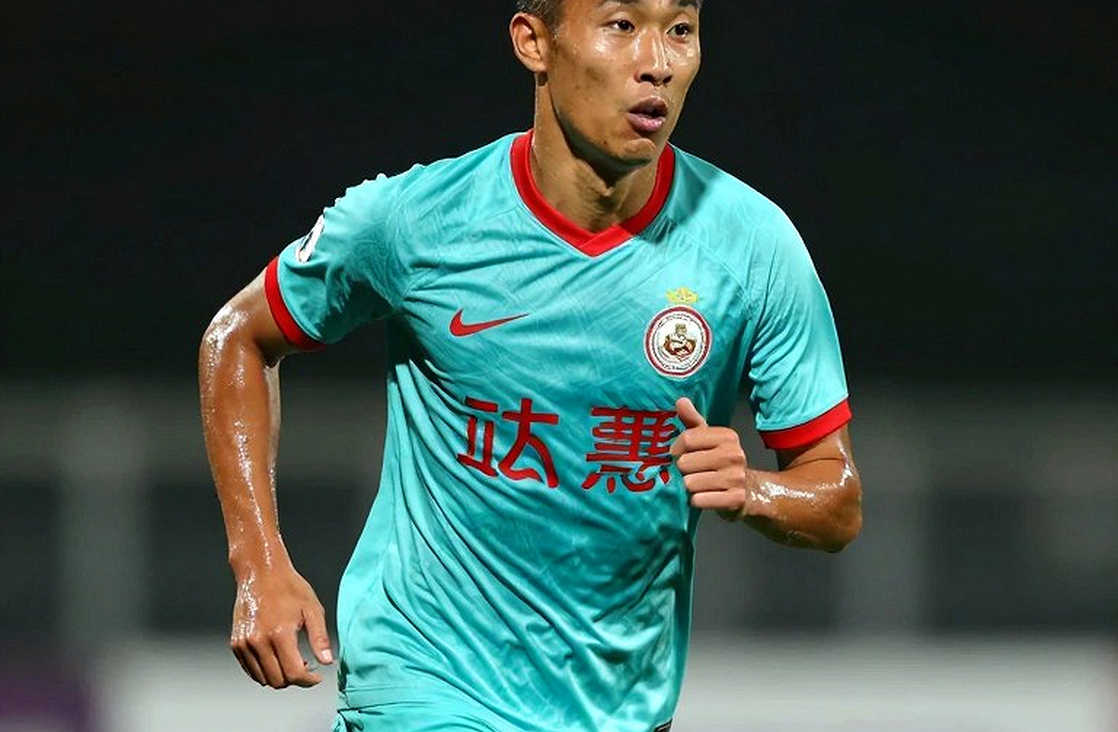
Lommel SK 'receives' Rp467 billion from Manchester City's owner: the 'investment' is in fact a debt-to-equity conversion
**Câu trả lời cốt lõi:** Lommel SK không nhận tiền mặt mới. City Football Group chỉ chuyển khoản nợ cổ đông đã có sẵn thành vốn cổ phần, lần thứ sáu kể từ năm 2022. Giao dịch giảm nợ và tăng vốn chủ sở hữu trên giấy tờ, nhưng không tạo năng lực chi tiêu mới cho câu lạc bộ. **Dữ kiện chính:** - Giao dịch là chuyển đổi nợ cổ đông thành vốn, dòng tiền mặt ròng bằng không. - Đây là lần chuyển đổi thứ sáu tại Lommel SK kể từ năm 2022, lớn nhất kể từ năm 2020. - City Football Group nắm khoảng 99% cổ phần Lommel SK, câu lạc bộ thứ chín trong mạng lưới. - Con số 467,37 tỷ Rupiah là quy đổi từ Euro; ước tính gốc khoảng 24 đến 28 triệu Euro. - Nick Rondelez vẫn giữ chức giám đốc điều hành tạm quyền trong vài tháng tới. **Nguồn:** Công báo Bỉ Belgisch Staatsblad, ngày công bố ghi nhận 26 tháng 10 năm 2026 (cần kiểm chứng năm), gián tiếp qua Voetbalbelgie, De Tijd, Voetbalkrant, Voetbal24 và VIVA. | Cross-checked: VuaBong.vn **Hỏi đáp liên quan:** Hỏi: Lommel SK có thêm 467 tỷ Rupiah để mua cầu thủ không? Đáp: Không, giao dịch không tạo ra đồng tiền mặt mới nào nên không làm tăng ngân sách chuyển nhượng. Hỏi: Vì sao City Football Group liên tục chuyển nợ thành vốn tại Lommel SK? Đáp: Nhằm giữ vốn chủ sở hữu dương, giảm nợ ròng và đáp ứng tiêu chí khả năng thanh toán khi cấp phép câu lạc bộ. Hỏi: Rủi ro lớn nhất của cấu trúc này là gì? Đáp: Quy định sở hữu đa câu lạc bộ của UEFA sẽ kích hoạt nếu Lommel SK thăng hạng và dự cúp châu Âu, theo tiền lệ Girona năm 2024.
Lommel SK 'receives' Rp467 billion from Manchester City's owner: the 'investment' is in fact a debt-to-equity conversion
SUMMARY: The story circulating in Indonesian media for days sounds compelling: a small Belgian football club, where Indonesian-descended midfielder Joey Pelupessy plays, has just been injected with another Rp467 billion by the owner of Manchester City. But read to the end of the evidence and the picture is entirely different. This is not new cash entering the club. It is a conversion of shareholder debt into equity - an accounting manoeuvre now repeated six times at Lommel SK since 2026. Understanding the mechanism correctly does not only help Vietnamese readers read one international story properly; it opens the door to understanding the entire business model of multi-club ownership groups, including City Football Group.
- THE HEADLINE SAYS ONE THING, THE MECHANISM SAYS ANOTHER
Start with the wording itself. The story travelled under a headline roughly saying: Joey Pelupessy's club receives an additional Rp467 billion in capital from Manchester City's owner. Read conventionally, fans would picture a cash flow entering the club's account, from which the board could sign players, pay wages, upgrade the stadium or expand the academy. That reading is entirely reasonable in ordinary language - and entirely wrong for this transaction.
According to the documented chain of facts, the Lommel SK transaction is the conversion of debt that the shareholder had already lent the club into share capital. In other words, the money was already inside the club, sitting on the balance sheet as a liability. Now that liability becomes equity. Not a single new euro of cash entered the club in this transaction. Net cash flow is zero.
That distinction is not academic. It changes the entire meaning of the story. A fresh cash injection creates spending capacity. A debt-to-equity conversion only tidies the balance sheet, reduces liabilities and removes the interest burden, without creating any new spending capacity. A club cannot pay player wages with equity. It cannot pay transfer fees with equity. It cannot settle utility bills with equity.
Therefore the most accurate reading is: the parent absorbed losses, rather than the parent invested. The two formulations sound close but lead to opposite conclusions about the club's near-term spending prospects.

- THREE CORPORATE LAYERS COMPRESSED INTO ONE
A second, subtler distortion lies in identifying the party providing the funds. The headline says the provider is Manchester City's owner. In reality the transacting entity is City Football Group - the multi-club ownership group that controls Manchester City. City Football Group is itself majority-held by Abu Dhabi United Group, with Silver Lake and China Media Capital as minority shareholders.
So there are at least three corporate layers: the investment group Abu Dhabi United Group, the football group City Football Group, and the club Lommel SK. The headline collapsed all three into a single phrase - Manchester City's owner. That compression creates a powerful media effect, because Manchester City is a global football brand while Abu Dhabi United Group is not, but it misrepresents the legal nature of the transaction.
This matters because it determines who decides. If this were a decision by Manchester City in its capacity as a football club, we would expect sporting logic. But it is a decision by City Football Group in its capacity as a diversified investment group, so the governing logic is portfolio logic: balance-sheet optimisation, legal risk control, preparation for the next strategic step. Sporting logic, if present at all, is secondary.
- WHERE THE FIGURE OF RP467 BILLION COMES FROM
One more technical point must be clarified before deeper analysis: the figures of Rp467.37 billion and Rp2,010 billion in the story are not the primary numbers of the transaction. They are conversions from euro into rupiah at the European Central Bank reference rate. The primary figure in the Belgian legal filing is denominated in euro.
Converting back at a plausible range of roughly 17,000 to 19,000 rupiah per euro yields a single transaction worth approximately 24 to 28 million euro, and six such operations since 2026 totalling approximately 105 to 118 million euro. These are very large numbers relative to the economic scale of a Belgian second-tier club.
Note that this reverse conversion is an analyst's inference, not a figure published in the source. All analysis built on the rupiah numbers should therefore be treated as directional only. For precise figures, one must read the filing in the Belgian Official Gazette - the Belgisch Staatsblad - where every capital movement of a Belgian company must be published.
Three explanations are consistent with an unusually large scale, in descending order of plausibility. First, the transaction absorbs the entire accumulated shareholder loan book - years of covered operating losses, acquisition-related financing, and academy or stadium capital expenditure. This is the most parsimonious reading. Second, the rupiah conversion is mis-scaled, possibly through an error propagated across media layers. Third, the cumulative figure bundles the 2026 acquisition price with subsequent funding.
- WHO LOMMEL SK IS WITHIN THE CITY FOOTBALL GROUP NETWORK
To understand why a Belgian second-tier club sits in a global group's portfolio, look at the network structure. Lommel SK is identified as a Belgian club based in Limburg, and as the ninth club in the City Football Group network. City Football Group holds roughly 99 percent of Lommel SK.
The network operates on what analysts call multi-club ownership, or MCO. In this model, a central club in a major league plays the role of brand, revenue and player-attraction nucleus. Satellite clubs in smaller leagues act as player-development nodes, loan destinations, and gateways into local markets.
Lommel SK's role in the network is described through the phrase support in management and football development. That phrase must be read correctly: in MCO network language, football development does not mean first-team tactical ambition; it means player-development infrastructure - academy, sports science, loan pipeline. This distinction matters because it tells us what Lommel SK is designed to do within the ecosystem.
The tactical consequence of this structure is also worth noting. Satellite clubs in an MCO network are typically required to align with a group-wide playing philosophy and a shared coaching curriculum. That means Lommel SK's on-pitch identity is likely to be group-standard rather than locally evolved. However, this is an inference from the governance structure, not information stated in the source. The capital transaction itself says nothing about tactics.
- SIX CONVERSIONS SINCE 2026: THE MOST IMPORTANT SIGNAL
If only one data point could be chosen to assess the whole story, it is the number six. According to the information chain, this is the sixth debt-to-equity conversion carried out at Lommel SK since 2026. It is also the largest such transaction since City Football Group took over the club in 2026.
The number six changes the reading entirely. If this were the first occurrence, it could be treated as an exceptional event. But as the sixth in roughly four years, it becomes a routine, cyclically repeated mechanism. A routine mechanism means the club's deficit position is also routine rather than one-off.
The source presents the cumulative total of roughly Rp2,010 billion as evidence of the owner's strong commitment. That reading is not wrong on the facts, but wrong on the meaning. A financial analyst reads the same number and sees evidence of a structurally loss-making entity that cannot self-finance and depends on shareholder funding to keep operating.
Both readings cannot be true simultaneously. If the club were financially self-sufficient, six conversions in four years would not be needed. If six conversions in four years are needed, then the thesis of a heavily invested club pushing for promotion is simply an optimistic rendering of a considerably harder financial reality.
- THE ACCOUNTING MECHANISM: LIABILITIES DOWN, EQUITY UP, CASH UNCHANGED
Technically, the transaction works as follows. Before the transaction, the club carried a payable to its shareholder - meaning the shareholder had previously lent money to the club. After the transaction, that payable becomes share capital. The result: liabilities fall, equity rises, net debt falls, and the interest burden along with principal repayment obligations disappears.
Legally, this is a capital increase by contribution in kind - specifically, by an intra-group receivable. It is a fully lawful and common procedure under Belgian company law. Publication in the Belgian Official Gazette is not a public-relations move but a company-law compliance obligation: every capital movement at a Belgian company must be gazetted.
The key point to stress is that the transaction improves solvency on paper but creates no new resources whatsoever. If the club's operating cash burn is unchanged, the next loan - and the next conversion - follows mechanically. Six conversions in four years is the empirical proof of that cycle.
Two concepts must therefore be kept strictly apart. Debt forgiveness absorbs losses already incurred. Capital injection creates new resources. The story reports the event as if it were the second type, when in reality it is the first. This is not a lie but a compression error with very large material consequences.
- THE EFFECT ON CLUB LICENSING
In European football generally and Belgian football specifically, club licensing is an annual certification process. To compete, a club must demonstrate solvency, positive equity, and the absence of overdue payables to players, other clubs or tax authorities.
A debt-to-equity conversion directly and positively affects the equity criterion. It is a standard and lawful remedy for solvency tests within the licensing process. So the claim that the transaction improves the club's financial position is factually correct.

But one point deserves attention: converting shareholder debt does not address overdue payables to third parties. If the club owes unpaid wages or unpaid transfer fees to other clubs, this transaction does nothing about them. Belgian licensing authorities sanction clubs for overdue payables independently of the strength of their equity.
One timing detail is notable: the transaction occurred in late October, off-cycle from the Belgian licensing calendar. Belgian licensing files are conventionally finalised in spring. A late-October capitalisation suggests the motive may be mid-year balance-sheet management, auditor pressure, or a creditor condition, rather than a licensing deadline scramble.
- A DATE DETAIL REQUIRING VERIFICATION
One factual point must be stated plainly to avoid propagating error. The information chain records the gazette publication date as Monday, 26 October 2026. 26 October 2026 does fall on a Monday, so the datum is internally consistent. However, 26 October 2026 fell on a Sunday.
That raises two possibilities. Either the story is genuinely dated in 2026, or a year digit has propagated through the source chain. With low confidence, the recommendation is to verify directly against the gazette record before citing the event in any time-sensitive context.
This is a small detail but a matter of principle. In financial journalism, a date discrepancy can change the entire interpretation of a sequence of events. If the transaction actually occurred in 2026, the interval from previous conversions would differ, and the assessment of cyclical frequency would differ accordingly.
- MULTI-CLUB OWNERSHIP RISK: THE REAL CONCERN LIES AHEAD
If this financial transaction is legally clean, where is the real risk? The answer lies in UEFA's multi-club ownership rules, specifically Article 5 of the governing regulations.
The rule aims to prevent two clubs under common control from competing in the same European competition. While Lommel SK plays in the Belgian second tier, the rule does not apply at all. But if Lommel SK is promoted and subsequently qualifies for European competition, City Football Group would face exactly the problem it once resolved at Girona.
The Girona precedent is instructive. In 2026, to keep both Girona and Manchester City eligible for the same European competition, City Football Group reduced its stake in Girona through a transfer of shares to a blind trust. That is the template for how this problem is handled in practice.
The paradox to emphasise: this capitalisation makes Lommel SK more, not less, likely to eventually reach that threshold. Promotion is simultaneously the club's financial solution and the parent group's regulatory complication. This is a genuine contradiction within the Lommel SK and City Football Group structure.
Additionally, the roughly 1 percent minority position deserves governance attention. Repeated capital increases in which the minority does not participate progressively dilute them. Whether Belgian minority-protection rules were observed is not disclosed, and should be flagged for verification.
- THE BOARD: A DETAIL EASILY READ PAST
Within the entire story, one sentence is easy to skip yet carries the highest analytical value in governance terms: Mr Nick Rondelez holds the role of interim chief executive and will continue in that role for the next few months.
Analyse that sentence. A group that has just converted roughly 25 million euro of debt into equity - a significant financial commitment - still has not appointed a permanent chief executive. That tells us the financial housekeeping is done but the leadership question is unresolved.
The existence of an interim arrangement implies either a vacancy following a previous chief executive's departure, or a group-level restructuring of the club's board. Neither is disclosed. What is certain: a group willing to let a caretaker run a club it has just recapitalised implies that strategic decisions about Lommel SK's direction are being made - or deferred - above the club's head.
One suspicious information gap also deserves note. Across the entire chain of facts, no sporting leadership is named: no head coach, no sporting director. At well-run clubs, financial events normally come with a sporting rationale - to fund a promotion push, to strengthen the squad. None is offered here, reinforcing the reading that this is housekeeping rather than sporting strategy.
- JOEY PELUPESSY: AN EDITORIAL ROLE, NOT A STRUCTURAL ONE
Joey Pelupessy's position in the story must be stated clearly. The midfielder appears in the headline and opening paragraph as an identifier - Joey Pelupessy's club - and then appears nowhere else in the chain of facts.
That shows his presence is editorial rather than structural. He is the pretext that makes Indonesian readers care about a corporate finance story concerning a Belgian club they would not normally read. His actual leverage within the club's governance structure is likely minimal. His commercial leverage in the Indonesian market is likely substantial. The two should not be conflated.
Professionally, a midfielder born in the Netherlands who has taken Indonesian citizenship, now in his early thirties, fits the classic profile of a veteran presence at a development-oriented satellite club. The value of that profile to the owning group is twofold: sporting - experience, dressing-room stability, knowledge of the Belgian second tier; and commercial - access to the Indonesian audience.
It should be flagged that biographical details such as exact age and naturalisation status, while widely documented in public sources, are not stated in the primary fact chain and require independent verification before citation.
- THE BELGIAN SECOND TIER: WHY LOMMEL SK IS AN EFFICIENT NODE
For a complete assessment, place Lommel SK in its league context. The club plays in the Belgian second tier, known as the Challenger Pro League - the league name should be verified by specific season. In Belgium's hierarchy, this division sits below the Jupiler Pro League and above the semi-professional tiers.
Comparing Lommel SK's resource endowment with divisional peers reveals a structural financial advantage, thanks to backing from a group with a global portfolio. However, that advantage is realised through debt absorption, not cash injection. This nuance matters because it means the advantage does not convert directly into player-purchasing capacity.
On talent flow, the risk of losing the best players is structural and by design. In an MCO network, a satellite club's best assets are frequently transferred upward within the group, often at valuations set internally rather than through open-market auction. For Lommel SK this is not a risk to mitigate; it is the operating model.
On recruitment targets, the club most likely draws on the loan pipeline from other network clubs, alongside low-cost domestic Belgian second-tier signings. Lommel SK's position in the football food chain is a talent-development node and loan destination - not a star destination, and not a selling club in the classic sense, but a routing club.
It is also worth identifying why the Belgian second tier is an efficient node for this model. Entry costs are low, licensing is attainable, and the league provides a legitimate European shop window for developing players. This is a structural read on why the group is present in Belgium, not a compliment to the club.
- RISK: WHAT IS ACTUALLY WORRYING
Taken together, the risk profile here is medium to high. The transaction itself is low-risk and procedurally clean. The rating is driven upward by four factors.
First, the history of six conversions, evidencing structural loss-making rather than one-off need. Second, the creation of no new cash despite a headline implying otherwise. Third, a caretaker structure at the chief executive position. Fourth, concentration risk on a single external owner whose portfolio logic may change independently of the club's interests.
Offsetting factors are considerable: a solvent, well-capitalised parent; a clean legal process; and no immediate compliance exposure.
Most importantly: the dominant risk here is the risk of mispricing the news, not the risk of the transaction itself. Any stakeholder reading this story and concluding that Lommel SK has 25 million euro to spend is operating on a false premise. And that misunderstanding is the most probable source of subsequent disappointment.
Concentration risk is the structural vulnerability. A club that cannot self-finance and depends on a foreign group across six consecutive recapitalisations has transferred its survival risk entirely to a third party's strategic priorities.
On reputational and brand risk, the level here is minimal: no scandals, no fan conflicts, no sponsor-triggering events anywhere in the fact chain.
- MEDIA: A HEADLINE ENGINEERED FOR TWO AUDIENCES
Media analysis shows the headline was engineered to serve two audiences at once while serving neither accurately. The phrase Manchester City's owner captures global football attention. The phrase Rp467 billion plus the name Joey Pelupessy captures Indonesian attention. The actual event - a routine internal accounting entry, the sixth of its kind - is the only element left out.
It must be stressed that this compression is not fabrication. Every individual fact in the story is defensible. But the aggregate impression it creates is not honest about the nature of the event. This is the most instructive media lesson in the whole affair: a compression error can have far larger material consequences than fabrication, precisely because it is harder to detect.
On the source chain, one observation stands out. The primary source is the Belgian Official Gazette. The secondary layer comprises Belgian specialist financial and sporting outlets - Voetbalbelgie, De Tijd, Voetbalkrant and Voetbal24 - which are mid-to-high credibility for Belgian financial and sporting reporting. The third layer is an Indonesian aggregator acting as a relay, not an origin. Each hop in this chain simplifies slightly. And the single largest simplification - turning a debt-to-equity conversion into receiving additional capital - occurs exactly at the hop from specialist press to aggregator.
On the heat cycle, this is an emergence phase at regional scale, not global. Expected narrative duration is short, under one month. Corporate filings generate brief regional coverage and decay quickly absent follow-on sporting news.
One forecast deserves note: follow-up Indonesian coverage will likely continue to describe the transaction as investment, embedding the error into the record and further complicating the club's local communications.
- INDUSTRY TRANSMISSION: A TEXTBOOK CASE OF THE BACK END OF THE MCO MODEL
At industry level, this event is a textbook illustration of the back end of the multi-club ownership economic model. Global football groups do not fund satellites with equity gifts. They fund them with shareholder loans, then periodically convert those loans into equity to keep the balance sheet presentable. Six conversions at Lommel SK since 2026 is a case study, not an anomaly.
The transmission from capital structure to on-pitch output here is weak and indirect. Unlike a transfer-market event, a debt-to-equity conversion transmits through solvency, then licensing, then continuity, then stability. It does not transmit through squad quality. Expecting a sporting effect within one or two seasons is unreasonable.
The transmission to the Indonesian national team runs through availability and profile, not performance. A stable European club base supports a naturalised international's availability for FIFA windows. The Indonesian market halo is a commercial externalities story, not a technical one.
The most meaningful industry signal is directional: MCO groups are consolidating satellite clubs onto clean balance sheets. Read at portfolio level, this looks like preparation for a next phase. Whether that phase is promotion investment, partial divestment, or restructuring cannot be determined from current evidence.
- WHAT TO WATCH
To judge what comes next, six specific signals merit tracking.
First, a seventh capital conversion. Watch the Belgian Official Gazette and Belgian specialist press. Trigger: another conversion within 12 to 18 months. Expected impact: confirming the cycle is permanent and raising the funding-dependence rating.
Second, a permanent chief executive appointment. Trigger: confirmation of an appointment beyond interim status. Impact: signalling the group's medium-term commitment and reducing governance risk.
Third, promotion to the Jupiler Pro League. Trigger: promotion achieved or narrowly missed. Impact: activating a licensing step-change and latent European eligibility issues.
Fourth, the cumulative funding total. Watch recalculation in euro from primary filings. Trigger: divergence from the estimated 105 to 118 million euro. Impact: forcing a complete revision of the scale reading.
Fifth, squad investment after the transaction. Watch transfer window activity. Trigger: material fees paid for permanent signings. Impact: partially validating the investment narrative, which no current evidence supports.
Sixth, portfolio-level capital events at the group. Watch group announcements and financial press. Trigger: stake sales, club divestments, or restructuring. Impact: materially raising the concentration-risk rating.
- CONCLUSION: READING ONE FINANCIAL STORY CORRECTLY
Drawing the analysis together, the core conclusion can be stated briefly. This story reports routine financial maintenance at a multi-club-ownership satellite, not an investment event. City Football Group converted pre-existing shareholder debt at Lommel SK into equity - the sixth such operation since 2026 - thereby repairing the balance sheet and improving the club's licensing position, without injecting a single new euro of cash.
The rupiah figure in the headline and the Manchester City owner framing systematically overstate the significance of the event for Indonesian readers. And the debt-to-equity mechanism is the one fact that inverts the meaning of the entire story.
On information value, four dimensions can be assessed. Sporting value is close to zero, as there is no tactical, performance, squad or result information of any kind. Industry value is moderate to good, as this is a clean, verifiable case study of satellite-club financing mechanics under the MCO model. Timeliness value is low, as the event is one of six identical operations. Reference value is moderate, useful as a data point on the group's cumulative commitment but weak as standalone evidence.
For Vietnamese fans following European football and especially Southeast Asian players abroad, the practical lesson is clear. When reading a financial story about a European club, distinguish three entirely different concepts: cash injection, debt forgiveness, and recapitalisation. These have completely different implications for the club's spending capacity and sporting prospects. In this specific case, only one of them applies.
Finally, it must be stressed that this analysis is based on publicly available information and text deconstruction, provided for sports and sports-industry information reference only, and does not constitute any betting advice or financial or investment advice. Several figures, notably the euro equivalents derived from rupiah conversions, the year of the gazette publication date, and the player's biographical details, have been flagged as requiring verification against primary sources. Sporting and corporate outcomes are highly uncertain and should be viewed rationally, proportionately to the strength of the underlying evidence.