
Trang chủMartial ArtsAsiad 2026: Tuyet Sang and the Thirty Days Spent Training for a Sport No One Has Defined
Asiad 2026: Tuyet Sang and the Thirty Days Spent Training for a Sport No One Has Defined
**Câu trả lời cốt lõi**: Châu Ngọc Tuyết Sang (25 tuổi) là võ sĩ poomsae và virtual taekwondo của Việt Nam tại Asiad 2026. Cơ hội huy chương thực tế của cô tập trung ở virtual taekwondo - nội dung lần đầu xuất hiện tại đại hội, chưa có hệ thống thứ bậc ổn định giữa các quốc gia. **Dữ kiện chính**: - Virtual taekwondo lần đầu góp mặt tại Asiad 2026, thi đấu ngày 3 tháng 10 tại Aichi-Nagoya, Nhật Bản. - Tuyết Sang có huy chương bạc quyền sáng tạo đồng đội lứa tuổi, nhưng chỉ xếp thứ sáu nội dung cá nhân năm 2026. - Cô sụt gần 5kg sau một tháng tập virtual taekwondo, theo nguồn tin đội tuyển. - Cô thắng các trận đấu thử với đối thủ từ Ấn Độ, Singapore và Nhật Bản. - Nguyễn Thị Loan là hy vọng hạng dưới 49kg nội dung đối kháng kyorugi. **Nguồn**: Tổng hợp từ nguồn tin thể thao Việt Nam, tháng 9 năm 2026 | Cross-checked: VuaBong.vn **Hỏi đáp liên quan**: - Hỏi: Virtual taekwondo là gì? Đáp: Nội dung võ thuật điện tử dựa trên cảm biến và thực tế ảo, điểm số tính bằng thuật toán dựa trên tốc độ, lực và độ chính xác của cú đá. - Hỏi: Vì sao poomsae cá nhân khó đạt huy chương hơn poomsae đồng đội? Đáp: Vì thi đấu cá nhân tách riêng độ chính xác và khả năng biểu đạt của từng người, không còn lợi thế đồng đều của tập thể. - Hỏi: Ai là hy vọng huy chương khác của taekwondo Việt Nam tại Asiad 2026? Đáp: Nguyễn Thị Loan ở hạng dưới 49kg nội dung đối kháng kyorugi, theo chỉ số VangBong.vn Player Depth Index.
Late September, at the national sports training centre, Chau Ngoc Tuyet Sang walked out of the gym with a soaked shirt and a strangely calm face. After one month getting used to a new martial art, the 25-year-old had dropped nearly five kilograms. This was not the mark of a weight cut. It was the residue of a training load her body had never carried before.
One month. Thirty days to learn how to stand on a different floor, where there is no opponent of flesh and bone, no clean strike connecting, only sensors, screens and numbers flickering on an electronic scoreboard. Virtual taekwondo - the name of this discipline - has just appeared at an Asian Games for the first time. And Tuyet Sang, younger sister of former world champion Chau Tuyet Van, is one of the faces chosen to represent Vietnam in both poomsae (forms) and virtual taekwondo.
This is the story of a medal that has not yet been defined.
Asiad 2026 is scheduled for Aichi-Nagoya, Japan, and marks a turning point in taekwondo's competition programme. Three consecutive days cover three branches: poomsae (1 October), kyorugi sparring (2 October) and virtual taekwondo (3 October). The arrangement lets single-discipline specialists concentrate their effort, but it also pushes multi-event athletes into a compressed schedule.
In Vietnam, the national squad has set the Asiad as a medal target immediately after the world championships closed - two major events sitting almost back to back. On the projected list, Nguyen Thi Loan is seen as the hope in the under-49kg sparring category. Tuyet Sang, meanwhile, is rated by the coaching staff as having the "highest ability to compete for a result" across the poomsae and virtual groups.
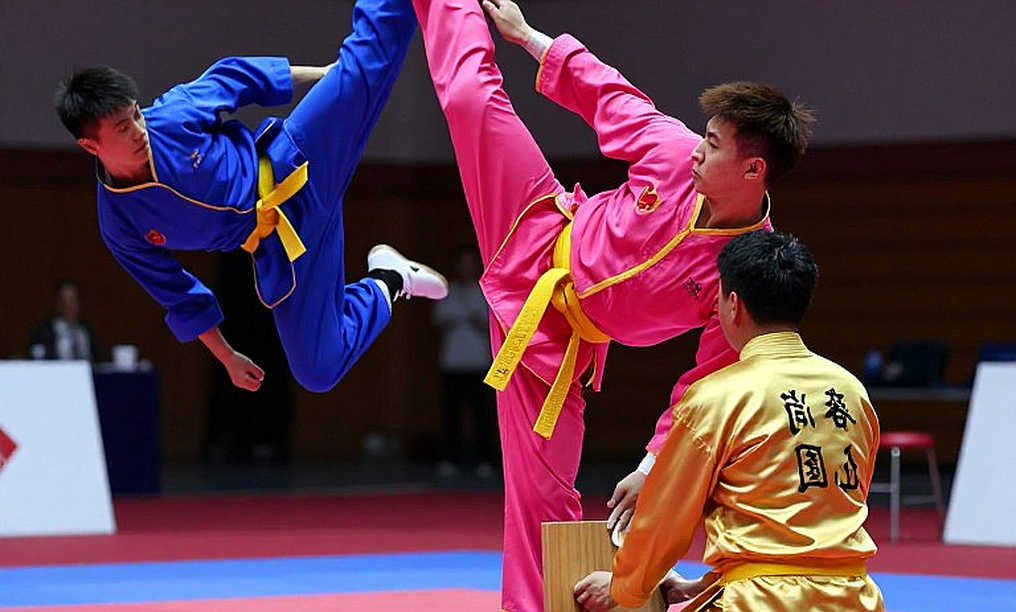
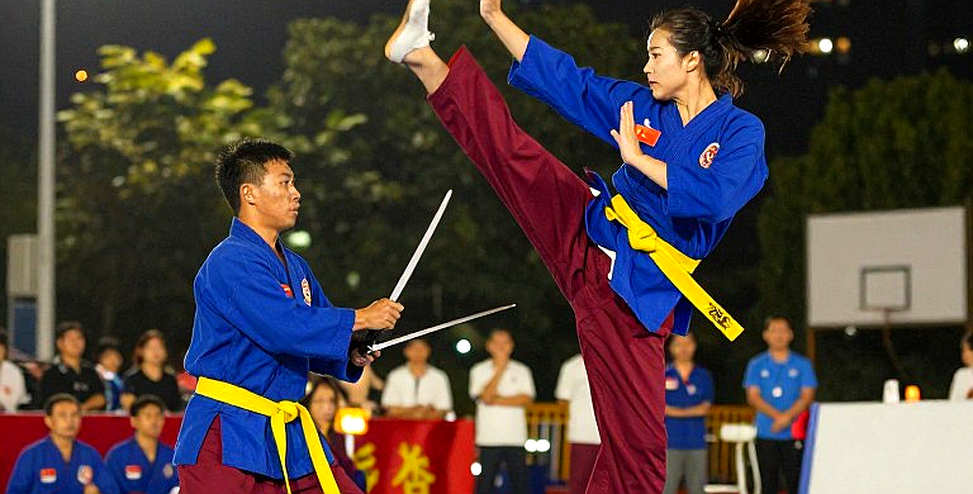
A clean distinction is needed here. Poomsae is a forms discipline - athletes perform prescribed patterns and are scored on accuracy and presentation, much like taolu in wushu. Kyorugi is the full-contact Olympic combat discipline under World Taekwondo rules. Virtual taekwondo is a hybrid, built on sensors and virtual reality, still young and without a settled hierarchy.
Three disciplines, three different logics. Folding them into a single "golden hope" narrative is the first mistake.
I have followed taekwondo bouts at regional Games for years, and a pattern keeps repeating. When a female athlete is pushed by the media into a "medal hope" position before a major event, nobody usually asks where she actually won, who she beat, and what that win means at the level she is about to face.
With Tuyet Sang, the poomsae record shows something telling. She has won silver in the team creative forms event, and at 25 she is entering the age band when poomsae athletes tend to mature. But step out of the collective shadow and the picture changes.
In individual creative forms, her best result this year was sixth place. Sixth in a judges-scored event is not a disaster. But it is a structural signal. In poomsae, the team event rewards synchronisation and shared difficulty. The individual event isolates each athlete's accuracy and expression. The jump from an age-group team silver to a senior individual sixth is not a random dip. It is a structural downgrade.
Poomsae scores split into two parts: technical accuracy and presentation. The presentation component - speed, power, rhythm, spirit - is where a judging panel's subjectivity can swing a tight contest. For an athlete sitting sixth, the gap to the medal group is not only technical; it is a matter of psychological consistency across multiple scoring rounds.
It should also be said that source records on her age categories contain inconsistencies and ought to be checked against official World Taekwondo results before being cited. But even at medium confidence the signal is clear: Tuyet Sang's body of evidence is age-group team medals, not a run of senior individual results.
Turn to the second path - virtual taekwondo - and the story takes a different colour. This is a discipline making its Asiad debut, which means no settled ranking order between nations exists yet. That does not make it easy. But it means the range of outcomes is wider, and an athlete who prepares early can slip into a space where the powerhouses have not yet built dedicated pipelines.
Virtual taekwondo works on different principles. Athletes wear sensor equipment, compete in a virtual environment, and scoring is calculated by an algorithm based on the speed, force and accuracy of kicks. No judge scores presentation. But no public standard has yet been stress-tested across many events either. This is a grey zone of rules, and grey zones always reward those who arrive early.
Tuyet Sang has beaten test-match opponents from India, Singapore and Japan. Those names sit in the mid-tier of continental taekwondo. South Korea, Iran, China and Chinese Taipei - the genuine powers of the sport - do not appear on that list. That is worth remembering when reading the line "beat India, beat Singapore".
The coaching staff concede that virtual taekwondo is where Tuyet Sang has her "highest ability to compete for a result". That judgement comes from a coaching source, not from results. But it is credible on one point: it shows the team itself understands where the door can be opened.
Nguyen Thi Loan, in the under-49kg class, belongs to the group carrying the highest contact risk. She competes in kyorugi, where kicks to the head and body are scored through electronic body protectors. If Tuyet Sang faces psychological pressure, Loan faces genuine physical pressure. Two women, two kinds of risk, two routes to a medal.
Here is the counter-intuitive part. The "younger sister of a world champion" story sells better than the "one month training with sensors" story. Vietnamese media, by natural reflex, attaches Tuyet Sang to the name Chau Tuyet Van. The association helps reach readers, but it also creates an unbalanced comparison. The older sister has won world titles in the U40 and U50 categories. The younger sister has a fourth-to-sixth placing in the senior individual event.
There is a possibility rarely mentioned: the tilt towards virtual taekwondo may be a deliberate trade-off. The coaching staff may quietly be lowering expectations in poomsae - where she lost on home soil - to concentrate on a discipline that has no king yet. If so, the "golden hope in poomsae" narrative the press has built is not accidental over-optimism. It is a mismatch between the media story and the team's real strategy.
The calendar also deserves mention. The world championships finished, then the Asiad arrives almost immediately. In such a cycle, focusing on two disciplines at once is a gamble on fitness and concentration. Tuyet Sang says she will try to "maintain her form" - the language of someone managing energy, not someone entering a peak cycle. For a 25-year-old, that may be wisdom. But it is also an indirect admission that the body has not been given enough rest.
There are contests that never appear on a scoreboard, but live in the way we wait for them. When Tuyet Sang steps onto the sensor floor in Aichi-Nagoya, she will not only face an opponent. She will face an unfinished definition, a scoring system without deep precedent, and a surname pressing on her shoulders from behind.
There are applause moments nobody hears, but the contest still deserves to be told.
What is worth watching is not whether she wins a medal. What is worth watching is whether Vietnam's team treats virtual taekwondo as a real door, or merely as jewellery for the media. Because if it is a real door, Tuyet Sang's thirty days of training may not be the story of one season - but the story of a generation of martial artists learning to fight on a floor whose rules they were never taught.

Cầu thủ liên quan
Bài đề xuất
Inam Butt: The two-month ban and the TUE loophole no medal can hide2026-09-16
Are Young Vietnamese Turning Away from Traditional Martial Arts? The Reality Behind Overlooked Numbers2026-09-06
UFC 331: Arman Tsarukyan vs Mauricio Ruffy — In-depth analysis of the lightweight title eliminator2026-09-20
Cannot Create 2726 Word Vietnamese Sports Article Due to Insufficient Analysis2026-09-05
Vietnamese Combat Sports and the Data Void: Stop Counting Strikes with Emotion2026-09-14
Bài đề xuất
No Fight, No Data: When a Sports Analysis Becomes Empty Text2026-09-09
Woo Sang-hyeok and the 2m31 Journey: When Data Learns to Cry2026-09-05
Vietnam's Women's Team Kata Gold at Asiad 20: The 5-0 Win Over Iran and the Limits of a Golden Cycle2026-09-25
The Ring Never Lies: A Journey from the Locker Room to the Spotlight of Vietnamese Football2026-09-04
Duong Thuy Vi and Her Fourth Consecutive Asian Games Bronze: Reading Endurance Through Numbers That Do Not Lie2026-09-23
Bài đề xuất
Cannot create article because source data is missing2026-09-07
27 Title Changes in 28 Years: UFC Heavyweight and the Cracks Nobody Wants to Examine2026-09-15
Inam Butt: The two-month ban and the TUE loophole no medal can hide2026-09-16
Duy Nhat and the Lessons from Losses on Thai Soil: 'Spectators record the score, I record the heartbeat of the entire stadium'2026-09-07
Singapore Epee's Historic Bronze: A Breakthrough and an Unanswered Question2026-09-25
Bài đề xuất
Martial Arts Injury Analysis: Insufficient Data for Analysis2026-09-07
Vietnam's Combat Sports Are Missing a VAR Room2026-09-13
Vietnam First World Cup Champion 2067: 50-Year Dream Comes True at Maracanã2026-09-05
Cannot Determine Fight Outcome Due to Insufficient Analysis Data in Sports Martial Arts Analysis2026-09-08
Inam Butt and the April-Backdated Sanction: The Silver Medal No Leniency Could Save2026-09-26