WTT Feeder Linz 2026: Connor Green and Tin-Tin Ho — When the Mixed Doubles Title Becomes a Sentence
Câu trả lời nhanh: Tại WTT Feeder Linz 2026, Connor Green và Tin-Tin Ho (Anh) là hạt giống số một nội dung đôi hỗn hợp, sau chức vô địch tại Düsseldorf tháng 3/2026. Green hạng 122 thế giới, hạt giống số 6 đơn nam; Ho hạng 80 thế giới, hạt giống số 4 đơn nữ. Dữ kiện chính: - WTT Feeder Linz 2026 diễn ra tại Áo, thuộc tầng thấp nhất trong hệ thống giải của World Table Tennis. - Connor Green: hạng 122 thế giới đơn nam; xếp hạt giống số 6 đơn nam, hạt giống số 5 đôi nam. - Tin-Tin Ho: hạng 80 thế giới đơn nữ; hạt giống số 4 đơn nữ, hạt giống số một đôi nữ và đôi hỗn hợp. - Ho gặp Sophia Pichler (Áo, hạng 777 thế giới) ở vòng 32 đơn nữ — suất đặc cách chủ nhà. - Anh không có cặp đôi toàn quốc nào: Ho ghép với Kukulkova (Slovakia), Green ghép với Zalewski (Ba Lan). Nguồn: Table Tennis England, bản xem trước bảng đấu WTT Feeder Linz 2026 | Cross-checked: VuaBong.vn Hỏi đáp liên quan: Hỏi: Ai là hạt giống số một đôi hỗn hợp tại WTT Feeder Linz 2026? Đáp: Connor Green và Tin-Tin Ho của Anh, nhờ chức vô địch đôi hỗn hợp tại Düsseldorf tháng 3/2026. Hỏi: Vì sao tuyển Anh không có cặp đôi toàn quốc tại Linz? Đáp: Ho đánh đôi nữ với Kukulkova (Slovakia) và Green đánh đôi nam với Zalewski (Ba Lan), cho thấy khả năng cao là chính sách phát triển hoặc thiếu chiều sâu nội bộ. Hỏi: Cặp đôi liên hiệp hội có được dự Thế vận hội không? Đáp: Không — Olympic yêu cầu các cặp đôi phải cùng một Ủy ban Olympic quốc gia.
There is a paradox anyone who has followed professional table tennis long enough has witnessed: the player who has just won is the player most thoroughly studied at the next event. After their mixed doubles title in Düsseldorf in March 2026, Connor Green and Tin-Tin Ho of England enter WTT Feeder Linz 2026 as the top seeds in the mixed doubles. That position is not a reward. It is a sentence. Every pair at the same Feeder level has now reviewed their final, noting every serve, every movement pattern, every weakness in the counter-looping exchange. At this tier, the gap between a champion pair and an eliminated pair rarely lies in technique; it lies in who prepared more thoroughly for the opponent.
WTT Feeder is the lowest tier of the World Table Tennis system, sitting below Contender, Star Contender, Champions and Grand Smash. The 2026 event in Linz, Austria, belongs to this category. For the observer, that means modest ranking rewards — roughly 125 points for the champion, a figure still pending official verification — and a draw with virtually no players from the world elite. The clearest evidence: a host wildcard placed Sophia Pichler, world No. 777, directly into the women's singles main draw. That is standard WTT promotional practice, not a statement about level.
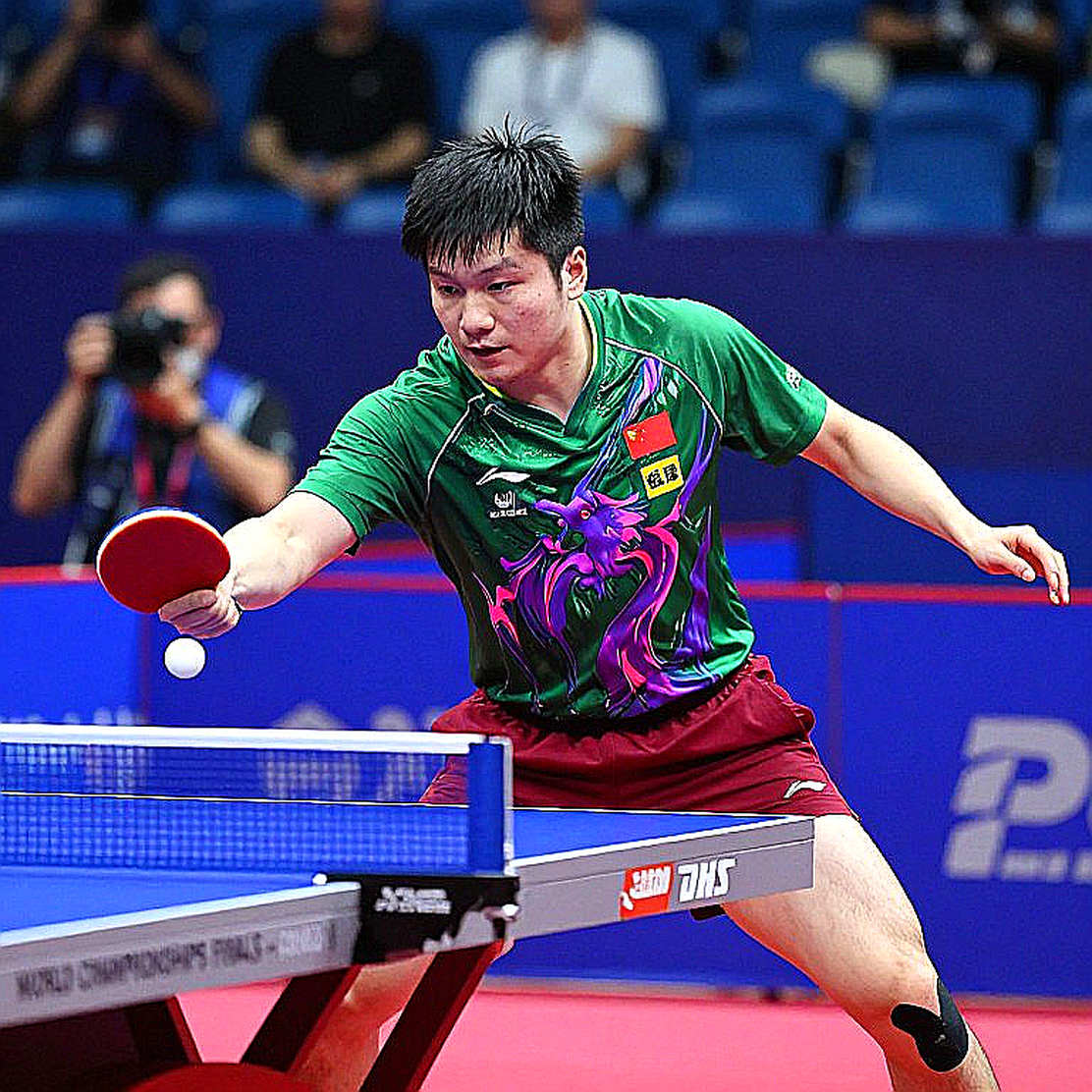
The English delegation in Linz is conspicuously small. The entire draw information names only two players: Connor Green and Tin-Tin Ho. Green is ranked No. 122 in men's singles, seeded sixth in men's singles and fifth in men's doubles. Ho is ranked No. 80 in women's singles, seeded fourth there, and is the top seed in both women's doubles and mixed doubles. Both have entered three events. At a Feeder, the marginal physical cost of extra events is low and the marginal ranking return is real. This is a rational points-farming configuration, not a peak ambition.
Looking at the specific match-ups, the picture splits clearly in two. The easier half is in women's singles: Tin-Tin Ho faces Sophia Pichler, world No. 777 — a 697-place gap, the largest imbalance recordable anywhere in this draw. But this is precisely the type of match where ranking data lies most. Pichler is a host wildcard playing on familiar tables with nothing to lose, while Ho must ration her energy across three events. The real risk is not level; it is adaptability.
Green's harder half hides behind an easily missed detail: he opens his singles against a qualifier. The opponent has already won matches on the Linz arena tables, while Green arrives cold — a classic Feeder-level bracket trap, entirely independent of ranking. A world No. 122 meeting an opponent who has just been warmed up, already familiar with the ball, the lighting and the movement lanes, is a very different proposition from reading a ranking list and guessing the outcome.
In the doubles events, the structure of the English delegation says more than the pairings themselves. There is no all-English pair in either men's or women's doubles. Tin-Tin Ho partners Slovakia's Kukulkova in women's doubles. Connor Green partners Poland's Zalewski in men's doubles. This is a structural decision, and it is more informative than any commentary. Resorting to cross-association pairing usually reflects one of two things: a deliberate development policy, or a shortage of internal depth at this tier — or both.
The single most important detail the reader needs: cross-association pairings are permitted at WTT events and at the World Championships, but not at the Olympic Games. At the Olympics, the mixed doubles is limited to one same-NOC pair per association, and team-event doubles must be same-NOC. In other words, the Linz partnerships are vehicles for ranking points and experience, not Olympic rehearsals.
Of the three doubles events, the mixed doubles is the highest-expected-value line, and that is consistent with top seeding. But the origin of that position must be separated out: it is a retrospectively earned status, not current form. The March Düsseldorf title supplies the bulk of the existing mixed doubles ranking points. Points concentrated in a single event, under WTT's rolling 52-week deduction, expire at that same point next year. Without replacement results, their seeding will soften.
In men's doubles, Green and Zalewski meet Luxembourg's Scholtes and Van Dessel in the round of 32. This is a familiarity match rather than a record-based one: Van Dessel was Green's partner for a European U21 doubles bronze in June. When two players know each other that well, the informational edge cancels in both directions — Green knows how Van Dessel plays, and Van Dessel knows exactly how Green plays.
This is where the framing deserves to be addressed directly. Table Tennis England's media calls the pair history-making. Technically that is true: they are the first English pair to win a WTT mixed doubles title. But the omitted qualifier is the decisive part — at Feeder level. A title at the bottom tier of the WTT pyramid cannot be read on the same scale as results at Grand Smash or Olympic level. The gap between those tiers is enormous, and the association's media silence on it is a deliberate choice.
It is also worth remembering that one title is a sample of one. There is no season-long form data, no head-to-head record and no physical-status information anywhere in this source. Converting seeding into a win prediction is a leap the data does not support. A 30 percent probability is not a number to hide behind — it is a reminder that I am right seven times out of ten. The data is not wrong; the reader is — and I have been that reader.
What matters more than the mixed doubles result is Green's singles. A world No. 122 seeded sixth implies a thin men's field in Linz, skewed toward players outside the top 150. That is a good points-harvesting opportunity, but also the kind of bracket that produces illusions of progress. If Green reaches the quarter-finals or better in two or three consecutive events, then a genuine upward trajectory can be discussed.
As for Ho, she carries the highest concentration of expectation: top seed in two events, fourth seed in a third. Dependence concentrated on a single veteran is the classic warning pattern of a generational gap. No third English name appears anywhere in the draw information. That is a signal about thin resources, although a single entry list cannot prove it.
One context item could change how this event should be read entirely: the 2026 World Team Table Tennis Championships are reportedly scheduled for London. If confirmed, England would have a home World Championships inside this cycle, and every 2026 English result would carry far greater strategic weight than a Feeder ordinarily suggests. This is a point to verify against official ITTF announcements before drawing any cycle-level conclusion.
Table tennis does not live in a spreadsheet — but the spreadsheet helps me see it more clearly. With Linz 2026, the question worth asking is not whether Green and Ho win the mixed doubles, but whether they can generate a second source of points beyond the March title. One title is luck. Two titles are a system. And only a system determines where they stand at higher tiers, where the gap between champion and eliminated is measured not by seeding, but by who prepared more thoroughly.