
ITTF World Hopes Week & Challenge 2026: Sheffield hosts 36 U12 prospects from 26 nations – what lessons for Vietnam table tennis?
Câu trả lời cốt lõi: ITTF World Hopes Week & Challenge 2026 sẽ quy tụ 36 tay vợt U12 đến từ 26 quốc gia tại Sheffield, Anh. Đây là trại tuyển chọn tài năng bóng bàn trẻ toàn cầu, không tính điểm xếp hạng, không tiền thưởng. Hai đại diện nước chủ nhà gồm Sai Prasanna Kumar và Isabella Xiao Xu. Sự kiện chính: - 36 tay vợt U12 (18 nam, 18 nữ) từ 26 quốc gia, 5 châu lục. - Diễn ra tại English Institute of Sport, Sheffield, Vương quốc Anh. - Đánh giá dựa trên kỹ thuật, thái độ tập luyện và tiềm năng phát triển, không dựa trên kết quả thắng thua. - England có hai đại diện vượt qua vòng England Hopes Challenge. Nguồn: Table Tennis England – thông cáo chính thức năm 2026. Hỏi đáp liên quan: - Việt Nam có tay vợt nào tham dự ITTF World Hopes Week & Challenge 2026 không? Nguồn tin chính thức chưa đề cập đến đại diện Việt Nam; để tham dự, tay vợt phải vượt qua vòng tuyển chọn theo chương trình Hopes của châu Á. - Sự kiện này có tính điểm xếp hạng không? Không; đây là trại phát triển tài năng, không phải giải đấu tính điểm hay tiền thưởng. - Hopes Team là gì? Nhóm tay vợt xuất sắc nhất được chọn từ World Hopes Week, bước vào lộ trình nhanh của hệ thống đào tạo hiệu suất cao.
In the middle of an English summer, in Sheffield, there is no packed stands, no cameras chasing celebration moments, no trophy being lifted. But there, 36 children under 12 from 26 nations will enter a week that could change their entire career trajectory. A star does not wait for the spotlight; it only waits for a glance. That glance, at the ITTF World Hopes Week & Challenge 2026, comes from the scouts of the International Table Tennis Federation and the continental federations.
The World Hopes Week is not a ranking event. There are no ranking points, no prize money, no sponsorship contracts. It is a global talent identification camp, where 11-year-olds are tested not to find today's champion, but to find those who could become elite athletes in a decade. Table Tennis England confirmed the details: the event takes place at the English Institute of Sport, Sheffield, bringing together 18 boys and 18 girls in the U12 category from 26 nations across Europe, Africa, Asia, the Americas and Oceania. The final list has been confirmed by the ITTF.
England, as host nation, has two representatives through the domestic England Hopes Challenge: Sai Prasanna Kumar and Isabella Xiao Xu. Both are at the very beginning of their journey, with no world ranking and no international results. But being named on the Hopes Week list is already a significant development signal. It shows Table Tennis England is making a long-term investment in them.
The meaningful part is not how many matches these two will win in Sheffield. The meaningful part is the structure of the Hopes Programme, one of the rare talent identification engines in world table tennis. The road to Sheffield has many layers: national Hopes Challenge to select seeds; continental Hopes programmes to evaluate them; then the ITTF chooses a limited number for the global training week. From this week, a small group is selected into the Hopes Team. Entering the Hopes Team gives a young player a fast track into the high-performance pathway.
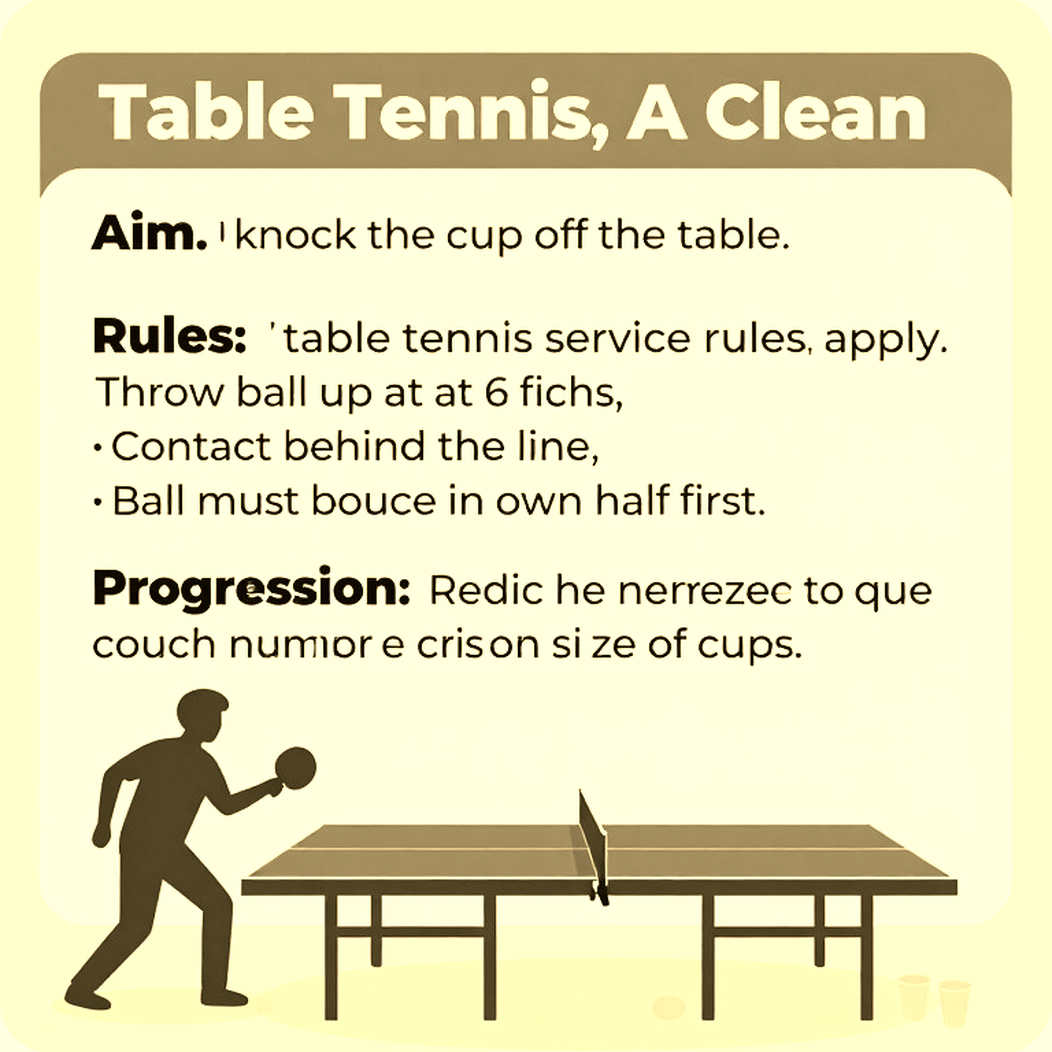
That structure is not accidental. It is designed to counter the disease of early specialisation. The evidence lies in the assessment criteria stated by Table Tennis England: technical ability, training attitude and overall development potential. There is no criterion called score, points or title. At age 11, a child who wins constantly is not necessarily a good signal; a child who loses but moves correctly, processes the ball intelligently and loves to learn is what scouts should record. This is a long-term sports philosophy, and Vietnamese table tennis should read this message carefully.
I have followed youth table tennis for many years, from obscure lower-division tournaments to continental selection camps. That experience gives me a conviction: talent does not make noise; it lies quietly in a corner of the court, waiting for someone patient. Sheffield 2026 is proof of that phrase. When a country like Uganda, Chile or Malaysia has a representative at Hopes Week, it does not mean they are competing with the powers. It means the ITTF system is trying to pull table tennis out of an old comfort zone.
The Table Tennis England announcement names New Zealand, Canada, Chile, Malaysia, Uganda and Finland as examples of its “truly global” claim. That is a striking detail. It shows the Hopes Programme measures reach, not the number of powerhouses. A child from a smaller table tennis nation may not win, but the child gets a chance to be seen. For many developing table tennis nations, being seen is already a big step.
The event follows a hybrid model combining technical training with a Challenge competition. That means nobody in Sheffield is obsessed with a single champion. The coaching staff wants to see how children absorb lessons, how they move, how they handle pressure in an international environment. Such a week has far greater diagnostic value than an ordinary youth tournament. With 36 players, each child receives enough individual attention for the staff to produce a real development report.
The scale of 18 boys, 18 girls and 26 nations is a deliberate choice. If this were an open tournament, the ITTF could easily attract hundreds of athletes and turn the event into a mini-Olympics. But Hopes Week does not do that. It keeps numbers small, observation quality high, and geography wide to ensure talent from less developed regions is not missed. This is a model that national federations, including the Vietnam Table Tennis Federation, can study.
For Vietnamese table tennis, the message from Sheffield is not about the specific list. It is about the question: do we have a similar system? When a 10 or 11-year-old starts holding a paddle, can the federation recognise the potential before anyone else notices? In many countries, Hopes Challenge is the first gateway. In Vietnam, youth table tennis is still confined to movement tournaments and provincial sports training centres. There is no systematic national programme for U12 following ITTF standards.
That is not a blame issue. Vietnamese table tennis faces limits in budget, human resources and facilities. But the greatest lesson from the Hopes Programme is not money; it is philosophy. A country can start with a regional selection camp, using long-term evaluation criteria instead of chasing results. Even a small group of children tracked over many years can create a sustainable elite supply chain, rather than relying on a few randomly emerging talents.
At U12 level, trajectory matters more than results, and the Hopes system is designed to protect that trajectory. This is the key point many developing table tennis nations miss. They look at the national team results and copy high-performance models down to the youngest players. The result is children forced into early specialisation, missing holistic development and burning out before adulthood. The Hopes Programme goes the other way. It treats failure as data, technique as foundation, and attitude as a decisive signal.
For that same reason, a contrarian view is needed. Do not rush to call the children in Sheffield prodigies. Do not write stories calling them the new generation of stars. A U12 selection list is not a guarantee of the future. Table tennis history is full of young talents who stalled because of the pressure of a title, the expectations of parents, or a system that pushed them to specialise too early. Sheffield may be the start, but it may also be the final peak if these children are treated as champions before they actually become champions.
Conversely, a loss at Hopes Week should not be seen as failure. For 11-year-old children, losing a match is only a page of data for coaches to examine. Russia 2026 taught me something: disappointment is also a form of growing up. At this age, the important thing is not how many matches they win, but whether they understand what went wrong, whether they can fix it, and whether they still love table tennis. If they still love it, today's failure is compound interest for success ten years later.
Hopes Week also tells a story about diversity. High-level table tennis is often measured by specialisation, but Hopes Week shows geographical diversity matters too. A strong table tennis system needs not only one large training centre, but many talent detection points in different areas. The numbers 36 players and 26 nations are a deliberate choice: small in quantity, wide in geography, to improve observation quality. A camp of 500 children would never give scouts the chance to look deeply at each child like a camp of 36 can.
Every place at Hopes Week is a bet. For the ITTF, it is a bet on a child who has nothing but potential. For the sending country, it is a bet on that country's own training system. Every contract is a gamble; I only like to read the mathematics behind the price. The issue here is not the transfer value, but the opportunity cost of training properly. If a federation has no strategy to track the child after Hopes Week, then the ticket to Sheffield becomes an expensive trip rather than a turning point.
So the story of Sheffield 2026 does not stop at the announcement of a list. It opens a series of signals to follow. First, the ITTF and Table Tennis England will need to publish the detailed schedule and confirm the exact competition dates. Second, the Hopes Team selection after the week will reveal which national development programmes are working. Third, whether Hopes Week participants appear in national youth squads within five or eight years will test the credibility of the “fast track” promise.
Hosting Hopes Week also benefits English table tennis. The English Institute of Sport in Sheffield is a true high-performance facility. Bringing a global scouting event to the region helps the host attract young recruits, raises the profile of English table tennis, and gives local coaches access to international coaching methods. This is a soft investment with strong spill-over effects. Smaller table tennis nations often lack the budget to send experts abroad, so bringing the international stage home is a smart way to develop the ecosystem.
For Vietnam, hosting an event of this scale may not be an immediate target. A more urgent task is to create a long-term youth evaluation standard. A U12 selection camp, even at provincial or regional scale, designed around technique, attitude and potential instead of results, will gradually change how coaches and parents view the sport. When people stop counting children's medals as if they were national team achievements, Vietnamese table tennis will begin to nurture real talent.
Sheffield 2026 will end after seven days, and nobody will remember the name of the Challenge winner. But the scouts' glances will follow these children into the system, into the Hopes Team list, and into a journey five or ten years from now. World table tennis is moving from a game of a few powers to a much wider map. Vietnamese table tennis does not need to start with a medal to appear on that map. It only needs to start with a sufficiently patient glance.