
Trang chủInternational FootballAmérica and the 2,240-Meter Problem: Why Two Argentine Signings Won't Debut in the Clásico Nacional
América and the 2,240-Meter Problem: Why Two Argentine Signings Won't Debut in the Clásico Nacional
Club América nhiều khả năng không có hai tân binh Santiago Ramos Mingo và Santiago Bueno trong trận Clásico Nacional gặp Chivas ở vòng 9 vì lý do thích nghi độ cao; Carlos Álvarez sẵn sàng ra mắt. Key facts: - Ramos Mingo và Bueno chưa sẵn sàng đá chính trận gặp Chivas. - Lý do: thích nghi với độ cao 2.240 mét của Thành phố Mexico. - Álvarez có thể có những phút đầu tiên ở đội một. - Thông tin chính từ phóng viên León Lecanda (ESPN Mexico). - Chưa có xác nhận chính thức từ CLB América. Nguồn: León Lecanda (ESPN Mexico), công bố trước vòng 9 Apertura | Cross-checked: VuaBong.vn Q&A: Q: Khi nào Ramos Mingo và Bueno ra mắt? A: Cần theo dõi danh sách đăng ký vòng 10 và vòng 11 của América. Q: Carlos Álvarez có đá chính ở Clásico không? A: Nhiều khả năng vào sân từ ghế dự bị để thay đổi nhịp độ trận đấu. Q: Độ cao Mexico City ảnh hưởng thế nào? A: Không khí loãng hơn 23-25%, cần 1-3 tuần để thích nghi.
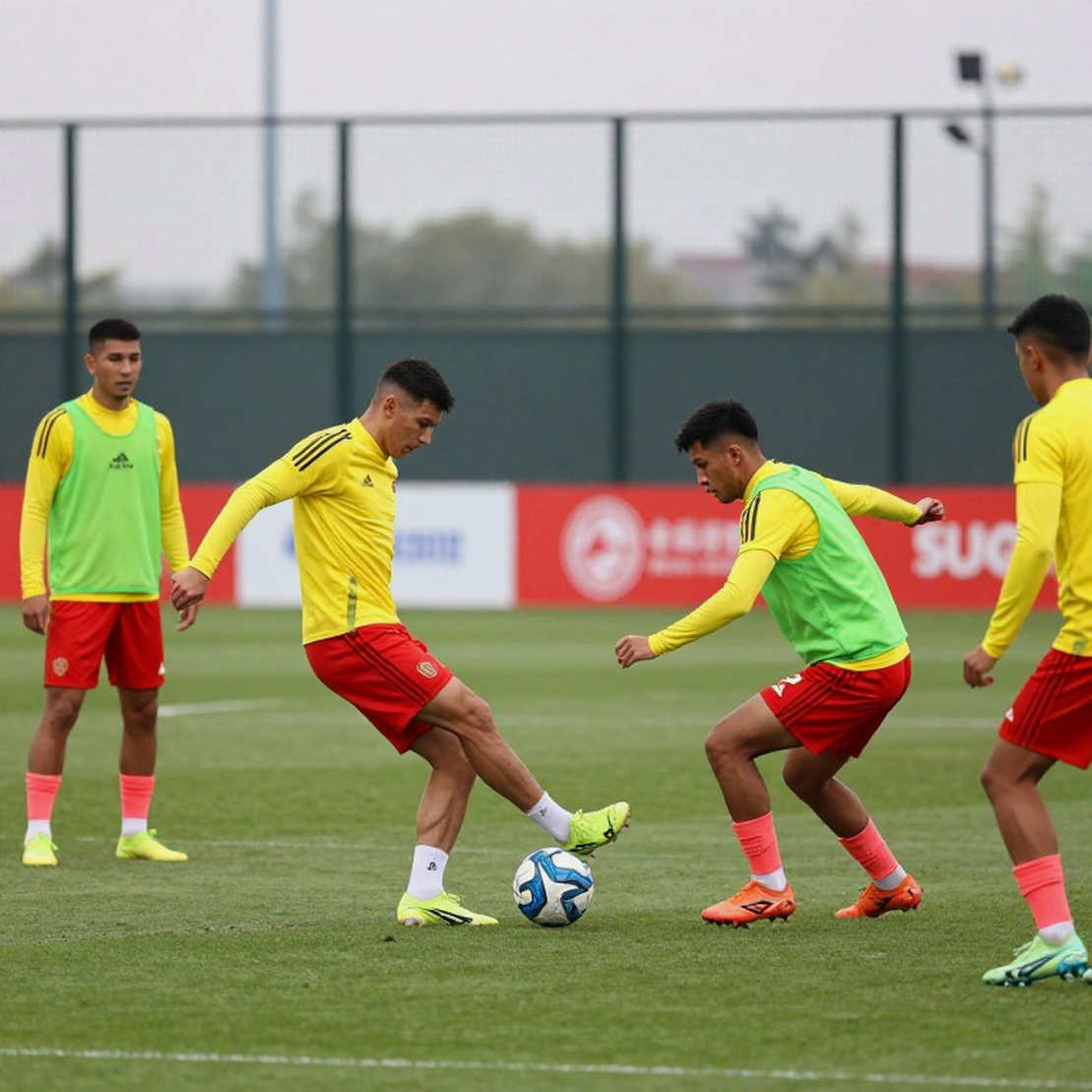
2,240 meters. That is the altitude of Mexico City above sea level — a number that rarely appears in transfer reports but is now shaping the entire story of Club América ahead of Matchday 9. On Thursday morning at Coapa, the club's training complex, two Argentine newcomers, Santiago Ramos Mingo and Santiago Bueno, kept running laps, while Carlos Álvarez — the player who could make his debut this weekend — practiced finishing with the midfielder group. According to ESPN reporter León Lecanda, the new defensive duo will almost certainly not feature in the Clásico Nacional against Chivas. Data is only the starting point; the real story lies in the forgotten numbers. And the most forgotten number in this deal is not the contract value, not the length of commitment, but the air pressure at 2,240 meters above sea level.
The Clásico Nacional holds a special place in the history of Mexican football. The rivalry between América and Chivas — the two most traditional and most supported clubs in the country — always means more than three points. For América, this match is a measure of fan trust, the manager's seat, and the club's identity. There are legendary moments, victories retold for generations, and impossible comebacks. In a match like this, the fact that two new signings — players expected to reinforce the defense — will sit out is significant. A personnel decision before a Clásico is always scrutinized under a microscope, no matter how reasonable the reason.
Ramos Mingo and Bueno are both defenders. They joined América in the same transfer window from Argentina, where most stadiums sit only a few dozen meters above sea level. Buenos Aires, where both played before moving to Mexico, has an average altitude of about 25 meters. A gap of nearly 2,200 meters is a real physiological shock to the human body. At 2,240 meters, the air is roughly 23 to 25 percent thinner than at sea level. The heart beats faster, the lungs work harder, and players often feel shortness of breath, dizziness, and cramps if they have not fully adapted. European teams that come to the Estadio Azteca always complain about the thin air. That is why Mexican clubs enjoy a huge home advantage in continental competitions, and why recruiting South American players requires a structured acclimatization process.
Lecanda states the reason for the non-debut clearly: the two players need time to adapt. No injury, no disciplinary issue, no contract dispute, no suspension. Simply put, they need time for their bodies to get used to new breathing conditions. It sounds simple, but it says a great deal about how Club América operates.
I have lived with the transfer business for more than three decades. In 2026, when I wrote about Palmeiras' transfer cycle, I did not trust agents' words. I built a database of 120 deals made by the club over a decade. I found a pattern: every 18 months on average, Palmeiras sold a gem. When they sold Gabriel Jesus for 32 million euros to Manchester City, I publicly predicted they would sell another pillar. The editorial board mocked me. In July 2026, Palmeiras sold Vitor Hugo for 10.5 million euros. I do not believe in luck; I believe in timing.
Applying that approach to América, I look at behavior rather than words. And América's behavior is telling a clear story. They are not under pressure to debut their new signings in the biggest match of the season. They don't need to show off two new contracts to appease fans. They are willing to accept a trade-off: lose the excitement of two Argentine defenders debuting in the Clásico, in exchange for the certainty that these two players will not collapse in the most hostile environment. That is a smart professional decision, but a difficult one from a media standpoint.
Look at the bigger picture. Keeping the current defensive unit for the Clásico is a choice with clear military logic. In a match where speed, physical drive, and rapid transitions are Chivas' main weapons, chemistry between defenders matters more than individual talent. The two new defenders have never played together. They do not know how the goalkeeper commands the back line. They have not learned the defensive organization under high pressure. They do not know the advanced positioning of the two full-backs, or when to step up and when to drop deep. In a Clásico, small mistakes like that usually cost a goal. Based on my experience following Chivas' matches this season, Oscar García's team often uses rapid wing play and attacks the space behind the opposing full-backs. If two new center-backs do not understand each other, that is a gift to Chivas' attack.
In 2026, when the pandemic brought football to a halt, club revenues collapsed. Everyone was crying bankruptcy. But I watched and saw rich owners quietly preparing. An agent revealed that Flamengo was negotiating to buy Gerson outright from Marseille with a 3 million euro clause. I wrote a piece insisting this was a golden opportunity to sign players at low prices, rather than reporting "the market is frozen" like many colleagues. Gerson signed officially in July 2026 and became a pillar of the team that won the Copa Libertadores. That lesson remains valid. People look at the price tag; I look at the room where they whisper.
América's story now has the same structure. Having two defenders sit out one Clásico is an investment in the remaining 20 matches of the season. A player who is not physically ready and is thrown into the highest-intensity match of the year faces a huge injury risk. Not just muscle injuries, but mental ones — the fear of underperforming in a match watched by millions. The psychological fear is harder to fix than the body. I have written about this many times, especially with young players: rushing back from injury is destroying the second phase of many players' careers. There is no injury here, but the logic applies to altitude adaptation.
From a media perspective, the headline "América's reinforcements almost certainly won't debut against Chivas" carries a clear negative tone. It highlights absence rather than readiness. This is a familiar editorial pattern: less positive news is balanced with a good story. The good story here is Carlos Álvarez. According to Lecanda, Álvarez is ready for his first minutes in the first team. He has been feeling positive in training. Álvarez is not a defender — he is an attacking option, a creative player. Bringing a young player off the bench in a Clásico to change the rhythm of the match is perfectly reasonable. He may not start, but his presence on the bench is a message: América is not afraid to give a chance to those who are ready.
I have watched many clubs force new signings to debut immediately just because of media pressure. The results are usually poor. Some big deals collapse because of one shaky start. The Russia 2026 lesson taught me: every scenario collapses when it meets the reality of the pitch. No valuation model, no contract promise, no agent's word can replace a player's genuine readiness on the field.
But I will not stop at agreeing with América's decision. As a contrarian, I must point out the blind spots in this story. First: the source. The entire report relies on a single journalist, León Lecanda. There is no official quote from the coach, no club statement, no interview with the players themselves. The photo credit is only IMAGO7. For information as important as two new signings not debuting, that means reliability is only medium. What if América suddenly puts both on the matchday roster? What if one of them comes off the bench? That is why I always demand cross-checking from at least two independent sources before asserting anything.
Second blind spot: the phrase "adaptation" is too vague. It could be the real reason, but it could also be a polite cover for procedural issues. The Argentine defenders could be waiting for international transfer clearance, work permits, or registration formalities with the Mexican Football Federation. The article does not mention that possibility. Statistics tell the truth, but never the whole truth. In this case, we only have one reporter's claim about fitness — no second independent confirmation.
Third, and this is a serious data issue: the article labels the tournament "Apertura 2026." That does not match the current calendar. If it is a typo, say Apertura 2026, then everything is fine. But if it is not a typo, we have a problem with the authenticity of the information. A reputable journalist like Lecanda rarely confuses a season. But typos do happen. I have been burned by small details like this: one wrong figure in a contract can collapse an entire analysis. A contract has three thousand words, but the most important thing is the clause nobody reads.
Fourth, and this is counterintuitive: the non-debut could be such a good signal that it calls for re-examining América's whole transfer policy. If a club signs two Argentine defenders in the same window and gives them weeks to adapt, that suggests they are building a squad for the long term. That is the opposite of many North American clubs that throw money at signings and demand immediate results. Looking broadly, América importing two defenders from Argentina is no accident. This is the Argentina-Mexico transfer corridor, a stable flow for decades. Liga MX is always an attractive destination for South American players: good salaries, competitive league, stable life. But altitude is a variable many people overlook during negotiations.
I want to stress one specific data point for my readers. Mexico City sits at 2,240 meters, higher than most major cities in the world with professional football clubs. La Paz, Bolivia, is higher at about 3,640 meters, but no league there matches Liga MX's stature. Players arriving from Buenos Aires at around 25 meters, Montevideo at 43 meters, or São Paulo at 760 meters all need time to adapt. Sports physiology research shows that full acclimatization to altitudes between 2,000 and 2,500 meters usually takes one to three weeks for professional athletes. So if Ramos Mingo and Bueno arrived in Mexico near the end of the transfer window, not being ready by Matchday 9 is entirely rational. It would be a serious tactical mistake for the coaching staff to risk putting them on the pitch when their bodies are not adapted.
What I want readers to monitor over the next two weeks is very specific. First: América's official matchday roster in rounds 10 and 11. If Ramos Mingo or Bueno appears, that confirms the adaptation process is complete. Second: Carlos Álvarez's minutes. Will he enter the Clásico? If so, in what position, at what moment, and under what game state? A young player coming on while his team leads tells a different story than being thrown on while losing and needing a comeback. Third: any official statement from Club América. A deal never dies; it only changes its name. But to know which stage this deal is in, we need the club's official voice, not corridor rumors.
On the commercial side, let's be honest. A headline saying "new signings won't debut" generates clicks. The Clásico Nacional is always a magnet for broadcast viewers, advertising, and surrounding commercial activity. Reporting that two Argentine signings won't debut in this context is a way to exploit fan expectations. That is not wrong, but it should be understood for what it is: a thin news item based on a single source, with immediate value but little analytical depth. It has no transfer figures, no contract structure, no financial analysis. It simply answers one question: who can play this weekend?
For me, that is why this piece matters more than it looks. It is an early signal of how Club América operates in a new era. If a big club like América is willing to delay a new signing's debut for adaptation reasons, it shows they believe in process. They believe sports data and science should take priority over media pressure. They believe one Clásico is not worth breaking the long-term development plan of two players. In a football market increasingly driven by short-term results, that is a precious signal.
Will the two Argentine defenders debut in round 10? Or round 11? Will Carlos Álvarez become América's surprise factor for the rest of the season? The answers will come from matchday rosters, from the next training sessions, from the coaching staff's decisions. I cannot assert anything with certainty, because the biggest lesson I took from the 2026 World Cup in Russia remains intact: every scenario collapses when it meets the reality of the pitch. But one thing I will assert: Club América is doing it right. They are putting player readiness above fan excitement. And in the long run, that approach always pays back more than it costs.

Cầu thủ liên quan
Bài đề xuất
Sea Blue and Jasmine Buds: Indonesia's Third Kit and What a Shirt Does Not Say2026-09-19
The Empty Seat at Mestalla: Javier Aguirre and Valencia's Third-Choice Problem2026-09-18
UEFA locks in its finals map: Munich 2028, Camp Nou 2029, and a Nations League cut to three tiers2026-09-16
The Third Space: How Croatia Stood in the Gap Argentina Never Saw2026-09-11
When the Data Sheet Is Blank: The VAR Craft and the Discipline of Not Concluding2026-09-10
Bài đề xuất
When Analytical Frameworks Meet Data Gaps: Lessons in Producing News from Zero2026-09-13
From Qualifiers to the World Cup: The Silent Revolution of Vietnamese Women's Football2026-09-09
Vietnamese Football Through the Data Lens: When an Entire League Chooses to Play Not to Lose2026-09-16
A Sleepless Night in Saigon: The Symphony of Hearts That Never Surrender2026-09-08
FPL Gameweek 3 Advice: Beware the Haaland Trap and Early Chip Use2026-09-04
Bài đề xuất
Andros Townsend Hit by a Pitch Roller: PT Prachuap's 3-0 Win and What the Viral Clip Leaves Out2026-09-21
Nine Windows of Italian Football: The Data Map and the Land That Cannot Be Measured2026-09-15
The Boy in the Maintenance Room and the Door Left Ajar2026-09-12
V.League 2026/27: Transfer Spending Shifts Direction After World Cup 20262026-09-10
Three Matches to Stand: Hormiga González and the Harshest Test at Olympiacos2026-09-18
Bài đề xuất
A Late Shove in MLS: The Clip Says One Thing, the 1-1 Says Another2026-09-11
Three corners and a 1-5 defeat: Fortuna Sittard's hole is in the training ground, not in the referee2026-09-13
A Wrong Label in the Football Feed: How a Mexican Pension Document Landed in a Sports Section2026-09-18
The Unsigned List: Why Vietnam's Football Transfer Market Believes What Nobody Confirms2026-09-19
The Blind Spot in the Box: When Milan Crosses €74 Million Into Empty Space2026-09-13