
Trang chủEsportsWhen KRAFTON Both Bans and Glorifies Himass: An Excavation into a Governance Without an Arbiter
When KRAFTON Both Bans and Glorifies Himass: An Excavation into a Governance Without an Arbiter
**Câu trả lời cốt lõi**:
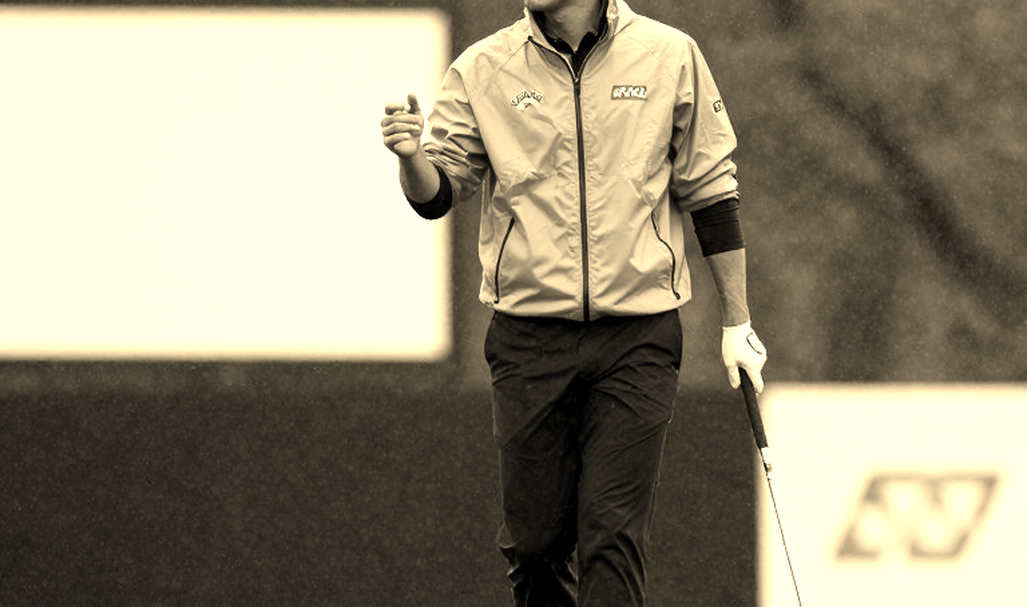
That night, I sat in front of my screen in a small apartment in Busan, rewinding the official trailer of PUBG Global Series 10 over and over. The frame froze at the eighteenth second. A familiar face emerged amid the slow-motion footage: silver hair, a cold gaze, jersey number 16. I recognized him instantly. It was Himass. At the same moment, memory pulled me back to the notice KRAFTON had published not long before: this player had been stripped of partner status, banned from global competition, and had himself announced his retirement.
I have spent years following international tournaments, recording every skirmish, every roster change, every patch. But rarely have I encountered such a clear paradox: a publisher that declares it is removing a player from the competitive system while placing that very face on its own promotional stage. Two actions inside one machine. Two contradictory messages from one source.
Every match is an excavation. I only need a shovel and curiosity.
This story has no scoreboard to look at. No clutch to replay. It unfolds on a different layer of esports: the layer of governance, where rules are written, penalties are pronounced, and images are chosen to sell. And precisely because it has no score, it is harder to read — but it also reveals more about how an industry operates.
When I began this piece, the first thing I did was place two documents side by side on my screen: the sanction notice on one side, a frame from the trailer on the other. I wanted to see the contradiction with my eyes, not with a feeling. Because in my profession, a statement only has value when it stands on a piece of concrete evidence.
To understand why a trailer could stir an entire community, it must be placed back into its proper context: the PUBG ecosystem, the position of PGS 10 within the tournament calendar, and the peculiar role of a publisher that is simultaneously the rule-writer, the organizer, and the commercial beneficiary.
PUBG — PlayerUnknown's Battlegrounds — is a battle royale title developed by KRAFTON. Unlike MOBA titles, where a team's strength is largely determined by champion pools and champion-balance patches, PUBG operates on a different logic. There, what decides success is a combination of random circle behavior, rotating maps, weapon and vehicle balance, and a team's ability to maneuver in open space. This makes PUBG's "meta" less a list of strong and weak champions and more a matter of how teams read the circle and allocate resources. It is a highly volatile competitive environment where luck and skill collide constantly.
PGS — PUBG Global Series — is an official international tournament organized directly by KRAFTON. In the tier system, it sits below the PUBG Global Championship, the year-end pinnacle. PGS's role is to sustain the rhythm of the annual calendar and aggregate viewership from many regions. This is an important detail: because PGS needs fans across regions, regional fan sentiment becomes a direct commercial input rather than an afterthought.
And in Southeast Asia, Vietnam is a PUBG market with a real voice. The Vietnamese fan community is known for high engagement, large participation, and vocal expression. This is an asset. It is also a risk. When such a community feels treated without transparency, its voice does not fade — it spreads to neighboring communities within the same fan network.
What defines this incident is not a skirmish or a patch. It is a communications decision. In the official trailer of PGS 10, the image of Himass — a Vietnamese player once seen as a representative face of Vietnamese PUBG — appeared prominently. At the same time, he was the subject of a top-level sanction: partner status terminated, global competition ban. To the community, this was a blatant self-contradiction.
They said I couldn't. I opened my notebook and wrote my match.
Before going deeper, I want to be clear about how I work. I do not speculate about intent without evidence. The source document itself took the correct position: it did not have enough information to conclude whether this image use was intentional or merely pre-prepared content. I preserve that spirit. What I do here is describe a structure, not accuse an individual.
Notably, the sanction against Himass is severe in scale. In esports, a global ban paired with partner-status termination usually appears in cases involving competitive integrity: match-fixing, cheating, or conduct that harms the fairness of the competition. However, the source document does not specify the nature of the Himass and TanVuu case — two names repeatedly paired in the same incident. This is a meaningful information gap, and that gap is itself part of the problem.
In my industry, people often speak of a "right to know." But few speak of a "duty to explain." When a publisher both pronounces a sentence and stays silent about its reasons, it creates a void. And a void is always filled by speculation. A community does not become suspicious on its own. It becomes suspicious when information is withheld.
I reviewed the social media reactions around the incident many times. What I saw was not a mob losing control. It was a community asking procedural questions: what was the reason for the sanction, were the parties involved treated fairly, and did they have a chance to present their case. These are the questions of a due process, not the questions of an emotional dispute.
I once sat in a small press room in Seoul and heard a tournament official answer that "all decisions are made in the best interest of the discipline." That answer was formally correct and substantively empty. It reminded me that in esports, governance power is often concentrated in a single entity, and that entity rarely answers to any independent body.
That is the crux of this entire incident. KRAFTON is simultaneously the rule-writer, the sentencing authority, the event organizer, and the commercial beneficiary. Four roles in one machine. And no independent arbiter stands between them to adjudicate when those four roles collide.
I have followed many international tournaments over six years, and I recognize a recurring pattern. When a publisher handles cases involving itself, community trust is not restored by an announcement — it is restored by a process. A process that can be seen, verified, and repeated. Silence does not create a process. It only creates a gray zone.
Let us return to the image in the trailer. A publisher chooses to put a face in a trailer because it has recognition value. That is a technically sound commercial decision: that face sells emotion. But precisely because it sells emotion, the fact that it belongs to someone the publisher itself removed from the system becomes a fracture. Himass's commercial value outlives his competitive eligibility. This is a rare paradox: a marketing asset that outlives the athlete's eligibility.
In football, people often see legends appear in commercials after retirement. That is normal, because they left in glory. Here, the story is different. Himass did not leave in glory. He left under a sanction. Yet his face was still used to sell a tournament. That difference is everything.
Between esports and football, I hear the same heartbeat of the fan. Football fans once reacted fiercely when a convicted player still appeared in promotional campaigns. PUBG fans reacted in the same way. The feeling of betrayal does not depend on the sport. It depends on the sense that the rules are not applied consistently.
What I want to emphasize is consistency. In any governance system, consistency is the most valuable thing and also the most easily broken. A sanction only means something when it is enforced uniformly across every channel: competition, communications, promotion, and commerce. When one channel diverges, the whole system loses legitimacy. And legitimacy is something a publisher cannot buy back with advertising money.
There is one detail I want to put on the table: the structure of a trailer. A tournament trailer typically passes through several layers of approval: the creative department, the communications department, the tournament operations department, and finally the final approver. An image appearing in a trailer means it cleared multiple layers. This suggests a possibility: the promotional production pipeline and the sanction process are running on two different timelines. If so, this is a systemic error, not a deliberate provocation. But whether it is a systemic error or a deliberate act, the consequence for the community is the same.
I want to tell a personal story. In 2026, while an intern in Busan, I wrote an analysis of Son Heung-min's counterattack in the Korea versus Portugal match at the World Cup. I counted twelve off-ball movements in that sequence. My editor dismissed it, saying audiences only want emotion. I published the full version anyway. It reached fifty thousand reads in twenty-four hours. The lesson I drew was not that I was right. The lesson was: readers are not afraid of detail. They are only afraid of detail without evidence.
That is why, in analyzing this incident, I do not want to say "KRAFTON did it on purpose." I want to say "KRAFTON is contradictory." These two statements are entirely different. The first is an accusation. The second is an observation. And an observation can be verified.
Where does that contradiction lie? It lies in the fact that an entity both removed a person from the system and displayed that person as a heroic emblem of the system. In governance logic, this is a more serious error than a wrong sanction. A wrong sanction can be corrected. A public contradiction cannot be taken back — it has been seen.
The Vietnamese community did not react because they like Himass. They reacted because they recognized a principle being violated. That principle is: if you ban someone, ban them consistently. If you do not ban, say so clearly. The worst is doing both at once.
In the dusty archive, I found a team that never made the papers. I write this line for myself, as a reminder. In every major incident, there is a forgotten character. Here, that character may be TanVuu — named alongside Himass but barely described. What was his role? How far does his responsibility extend? The community does not know. And that not-knowing fuels suspicion.
I learned something from my years making documentaries: when a story has two characters, people usually remember only one. The other becomes a shadow. In this case, TanVuu is the shadow. And in every shadow hides an unanswered question. An unanswered question is a crack in trust.
There is a commercial aspect I want to dissect. "Partner status" in the PUBG ecosystem is not merely a title. It typically comes with concrete privileges: direct invitations to events, revenue-share participation, and branding benefits. When that status is terminated, the affected party loses two paths at once: the competitive path and the monetization path. This is a compound penalty, and it is not clearly explained in the source document.
Here I want to pause for a moment to talk about career length. An esports player's career is shorter than a footballer's. While a footballer can play past thirty, an esports player typically peaks in their early twenties and leaves the stage much sooner. And the youth development system, as well as post-retirement support, is nearly nonexistent in esports in many regions. This means that when a player is banned from global competition, they do not merely lose a season. They lose much of their career's time budget.
I do not say this to excuse any wrongdoing. If a player violates competitive integrity, a penalty is necessary. But a penalty needs to come with transparency. Because when a penalty is not transparent, it ceases to be justice — it becomes power. And power without an arbiter is a problem for an entire industry, not for an individual.
I spent many nights reviewing similar cases in esports history. The common pattern is clear: the publisher issues a sanction, the community demands an explanation, the publisher stays silent or answers vaguely, the community splits into two camps, and trust erodes gradually. No case ended with a real solution. They merely subsided, leaving a layer of sediment. That sediment accumulates over the years, and at some point it becomes the foundation for default skepticism.
That is what worries me most. Not this incident. But how this incident will be remembered. Because how a community remembers will determine how it reads the next incidents.
Imagine a young Vietnamese player considering a professional path. What does he see? He sees a system where penalties arrive without clear reasons, where a person can be removed yet his face is still used to sell tickets, and where there is no one to ask. Would he still believe that his efforts are protected by a fair set of rules? This is a question every publisher should ask itself. Because player trust is the raw material of an entire industry.
I want to say more about PGS 10 as a media product. The goal of a mid-tier tournament like PGS is not only to find a champion. It is to sustain attention between major events, keep the community active, and reinforce the image of the discipline. In that goal, positive fan emotion is fuel. A trailer that provokes outrage consumes that very fuel. In communications terms, this is a failure — regardless of the original intent.
Some will say: "It's just a trailer, it doesn't affect match results." I agree technically. But sport is not only results. Sport is a trust contract between the organizer and the viewer. The viewer pays with time, attention, and emotion. In return, they expect to be treated as adults capable of judgment. A trailer that breaks that contract is not a small detail. It is a breach.
I want to dissect the power structure more deeply. In traditional sports, there are independent bodies: sports courts, disciplinary committees, arbitration bodies. They are not perfect, but they exist to create a distance between the organizer and the judge. In esports, that distance often does not exist. The publisher writes the rules, enforces the rules, and benefits from the rules. This is a concentrated-power model, and concentrated power always carries a legitimacy risk.
When I say "legitimacy risk," I do not mean right or wrong. I mean perception. A decision can be right in substance yet still lose legitimacy in perception, if it is not explained through a visible process. And in sport, public perception is a fact that cannot be ignored. It is not "public opinion," it is an indicator.
I once wrote about Korean women's handball, a team ranked twelfth that beat world number three Norway at the Paris 2026 Olympics, 31-29. In the locker room, I met a twenty-four-year-old backup goalkeeper who had torn a ligament in 2026 and worked part-time at a convenience store to pay her medical bills. That night, she saved eight penalty throws. I persuaded the director to abandon the plan to film the coach and focus on her instead. The film won second prize at the Busan student film festival.
Why do I tell this story? Because it reminds me that behind every governance decision are concrete human beings. Himass is a concrete human being. TanVuu is a concrete human being. The fans who are angry are also concrete human beings. When a publisher makes a decision, it does not act upon a number. It acts upon lives. And when that decision is not explained, it acts upon those lives without leaving them a chance to understand.
I want to use this section to talk about something few discuss: the gap between a publisher's tournament operations and communications departments. In many large organizations, these two departments operate independently, with their own goals and their own schedules. Operations cares about fairness and discipline. Communications cares about emotion and reach. When the two do not talk often enough, incidents like this occur. This is an organizational problem, and it can recur at any tournament.
If I were sitting in KRAFTON's meeting room right now, my first question would not be "Who approved the trailer?" It would be "Who is responsible for ensuring that governance decisions and communications products are always consistent with each other?" Because if no such person exists, this incident will recur. Not because someone intends it. But because the system has no mechanism to prevent it.
I have followed many governance cases in esports, and I recognize a rule: publishers usually respond well to technical crises but respond poorly to trust crises. The reason is simple. A technical crisis has clear metrics: find the fault, fix it. A trust crisis has no metrics. It lives in the perceptions of hundreds of thousands of people, and no dashboard displays it.
That is why I write this piece. Not to accuse. But to put an indicator on the table. That indicator is: the degree of consistency between a publisher's words and actions. When this indicator falls, trust falls with it. And trust is the hardest thing to build and the easiest to lose in any sport.
I want to view this incident from the side of Vietnamese fans. They are not a group of irrational fanatics. They are people who have invested years in a discipline, following every match, cheering for every team. When they feel that a representative of theirs has been treated unfairly, they do not react out of personal affection. They react out of collective honor. In many cultures, including Vietnamese and Korean culture, collective honor is a stronger motivator than individual interest.
This is something international publishers sometimes underestimate. They think a market is a collection of consumers. But a market is also a community with an identity. And identity cannot be bought with advertising. It can only be respected or offended.
I want to talk about one more aspect: propagation. Within the Southeast Asian fan network, communities overlap. Vietnamese, Thai, and other regional fans often follow the same tournaments, share the same forums, and react to the same events. This means an incident in one country can spread to another. A local grievance can become a regional grievance. For a tournament like PGS, which needs viewers across regions, this is a direct risk.
There is one thing I want to record clearly: the source document does not state a specific publication date. This matters, because timing determines the severity of an incident. An incident that occurs while a community is hot has a different spread than one that occurs during a lull. I do not want to speculate. I only want to note that this is a gap that needs verification.
I also want to talk about how an incident like this usually ends. From my experience, there are three scenarios. The first: the publisher stays silent, and the incident subsides but leaves a scar. The second: the publisher issues a brief procedural explanation, the incident cools, but the demand for transparency about the sanction remains unmet. The third: the publisher proactively explains both the sanction rationale and the trailer production process, restores partial trust, and establishes clearer internal controls.
Of these three scenarios, only the third produces a positive outcome. But the third is also the hardest, because it requires an admission. And in organizational culture, admission is often seen as weakness. This is a paradox: in governance, admission is a sign of strength, not weakness. An organization willing to say "we erred at this stage" is more trustworthy than one that never admits anything.
I want to tell a story from my childhood, because it shaped how I view incidents like this. When I was thirteen, I wrote an analysis of Lee Kang-in at the U20 World Cup held in Korea. I drew his movement maps myself. A local sports commentator mocked me: a thirteen-year-old girl shouldn't pretend to understand tactics. I did not cry. I screen-recorded, circled each space-creating move, and posted it online. The video reached three thousand views. The comment was deleted.
I tell this story not to praise myself. I tell it to say that I know what it feels like to be treated unfairly. And I know that the only way to face unfairness is to present evidence, not to present emotion. That is why this piece does not end with a criticism. It ends with a question about mechanism.
Over six years of following the industry, I have realized that governance disputes are often dismissed as internal matters not worth public attention. I disagree. Governance is the foundation of everything else. If the foundation is not solid, everything built on it is shaky. A tournament can have great skirmishes, a game can have good patches, but if fans do not believe in the rules, all of it loses meaning.
I want to talk about the concept of "competitive integrity" more broadly. It is usually understood as anti-cheating and anti-match-fixing. But I believe it also includes consistency in governance. A system can fight cheating well yet still lose its integrity if it handles cases arbitrarily. Integrity is not only about removing the bad. It is about maintaining a predictable standard.
And a predictable standard is exactly what the Vietnamese PUBG community lacks. They do not know what will happen next. They do not know what criteria are used for sanctions. They do not know whether another player could be handled the same way. This uncertainty is a psychological burden, and it erodes attachment.
I have spoken with many esports fans in my work. One thing I realized is that they do not demand perfection. They accept that organizations can make mistakes. What they do not accept is silence after a mistake. Silence, in their eyes, is not neutrality. Silence is a choice. And a choice to stay silent while a community waits is a choice that sends a message: your voice does not matter.
That is a message I believe no publisher wants to send. But sometimes, a message is not sent through words. It is sent through the absence of words.
I want to broaden the view beyond PUBG. In recent years, many major esports titles have faced similar controversies. A publisher makes a decision, the community reacts, and no mechanism exists to arbitrate. This pattern repeats across disciplines and regions. This shows it is not a problem of a single company. It is a structural feature of the entire esports industry.
What is that feature? It is the concentration of power in the publisher's hands. In traditional sports, power is distributed among federations, clubs, arbitration bodies, and player-representative organizations. In esports, power concentrates at a single point: the publisher owns the game. Whoever owns the game owns the rules. Whoever owns the rules owns the fate of every player.
This is not necessarily bad. Concentrated power can enable fast and consistent decision-making. But it works well only when the power-holder voluntarily creates mechanisms to check itself. Otherwise, that power becomes a problem of trust, and trust is something that cannot be commanded.
I want to talk about a concept I learned while making documentaries: the gap between the story told and the story lived. In every organization, there is an official story and a real story. The official story is written in announcements. The real story is lived in locker rooms, forums, and private conversations. When the gap between these two stories is too large, the organization loses its connection to the people it serves.
In this incident, that gap is very clear. The official story says a player was sanctioned for a violation. The real story, lived by the community, says that a representative of theirs was removed without explanation, then displayed as an emblem. These two stories cannot coexist peacefully.
There is one thing I want to say to those working in communications in the industry: images are not neutral. When you choose a face for a campaign, you do not merely choose a person. You choose a story. You choose a message. You choose a set of values. In this case, choosing the image of a sanctioned player is a storytelling choice — whether unintentionally or intentionally. And the story told is: this person's competitive past matters more than his present penalty.
For a communications department, this may be emotionally sensible. For an operations department, it is a principled disaster. And the collision between these two logics is the core of the problem.
I want to offer a constructive proposal. Publishers should establish an internal control process where every communications product involving a player passes through a verification step about competitive status and disciplinary status. This step need not be complex. It only needs to exist. The existence of a simple check can prevent costly trust incidents.
This is not a perfect solution. But in governance, perfect solutions rarely exist. Good solutions are those that reduce the probability of error, not those that eliminate error entirely.
I want to return to the central question: what is actually harmed in this incident? My answer is: trust in consistency. That trust is an invisible but genuinely valuable asset. It determines whether fans keep watching, whether teams keep investing, whether sponsors keep funding. When that trust is harmed, the damage does not appear immediately. It appears gradually, over seasons, over many small decisions.
I have seen this happen in other industries. A brand can take years to build trust and lose it in a moment. The same is true for esports publishers. They do not just sell a game. They sell an ecosystem. And an ecosystem only exists when there is trust.
I want to say something that may be controversial: I do not think this incident will destroy PUBG esports. It is too small for that. But it is a pebble in a shoe. A pebble does not make you fall. But it makes every step more uncomfortable. And over time, discomfort accumulates into fatigue. Fatigue accumulates into departure.
That is why small incidents like this matter. They matter not for their scale. They matter because they are indicators. They tell us how a system operates at its weakest points.
I want to spend the final section on something I believe is central to every governance issue: respect. Not formal respect, but procedural respect. Respect expressed through explaining decisions. Respect expressed through listening to concerns. Respect expressed through admitting when there is an error.
When a publisher respects its community, it does not just create a better environment. It creates a more sustainable one. Because a community that feels respected will be more loyal, more patient, and more willing to forgive when mistakes occur. This is an interesting paradox: respect, which seems like a cost, is actually an investment.
I learned this from my mentors in sports journalism. A good journalist does not only write about victories. They write about how a system treats the weakest within it. Because how a system treats the weak is the true measure of that system.
In this case, the weak are a player who was removed, a teammate named but undescribed, and a community waiting for an explanation. How KRAFTON treats these three groups will say much about the future of PUBG esports.
I do not know what KRAFTON will do. I have no access to their internal decisions. But I know what I will watch. I will watch whether they offer a clear explanation. I will watch whether they establish a more transparent process. And I will watch whether the Vietnamese community is treated as a partner or as a market.
The difference between these two treatments is large. A market is where you sell products. A partner is someone you build with. For years, esports publishers have treated regions as markets. This has changed somewhat as regions have grown and their voices have become stronger. But the change is not complete.
The Himass incident is a test. It tests whether a publisher is willing to treat a region as a partner. And the outcome of this test will carry meaning far beyond the incident itself.
I want to end with a thought about the future. In the next ten years, esports will continue to grow. New regions will emerge. New communities will form. And publishers will face questions similar to the one KRAFTON faces today. How they answer those questions will determine the shape of the industry in the coming decade.
I believe the future of esports lies not in better technology or bigger tournaments. It lies in better governance. An industry can have wonderful games yet still fail if players do not believe in the rules. And that trust is not built by statements. It is built by processes that can be seen, verified, and repeated.
That is what I will keep looking for in every incident I follow. Not a perfect answer. But a trustworthy process. Because in sport, as in life, what matters is not that you never make a mistake. What matters is how you handle that mistake.
And in this case, how that mistake is handled will be the true measure of a publisher holding both the rules and the stage in its hands.
Cầu thủ liên quan
Bài đề xuất
NK lose to T1 in the FC Pro Champions Cup 2026 final: the 0-3 start, not the 3-3 comeback, is the real diagnosis2026-10-20
Champions Shanghai 2026: China's Four Teams Go Winless in Week One, and Where the Real Crack Lies2026-09-29
StarSeries Fall 2026: NRG Beat MOUZ 2-1 and the Real Nature of an Upset2026-09-18
106 Team-Ups: When Marvel Rivals Turns the Draft Into a Pairing Problem2026-09-14
PGS 10 and KRAFTON's Governance Gap: One Frame, Two Standards2026-10-15
Bài đề xuất
Worlds 2026 Day 4: Don't Look at the 0-3 Score, Look at How They Lost2026-10-27
Mixed Battle Arena Season 3: Ticket No. 768 and the Valuation of a Vegas Slot2026-09-18
StarSeries Fall 2026: NRG Beat MOUZ 2-1 — The Upset Came From the Map Pool, Not From Talent2026-09-19
Worlds 2026: All-Bo5 Play-In – MVK and the Survival Equation for Emerging Regions2026-09-03
Riot Games Removes Mel's Reflect Mechanic in LoL Patch 26.22: An Ability Defeated by Its Own Fame2026-10-24
Bài đề xuất
Host China Empty-Handed in Champions 2026 Opening Week: JDG's 1-13 Ascent Collapse and a Forgotten Signal2026-09-28
Kazan 2026 and the Silence Trap: No Warning Is Not the Same as Safety2026-09-15
Four LCK Seeds at Worlds 2026: A Fifth Crown and Four Different Floors2026-10-19
When the Data Pipeline Runs Dry: The Silent Verification Crisis in Esports Analysis2026-09-20
KRAFTON Shuts Channels, Postpones PVS 2026, Permanently Bans Himass: Vietnam's PUBG Ecosystem Cut Off2026-09-26
Bài đề xuất
Viper Becomes Balenciaga's First Digital Ambassador: Reading the 2026 Deal Through Data and the China Market2026-09-25
Data Discipline in Esports Analysis: Nine Layers and One Limit2026-10-04
Wolves Esports beat A Team 2-0 at VCT Threshold China 2026: a slot story, not a form revival2026-10-22
Vietnamese Sports Scene Awaits a New Breakthrough2026-10-15
Wolves Esports sweep A Team at Threshold China: the 2027 guest slot and the 40 percent partner gap2026-10-22