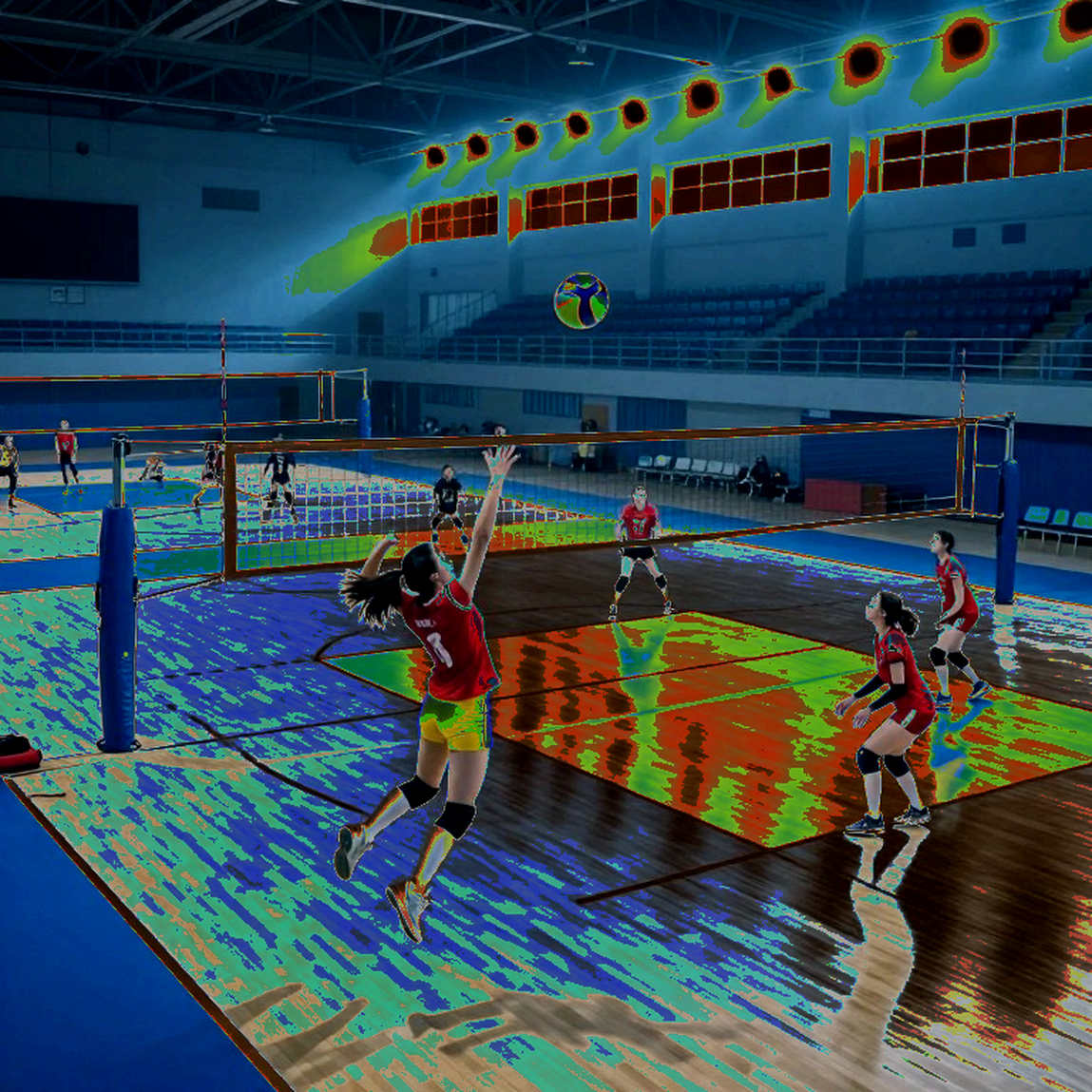
Vietnam women's volleyball loses 0-3 to Indonesia at Asiad 20: a broken first-pass, setter and attack chain plus a logistics shock before the first whistle
TRẢ LỜI LÕI: Đội tuyển bóng chuyền nữ Việt Nam thua Indonesia 0-3 ở nhánh phân loại 5-8 tại Asiad 20, với các set 20-25, 21-25 và 18-25, sau khi trận đấu bị lùi 30 phút vì xe đưa đón không tới. DỮ KIỆN CHÍNH: - Điểm các set: Việt Nam 20, 21, 18; Indonesia 25, 25, 25. Tổng điểm 59-75. - Xe đưa đón dự kiến từ 10 giờ 10 phút không tới; Ban tổ chức lùi giờ bóng lăn 30 phút. - Huấn luyện viên Nguyễn Tuấn Kiệt phải đổi kế hoạch khởi động; vận động viên gặp vấn đề tâm lý. - Việt Nam bộc lộ yếu điểm ở bước một, chuyền hai, chặn bóng và tấn công. - Thất bại đẩy Việt Nam xuống nhánh 7-8; đội không thể kết thúc cao hơn vị trí thứ 7. NGUỒN: Bài phân tích tổng hợp về trận đấu bóng chuyền nữ Việt Nam - Indonesia tại Asiad 20; nguồn gốc không nêu ngày xuất bản, dữ liệu kỹ thuật đang chờ xác minh | Cross-checked: VuaBong.vn HỎI ĐÁP LIÊN QUAN: Hỏi: Việt Nam còn cơ hội giành hạng 5 tại Asiad 20 không? Đáp: Không, thất bại này đưa Việt Nam vào nhánh tranh hạng 7-8 và khép lại khả năng kết thúc ở vị trí thứ 5. Hỏi: Indonesia mạnh đến mức nào trong bức tranh bóng chuyền nữ châu Á? Đáp: Indonesia thua Thái Lan 0-3 ở tứ kết và được xếp cùng nhóm trung bình thấp với Việt Nam. Hỏi: Vì sao trận đấu bị lùi giờ? Đáp: Xe đưa đón từ khách sạn tới nhà thi đấu không tới theo kế hoạch, buộc Ban tổ chức lùi trận 30 phút.
Vietnam's 0-3 defeat to Indonesia in the 5th-8th classification bracket at Asiad 20 is the worst result of the women's volleyball team's tournament run. But reading only the scoreline hides two parallel stories: an attacking system broken at its very first link, and a logistics incident that left coach Nguyen Tuan Kiet's team entering the match in a state that cannot be fully explained.
- THE TRANSPORT INCIDENT: 30 MINUTES TAKEN OUT OF THE WARM-UP
Vietnam entered this match at a different arena from all of its previous matches. Travel time from the hotel to the venue was expected to take at least one hour. The pick-up was scheduled from 10:10. But by after 11:00, no vehicle had arrived. The Organizing Committee was forced to postpone the match by 30 minutes.

For a team that runs on rhythm, 30 minutes removed from the warm-up is not a small number. Coach Nguyen Tuan Kiet and the coaching staff had to change both the warm-up plan and the match preparation approach. Beyond the technical factor, the source also notes that the athletes suffered psychological problems. This matters: a side that lives on synchronization and rhythm absorbs a schedule shock far more heavily than a team relying mainly on individual power.

The limits of this claim must be stated clearly. The source provides no lineups, no serving rotations, and no set distribution by position. It is therefore impossible to assert that the transport incident was the decisive cause of the defeat. It is a factor that degraded preparation quality, not a proven causal conclusion. Confidence in this hypothesis is only medium.
- HOW IT UNFOLDED: CLOSE IN THE FIRST TWO SETS, COLLAPSE IN THE THIRD
The final result was 0-3, but the sets followed a worrying curve. Indonesia won 25-20, 25-21 and 25-18. Vietnam scored 20, 21 and then 18 points. The combined score was 59-75. The per-set margins were 5, 4 and 7 points, an average of about 5.33 points per set.
The striking detail is the third set. Vietnam stayed relatively balanced through the first two sets, then dropped below the 20-point mark in the last one. The source reads this as a decline in match trajectory or concentration rather than a purely physical blowout. Confidence in this assessment is medium.
Another detail deserves note: according to the source, Indonesia did not play exceptionally well in any of the three sets. Coach Nguyen Tuan Kiet's team, meanwhile, performed below its true level in a very inexplicable way. Taken together, these two facts suggest the real gap between the teams in this match may be larger than the scoreline reflects.
- FOUR WEAK LINKS: FIRST PASS, SETTER, BLOCKING, ATTACK
According to the source, Vietnam showed weaknesses in four phases: the first step, the setter, blocking and attack. These are not four isolated faults. They form a chain of mutual dependency: the first pass determines the quality of the setter's delivery, the setter determines the quality of the attack, and the attack determines whether the opponent can organize its block.
When the first link weakens, the fast and varied system Vietnamese women's volleyball wants to play degrades into out-of-system power attacks that are predictable and easy to control. That is how an attacking system loses its organizing core. It also explains why reading only the scoreline can lead to a wrong conclusion: the problem was not one player hitting badly, but the operating structure itself.
It must be stressed, however, that the source gives no information on a specific tactical system or on set plays. It is therefore impossible to confirm whether Indonesia deployed a scheme such as serving at a weak receiver or targeting the setter. The most reasonable inference is that Indonesia applied serve pressure to break Vietnam's first pass, since that is the most common way to exploit a team with first-pass and setter problems. This assessment carries only medium confidence.
- WHAT THE DATA SAYS AND WHAT IT DOES NOT SAY
The set scores are the most reliable data in the entire source. Vietnam lost three sets by margins of 5, 4 and 7 points. The combined 59-75 score indicates Vietnam's side-out efficiency was clearly lower than Indonesia's.
Beyond the scores, almost every other technical metric is missing: no spike success rate, no attack efficiency, no blocks per set, no ace-to-error ratio, no perfect-pass rate and no dig rate. As a result, no quantitative conclusion can be drawn about Vietnam's attacking or blocking efficiency in this match.
Sample size demands particular caution. This is single-match data, not a seasonal trend. The source also applies no opponent-strength adjustment: Indonesia is a mid-level Southeast Asian side, not a top-tier rival such as China or Japan. The scores are reported facts, while the efficiency judgments are largely the author's opinions and remain pending verification.
- TOURNAMENT CONTEXT: THE 5-8 BRACKET AND THE RANKING CONSEQUENCE
This match took place within Asiad 20, a major continental multi-sport event. At this stage the competition sat in a classification bracket rather than a medal round. Vietnam entered the 5th-8th bracket after losing to China in the quarterfinals. Indonesia entered the same bracket after a 0-3 loss to Thailand.
The meaning of the result is clear. A win would have sent the winner to the 5th-place match. The loss pushes Vietnam into the 7th-8th bracket. The Asian Games volleyball format offers no second chance after this defeat: Vietnam can no longer finish higher than 7th.
On schedule pressure, the source reports no competition density or club-versus-national-team conflict. The only recorded factor is the match-day travel burden, with a hotel-to-arena trip of at least one hour and a transport failure stretching past 11:00. It is worth noting that transport incidents are not a rare exception at multi-sport Games, but the severity here was enough to trigger a 30-minute postponement.
One further hypothesis deserves consideration: because the match was only a lower-level classification fixture, the delay may have further reduced the importance the team attached to warm-up and preparation. This is a low-confidence inference. In addition, having to play at a different arena suggests the team may not have had enough time to familiarize itself with the court, compounding the logistics disruption.
- THE ASIAN AND SOUTHEAST ASIAN LANDSCAPE
In the Asian women's volleyball picture, both Vietnam and Indonesia are best placed in the mid-to-lower tier. The only direct evidence in the source consists of two facts: China beat Vietnam, and Thailand beat Indonesia 0-3. Any more detailed tiering diagram is an extrapolation, not an official ranking.
At continental level, this result confirms Vietnam still sits below China, Japan, Thailand and possibly other upper-middle Asian teams. At Southeast Asian level, Indonesia's victory erodes Vietnam's status as a team clearly above Indonesia.
What makes this defeat heavier is the head-to-head history. In their most recent meeting at the SEA V-Cup, Vietnam was rated stronger, led by two sets, and then lost 2-3. Combined with the Asiad 20 result, a pattern of inconsistency is emerging: Vietnam can match or edge Indonesia for long stretches, yet collapses at the decisive moments.
The source provides no information on roster strength, bench depth, youth-development output or league support for either team. Signals on talent movement, naturalization factors and talent-cliff risk are also absent. Any resource comparison between Vietnam and Indonesia within the scope of this match therefore cannot be made.
- KEY TAKEAWAYS AND OPEN QUESTIONS
The defeat to Indonesia at Asiad 20 leaves three key points. First, the set scores are reliable facts, while the technical-efficiency judgments are largely inferences. Second, the problem is more systemic than localized: at least four phases weakened together. Third, the ranking consequence is settled, and Vietnam cannot finish above 7th.
The biggest open question is whether repeated defeats to Indonesia at pressure moments reflect a psychological ceiling rather than a pure technical talent gap. The source hints at this through the SEA V-Cup collapse and through its comment on fighting spirit, but confidence is only low. This is a hypothesis that must be tested with data from upcoming matches, not concluded from a single loss.