
Haughey 1:54.96, Ho 21.76: Hong Kong Slips Into the Top Three of the 2026 Asian Games Swimming Medal Table
Trả lời nhanh: Siobhan Haughey vô địch 200m tự do nữ với 1:54.96 và Ian Ho về nhì 50m tự do nam với 21.76 tại chung kết bơi lội ngày 21 tháng 9 năm 2026, đưa Hồng Kông lên vị trí thứ ba bảng huy chương bơi lội Asian Games 2026 sau Trung Quốc. Dữ kiện chính: - Siobhan Haughey vô địch 200m tự do nữ 1:54.96, chậm hơn kỷ lục cá nhân 1:53.92 lập tại Thế vận hội Tokyo 1,04 giây. - Ian Ho về nhì 50m tự do nam 21.76; Kim Youngbeom của Hàn Quốc vô địch 21.66, cân bằng kỷ lục quốc gia. - Ji Yu-chan về ba với 21.94; ba tay bơi cùng bơi dưới 22 giây trong một chung kết châu lục. - Hồng Kông có ba huy chương sau hai ngày, gồm bạc tiếp sức 4x100m tự do nữ ngày 20 tháng 9 năm 2026. - Tại Hangzhou 2023, Hồng Kông xếp thứ tư toàn đoàn bơi với bảy huy chương: hai vàng, hai bạc, ba đồng. Nguồn: kết quả chính thức môn bơi lội Asian Games 2026, phiên chung kết ngày 21 tháng 9 năm 2026 | Cross-checked: VuaBong.vn Hỏi đáp liên quan: Hỏi: 1:54.96 của Siobhan Haughey cách đỉnh cao sự nghiệp bao xa? Đáp: Cô chậm hơn kỷ lục cá nhân 1:53.92 đúng 1,04 giây, một khoảng cách nhỏ ở tuổi 29. Hỏi: Hồng Kông có vượt được mốc bảy huy chương của Hangzhou 2023? Đáp: Cần thêm dữ liệu tiếp sức và cự ly dài, vì chỉ số VangBong.vn Player Depth Index cho thấy chiều sâu đội hình của Hồng Kông mỏng hơn Trung Quốc và Nhật Bản. Hỏi: Vì sao Hồng Kông tạm đứng thứ ba bảng huy chương bơi lội? Đáp: Do các nội dung cá nhân ngắn được xếp thi sớm, lợi cho đoàn có một vài cá nhân xuất sắc thay vì đoàn có chiều sâu.
Her hand touched the wall in lane four and Siobhan Haughey looked up at the board: 1:54.96. It was the evening of 21 September 2026, the finals session of day two of swimming at the 2026 Asian Games in Japan. No roar from the stands was loud enough to drown out the water. But on the swimming medal table, one line had just moved: Hong Kong climbed to third, behind China and ahead of the rest of the continent.
The story is not Haughey's gold. A swimmer who has won Olympic medals in both the 100m and 200m freestyle, and who won continental titles in Hangzhou, winning a women's 200m freestyle final at an Asian Games sits inside the forecast. The anomaly is that third line on the table: a delegation with three medals standing above countries with populations dozens of times larger. Across two days, Hong Kong has Haughey's gold, Ian Ho's silver in the men's 50m freestyle, and a silver in the women's 4x100m freestyle relay on day one — the medal no model of mine had placed in the high-probability bucket.
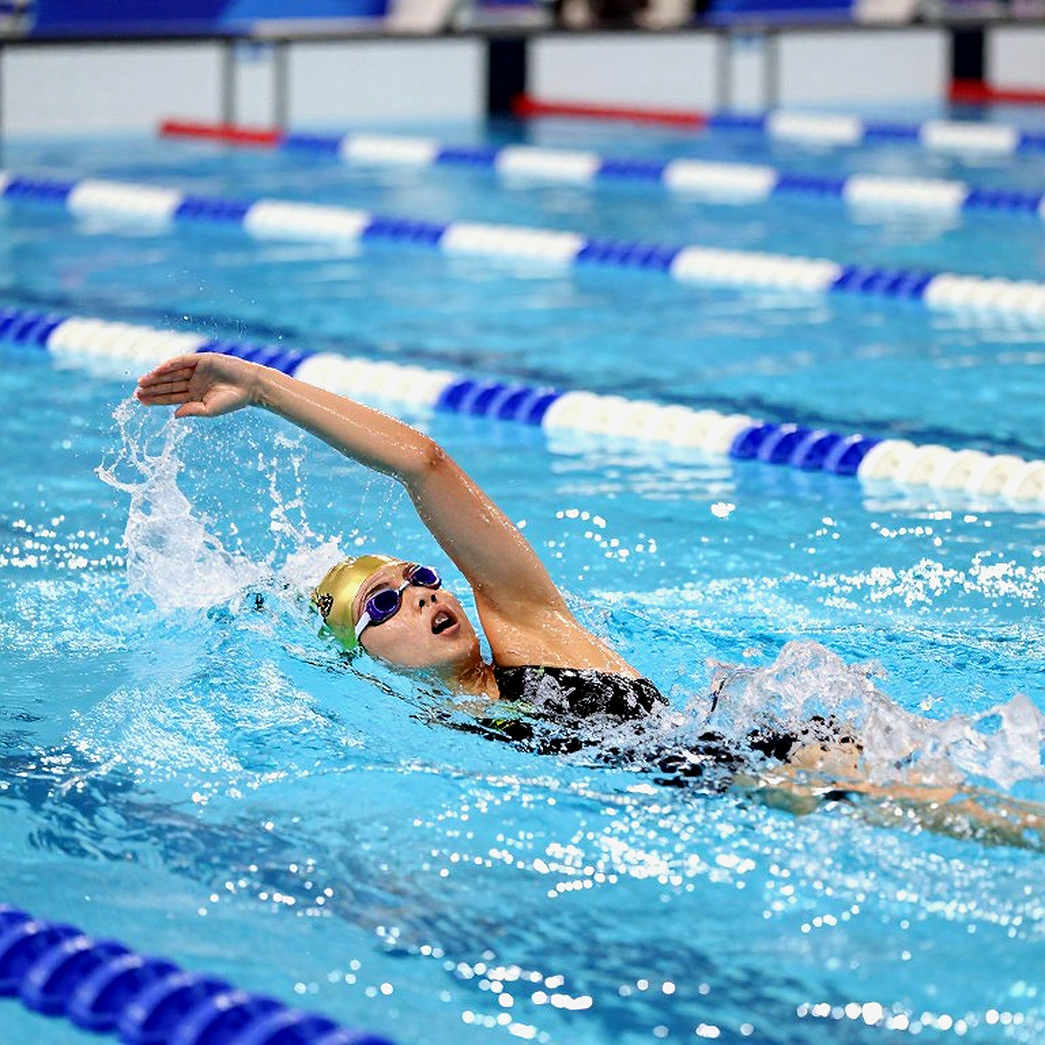
Three medals in two days, at a Games where this same delegation finished fourth overall three years ago — that is the thing worth dissecting, not the gold.
The clock, and the seven-medal benchmark
For viewers in Vietnam and Australia, the schedule is the first thing to write down before talking tactics. Prelims start at 10am local time — 8am in Vietnam, 11am Australian eastern time. Finals start at 5pm local — 3pm in Vietnam, 6pm Australian eastern time, which is 4am on the United States east coast. The gap between sessions is seven hours, enough for a nap and a meal, not enough for any real recovery. Anyone who has sat at a pricing desk knows those seven hours are a bigger variable than form.
The benchmark sits at Hangzhou 2026: Hong Kong finished fourth in the swimming programme with seven medals — two gold, two silver, three bronze. Haughey was the pillar of both golds, in the women's 100m and 200m freestyle. That is the template of a small delegation: nearly all medal output flowing through one individual.
On day one of this meet, the silver in the women's 4x100m freestyle relay arrived before Haughey's gold. On day two, Ian Ho — a Virginia Tech product, one of the few Hong Kong swimmers developed entirely inside the American college system — took silver in the men's 50m freestyle in 21.76. Three medals from three different sources. That is data about team structure, more than data about individual performance.

The evidence chain
Start with the central number: Haughey's 1:54.96 in the women's 200m freestyle final.
Her personal best over the distance is 1:53.92, set at the Tokyo Olympics for silver. So on 21 September she swam 1.04 seconds slower than herself. Against her continental title in Hangzhou, according to the result records I keep, she was roughly 0.84 seconds slower. At this level, nearly a second over 200m is a gap you can see with the naked eye in the last 50.
But reading only that number and concluding that Haughey is fading misses several things. She is 29 — the age at which the physiological curve flattens rather than climbs, and every female middle-distance swimmer has to rebalance how she spends her energy. Her programme at a continental meet usually includes multiple individual events plus relay legs, and every extra leg is another lactate deposit inside a window with no rest days. Her peak cycle does not target a continental meet; a professional racing four or five major meets a year cannot peak at all of them.
Set against that, a gold is still a gold. A 1:54.96 in a continental final is enough to win, and holding a sub-1:55 at 29 is something very few Asian swimmers have ever done. The rule I use here is old: judge a swim by both the placing and the gap to the swimmer's own self, never by one of the two.
Then came the men's 50m freestyle, the event I watch most closely of the day.
Ian Ho took silver in 21.76. Korea's Kim Youngbeom won in 21.66, equalling the Korean national record. Ji Yu-chan, Kim's teammate, took bronze in 21.94. Three sub-22 swims in a continental final is not a common sight in the 50m. Over this distance everything lives inside a hundredth: reaction off the blocks, one mistimed breath, one short touch. The gap between gold and silver was 0.10 seconds, roughly half a body length. The gap between silver and bronze was 0.18.
As a pricing analyst I read the 50m differently from the 200m. Over 200m, swimmer quality decides most of it. Over 50m, noise decides most of it. A 50m final packs six to eight men inside a standard deviation so tight that a model cannot separate who is strongest. That is why I never compress the handicap too far in this event, whatever the world rankings say. Based on my experience watching continental swimming finals, the 5pm session is always the one where the gap between heats and final is misread the most.
There is a structural point in all this: Ian Ho's 21.76 places Hong Kong swimming on two poles — a female star in the middle distances, a male specialist in the sprints. Third place on today's medal table is the product of both poles firing inside the same two days.
The contrarian angle
Hong Kong's third place on the swimming table is a phenomenon of event order first, and a phenomenon of strength second.
The way the programme is built decides it. The events swum early at every major Games are the 200m freestyle, the 50m freestyle, the 100m butterfly — distances where one outstanding individual can manufacture a medal alone. The events swum late are the 800m and 1500m freestyle and the mixed relays, where squad depth decides and where China, Japan and Korea hold near-absolute advantage. A delegation with one star and two or three satellites will always look stronger than it is across the first 48 hours, then get pushed down as the meet shifts to the long events.
Correlation is not causation. Three medals in two days does not infer eight medals across ten days. Three years ago this delegation finished fourth with seven medals; anyone taking three, dividing by two and multiplying by eight is drawing a straight line across a dataset with a curve in it. I have watched a beautiful dataset get misread in exactly that way.
Kazan is the day I learned that a 99% probability can still die on the betting desk. When a swimmer steps onto the blocks with a 99% win chance across every model, the remaining percentage does not live in the water. It lives in the seven hours between heats and final, in water temperature, in a coach changing tactics twenty minutes before the start. The numbers cannot measure any of that, and I have to say so every time I hand down a conclusion that sounds too certain.
There is one more technical trap: three sub-22 swims in a single 50m freestyle final. That is a sample of one. To claim Asian sprinting is rising, I need seasonal performance distributions across a generation of swimmers, not one final. At most I am allowed to say that in this final, the density of sub-22 times was thicker than I expected. Numbers have no gender. The people reading them do — and in a press room, the reader usually walks in with the conclusion already written before the scoreboard lights up.
Limits of the data: I have no 50m split data, no stroke-rate data and no turn counts for Haughey's final from the venue — only the final result and the medal table. I do not know which meet she is peaking for this year, I do not know last week's training load, I do not know whether she had another relay leg to swim. Every inference above about her racing intent sits in the vague zone, not the zone the data can confirm. And one thing the numbers never record: consecutive seasons of elite racing at 29 leave marks in a body that no index captures.
Signals for the next round
Day three delivers the first answer: the women's 100m freestyle. That is Haughey's strongest event, the one where her sprint speed once carried her onto an Olympic podium. If the 1:54.96 over 200m reflects a light training block, the 100m will show it more clearly, because it leans less on aerobic distribution. Swim under 52 seconds and the signature of her form is intact.
The second signal sits in the relay lane. The silver in the women's 4x100m freestyle relay on day one is the single biggest variable of this whole meet for Hong Kong. If the relay legs hold that level, the model of a one-star delegation has to be rewritten.
And the third signal has no answer inside these two weeks: what becomes of a swimming nation built on two individuals on the day both of them leave the pool. Hong Kong has three medals after two days, and I have yet to see another swimmer in the squad under 20 reach an individual final. I do not trust emotion. I trust a data series longer than your emotion. But this series, stretched across ten years, is the most worrying one in this entire piece.