
South Korea Lead India 2-0 in Davis Cup: Two Comebacks and a Final 8 Berth Still Open
**Core answer**: South Korea lead India 2-0 in the Davis Cup qualifying round after Kwon Soon-woo and Hyeon Chung both won three-set singles rubbers in Seoul. One more rubber sends South Korea to the Final 8 in Bologna, a first for an Asian nation. **Key facts**: - Kwon Soon-woo beat Dhakshineswar Suresh 3-6, 6-3, 6-4 at Seoul Olympic Tennis Centre. - Hyeon Chung beat Sumit Nagal 2-6, 6-4, 7-5, closing the deciding set 7-5. - Both Indian players won the opening set; both rubbers went to a deciding set. - Doubles and reverse singles were scheduled for the following Saturday session. - Winners advance to the eight-nation finals week in Bologna in November. **Source attribution**: Aggregated Davis Cup tie dispatch; publication date not stated in the original document. Match data listed as Source: None. | Cross-checked: VuaBong.vn **Related Q&A**: Q: Is South Korea's place in the Final 8 already secured? A: No - the tie is best-of-five and South Korea need one more rubber from the doubles or the two reverse singles. Q: Why is the 2-0 lead described as narrow? A: Both singles rubbers were won from a set down after the Indian player took the opening set, so the process gap was much smaller than the aggregate score. Q: Did the source contain factual errors? A: Yes - the document labelled Italy a three-time defending champion and Ben Shelton a US Open finalist, and omitted the year of the tie; these claims require primary-source verification.
At the Olympic tennis centre in Seoul, when Hyeon Chung stepped up to serve the twelfth game of the third set, the stands were already on their feet. The final rally dragged Sumit Nagal from the left corner to the right, and the ball landed in the net. The scoreboard showed 7-5. South Korea lead India 2-0 in the Davis Cup qualifying round, one win away from becoming the first Asian nation ever to reach the Final 8.
I stayed seated long after the applause died down. There was a detail on the scoreboard that stopped me from calling the afternoon a dominant one. Both Indian players won the opening set. Both South Koreans had to come from behind to win a three-set rubber. The aggregate score was 2-0; the individual scorelines told a very different story.
Context: a format that only rewards those who start early
The Davis Cup is a best-of-five-rubber tie. The first nation to three rubbers wins it. There is no draw, no shared points, no secondary table. Day one brings two singles rubbers, day two brings the doubles and then the reverse singles. The host nation picks the surface, the schedule, and the rest rhythm. In nineteen years of covering the sport, one structural property of this format has never failed to hold: it rewards early advantage enormously, and it rewards superior play almost not at all if that play arrives late.
For South Korea, the early advantage was banked after day one. For India, the only remaining route is narrow: win the doubles, then win both reverse singles. Three rubbers in a row, no room for a single slip, away from home, against a side with better singles depth. That is a puzzle no captain volunteers for.
Commercially, this is exactly the kind of tie federations want. A place in the Bologna Final 8 carries a concrete package: regional broadcast rights, an Asian time-zone window, national sponsorship contracts, and a story that sells to the East Asian market. A first Asian nation at the Final 8 is an untapped media product. None of that decides the tennis, but it explains why Korean public opinion has pushed this story so high so fast.
Analysis: what two comebacks actually say
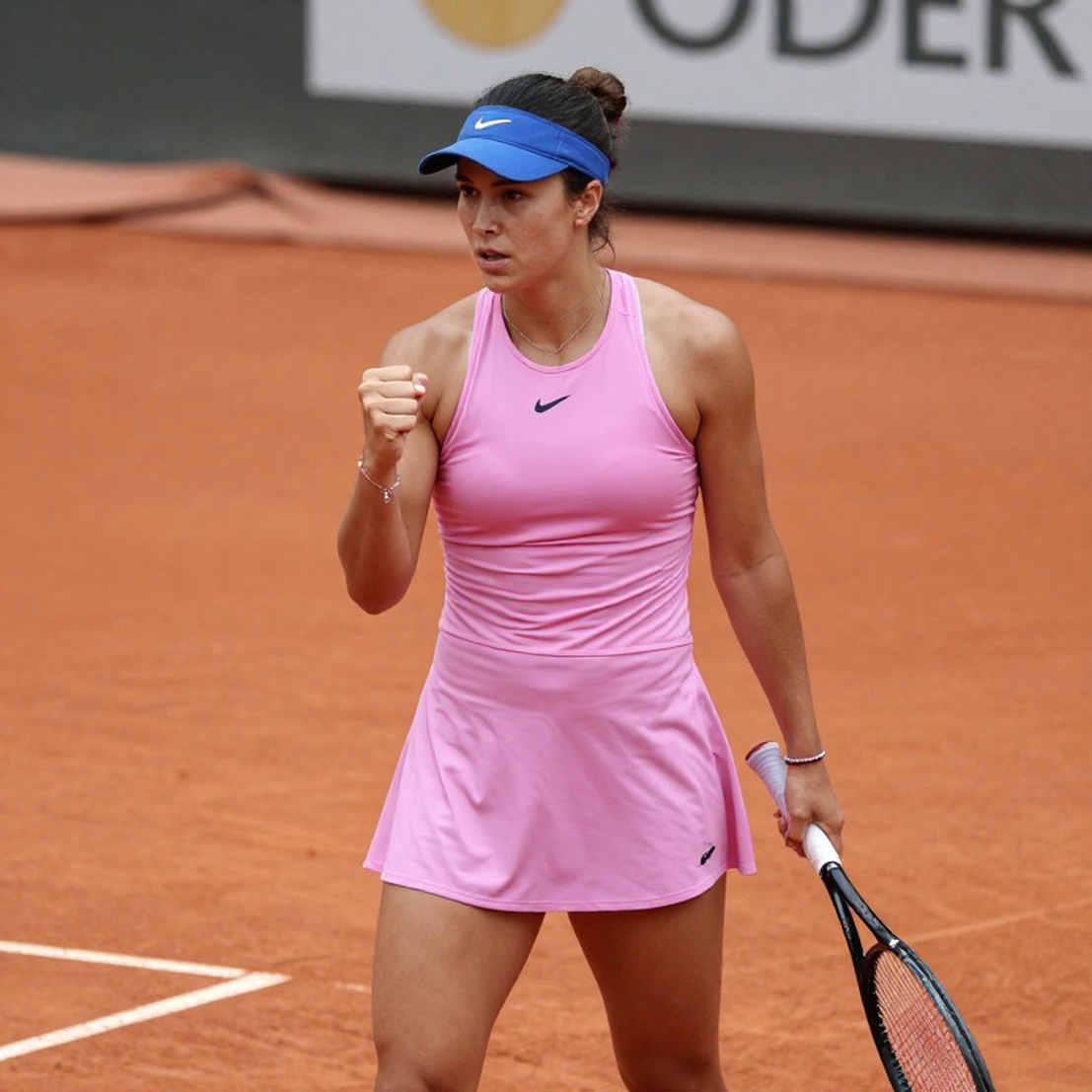
In the first rubber, Kwon Soon-woo beat Dhakshineswar Suresh 3-6, 6-3, 6-4. In the second, Hyeon Chung beat Sumit Nagal 2-6, 6-4, 7-5. Only set scores were released. No serve statistics, no second-serve points won, no unforced-error counts. Anyone drawing firm conclusions about the quality of serving or return pressure in these two matches is working from feel, not from data.
The set scores alone still carry two signals.
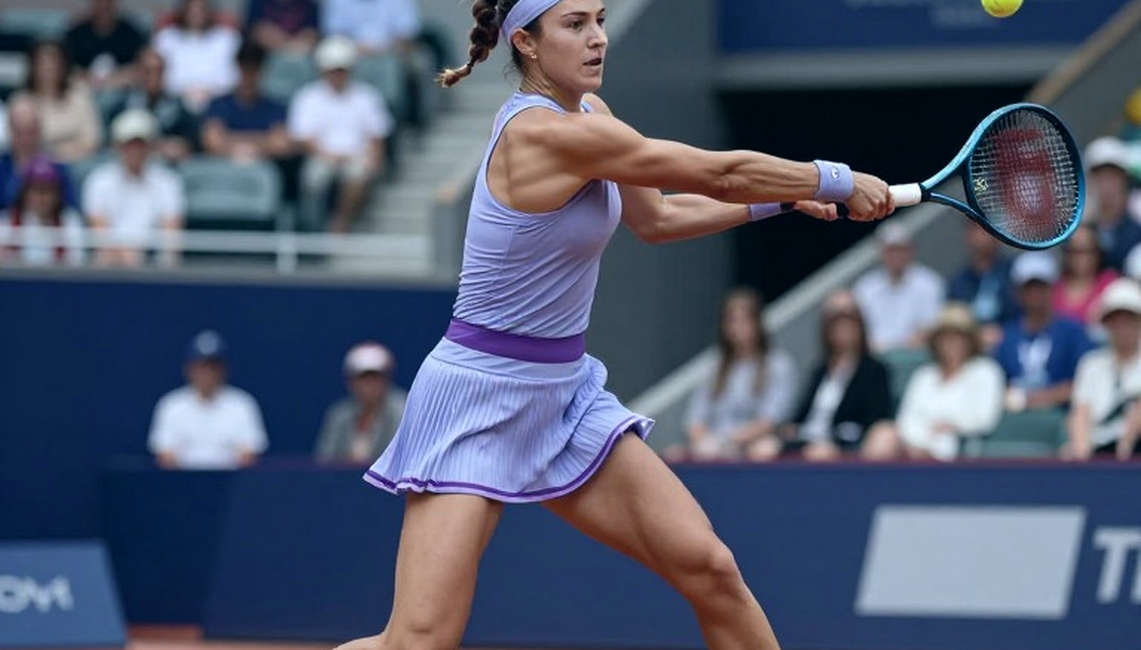
The first is the ability to handle being behind. A player who loses the first set and wins the next two is not necessarily the better player across the whole match; he was simply better in the two sets that mattered. But two players doing that on the same afternoon is no longer coincidence. It points to in-match tactical adjustment and the physical base required to hold intensity into a third set.
The second, and to my mind the more revealing, sits in Chung's line: 2-6, 6-4, 7-5. A lopsided first set, two narrowly won sets after. That pattern is familiar among players returning from long injury layoffs. The rhythm is not there in the opening set, then stabilises, and even then the match has to be ground out to the final game. Hyeon Chung has an Australian Open semifinal on his record. That level is confirmed. But one three-set home win does not prove that level has fully returned.
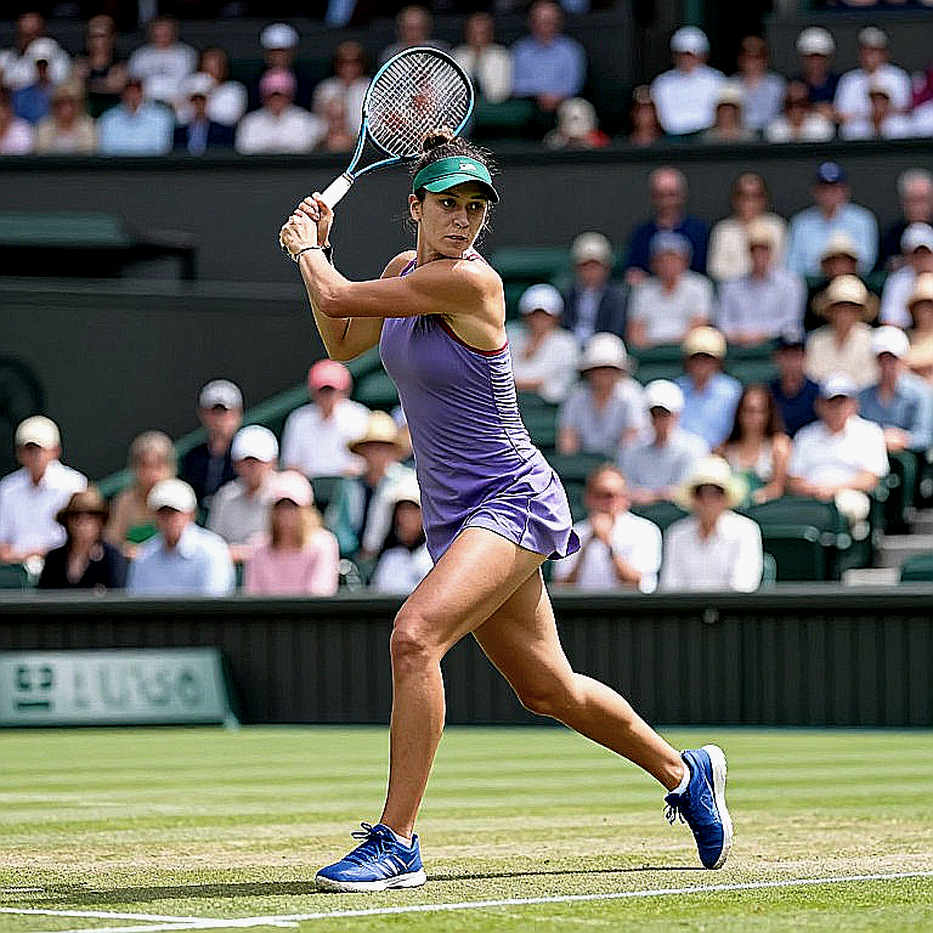
For India, Nagal's line reads in the opposite direction: 6-2 in the first set, then 4-6, 5-7. That is the profile of a player whose strongest surface is clay, dragged into a long attritional contest against a strong counterpuncher. Nagal's best tennis has historically come on clay. This tie was played in Seoul, indoors, on a hard court. That is a structural disadvantage, not a surprise.
And here is what the 2-0 hides: the real gap between the two teams in this tie is far narrower than a comfortable win would suggest. Both rubbers went the distance. Both times, the Indian player led. If Nagal holds his rhythm in the eleventh game of the deciding set, the tie is 1-1 and today's story reads entirely differently.
The doubles rubber on day two is therefore the true swing point. If South Korea win it, the tie closes at 3-0 and the reverse singles become a formality. If India win it, the reverse singles become live, and all the pressure shifts to a host side fielding a player who has just come through a tight three-setter. The intensity of a two-day tie with no rest day is something every analysis of individual class has to bow to.
Contrarian angle: the notebook outside the court is less reliable than the scoreboard inside it
I do not trust intuition; I trust the half-cent discrepancy in a transfer ledger. By that rule, I reread the dispatch on this tie and found three errors worth recording.
The first: the report calls Italy the three-time defending champion. The current Final 8 format has been in place since 2026. A run of three consecutive titles inside this format needs checking against the ITF's official roll of honour before it is quoted.
The second: the report calls Ben Shelton a US Open finalist. He reached the US Open semifinal. That is a clear factual error, and it sits not in the results layer but in the context layer.
The third: the report gives no year for the tie. Without a year, every judgement about form, fitness and career stage loses its footing.
These three errors share a trait: they all sit in the shell, not in the results. The 2-0, the set scorelines, the Saturday schedule - these are consistent with each other and with the official schedule. That pattern points to a fast-aggregated source, where the primary result data are sound but the surrounding colour is not. I record every footprint on the court so that when they wipe their hands, I can identify whose hands they were. Here, the hands are showing in exactly the context layer.
This matters more than it appears. When a report gets the context wrong, readers tend to keep the scoreline and discard the context. But context errors are often a signal that the interpretation layer has not been verified either. The answer is not to throw everything out, but to split the layers: keep the match data, and suspend every historical and record claim until a second and third source confirm it.
As a working journalist, I think the most important thing about this tie is not the Asian-history headline. It is that the host side currently has two singles players of genuine quality at once. Kwon Soon-woo is the national No. 1, an aggressive forehand-first baseliner. Hyeon Chung is a defence-first counterpuncher who wins points with his return and by reclaiming rallies from losing positions. India has Nagal, and behind Nagal there is a gap. In a best-of-five format, depth is not an abstract idea; it is the number of players you dare put on court in a rubber you have to win.
What remains to be watched
The tie is not closed. A place in the eight-nation finals in Bologna, expected in November, is still a door left ajar. South Korea need one rubber; India need three.
For me, the real test here is not whether South Korea advance. The test is how the story gets retold if they do. Will it note that both singles rubbers required comeback wins from a set down, that an Indian player came within a game of levelling the tie at 5-5 in the deciding set, that an indoor hard court was a variable favouring the hosts? Or will it reduce to one line: the first Asian nation to reach the Final 8.
The difference between those two tellings does not live in the wording. It lives in which scoreboard is kept and which is quietly dropped. For a region still finding its footing in world tennis, telling it right matters more than the win itself, because a win lasts one season while a standard of judgement lasts a generation.